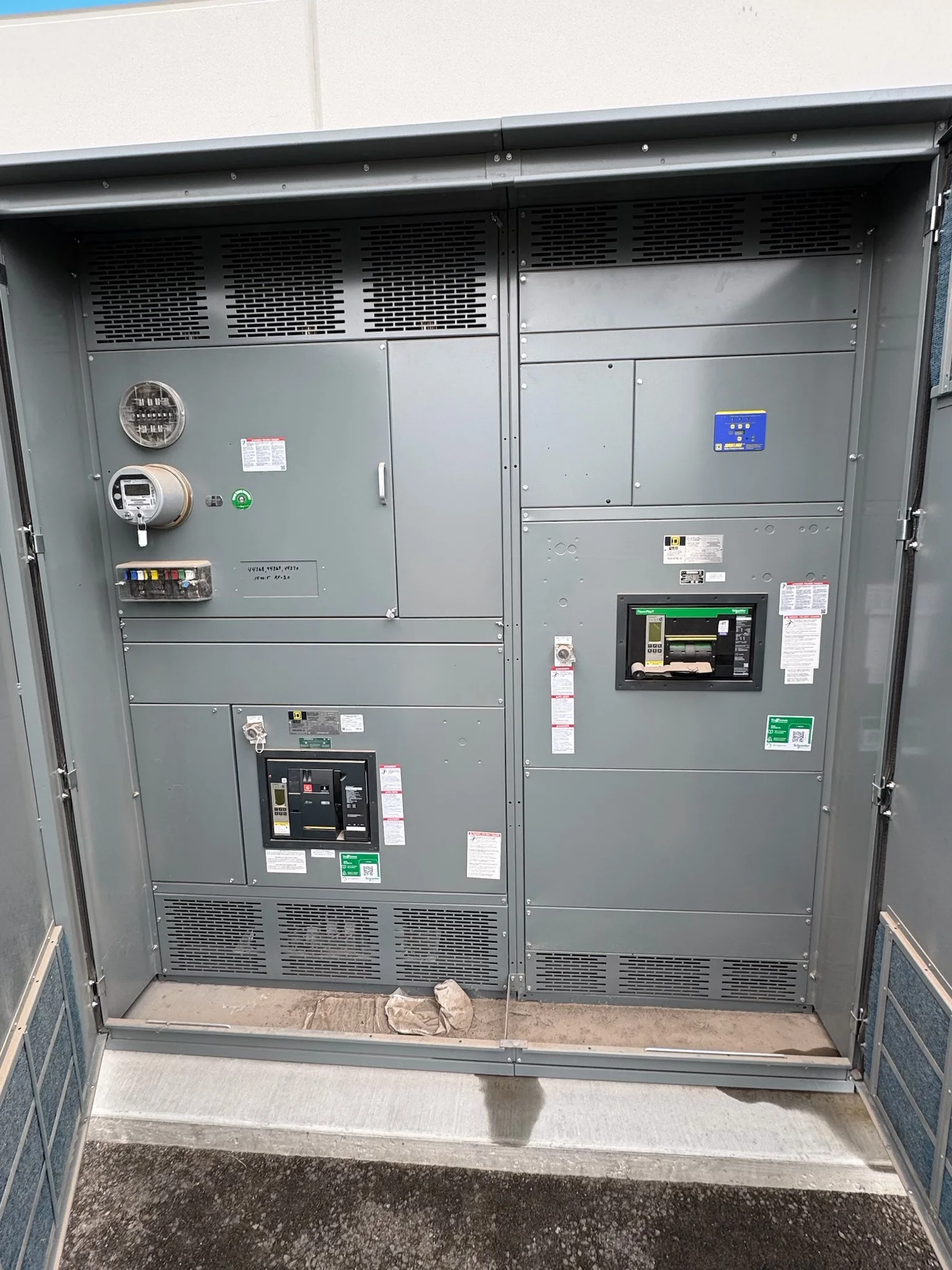
Start with the system and equipment boundary
Identify the installation and define exactly what the specification covers: service entrance, distribution lineup, individual sections, or associated protective devices. Include the latest one-line diagram, system voltage, phase and frequency, source arrangement, grounding method, and downstream loads. Clarify whether transformers, cables, bus duct, metering, or controls are by others.
Describe normal and alternate operating conditions, including utility and generator sources, ties, and transfer arrangements. State which equipment is included in the manufacturer’s scope and which interfaces must be coordinated with other suppliers. Clear boundaries help prevent omissions and make the requested configuration suitable for engineering review and a meaningful quotation.
Set electrical ratings from system studies
Specify nominal system voltage, continuous current, number of wires, and the required bus arrangement. Establish the available fault current and clearing assumptions from the responsible engineer’s study, then identify the required short-circuit withstand or interrupting ratings for the selected equipment and devices. Do not treat those terms as interchangeable; the design must match the equipment type and protective scheme.
List protective-device types, frame or sensor requirements where determined, trip functions, settings responsibilities, and coordination expectations. Confirm whether ground-fault protection, arc-energy-reduction features, metering, or protective relays are required by the design or applicable rules. Ratings and features depend on the project; the engineer must verify calculations, device coordination, and compliance with the adopted code.
Choose the equipment class and construction
Name the intended equipment category rather than using “switchgear” as a catchall. Low-voltage distribution may use a UL 891 switchboard or UL 1558 low-voltage switchgear, depending on the application and design criteria. Medium-voltage equipment is a separate class with its own voltage range, construction, and applicable standards; UL 891 does not cover medium- or high-voltage equipment.
Describe the lineup arrangement, number and function of sections, main and tie devices, feeder quantities, and any future spaces. State whether drawout or fixed devices are required where applicable, and identify compartmentation or access expectations. The manufacturer can assess custom fabrication against the project drawings, selected equipment class, ratings, and required interfaces rather than assume a standard layout.
Define connections and physical interfaces
Provide available room dimensions, equipment location, lineup orientation, and required front, rear, or side access. Specify cable entry direction, conduit or bus-duct connection points, conductor material and termination needs, and any restrictions on bending space. Show wall, floor, trench, and overhead obstructions on coordinated drawings; physical fit depends on actual site conditions and the final configuration.
Document bus connections to transformers, generators, utility service, or adjacent lineups, including phase sequence and any transition requirements. Identify control wiring, communications, remote signals, and terminal responsibilities at each boundary. Confirm shipping splits, handling limits, doors, corridors, lifting access, and installation sequence with the contractor, since the transportable arrangement may affect section dimensions and field connections.
Describe the installation environment
State indoor or outdoor location and provide ambient temperature range, altitude, humidity, ventilation conditions, and exposure to dust, moisture, corrosive agents, or vibration. Note heating, cooling, condensation control, or enclosure requirements only where the site assessment calls for them. Environmental conditions can influence enclosure selection, derating, materials, and arrangement, so avoid relying on a generic indoor or outdoor label alone.
Identify the applicable enclosure type or ingress protection criteria if the project has established them, along with seismic, wind, or other structural requirements where relevant. Explain whether equipment is in a clean electrical room, process area, or exposed location. The responsible engineer should confirm environmental assumptions and any required mitigation with the facility team and authority having jurisdiction.
Name standards and compliance expectations
List the standards and code editions required by the contract and jurisdiction, and specify the applicable equipment category. UL 891 applies to switchboards; UL 1558 applies to low-voltage switchgear. Medium-voltage equipment requires separately identified standards appropriate to its design. Do not request a label or certification without confirming that the selected construction and project requirements support it.
State required documentation, inspection, and testing expectations in the procurement documents, distinguishing standard production procedures from project-specific witness or acceptance testing. If a particular listing, marking, or test report is required, identify it for review before award. Applicability depends on the actual build and governing requirements; verify interpretations with the manufacturer, responsible engineer, and AHJ.
Specify controls, metering, and documentation
Translate operating needs into a control narrative: local and remote operation, interlocks, transfer logic, alarms, status points, and communications protocols. Identify who supplies control power, network devices, programming, and field wiring. Provide instrument transformer and metering requirements, accuracy needs where specified, and point lists for monitoring systems; confirm compatibility with the selected protective devices and control architecture.
Define submittal milestones and deliverables, such as arrangement drawings, wiring diagrams, bills of material, operation manuals, and test documentation. Set review responsibilities and identify required drawing formats or data schedules. Early clarity helps coordinate switchgear with controls, protection, and installation packages, while leaving project-specific details open for engineering review rather than implying every feature is included by default.
Prepare a quote-ready specification package
For pricing, provide the specification, one-line diagram, load and feeder schedule, fault-current information, floor plan, and available utility data. Include equipment class, ratings, section functions, physical interfaces, environmental conditions, standards, and requested submittals. Flag unresolved items instead of silently assuming values; the manufacturer can identify information needed to develop a technically aligned proposal for new equipment.
State the project location, quantity, requested delivery window, shipping destination, and whether installation or field services are in scope. Manufacturing in the United States with American components, custom fabrication, short lead times, and nationwide shipping can be relevant to procurement planning; confirm project-specific availability and logistics during quotation. Have the engineer, utility, and AHJ review applicable design decisions before release for construction.