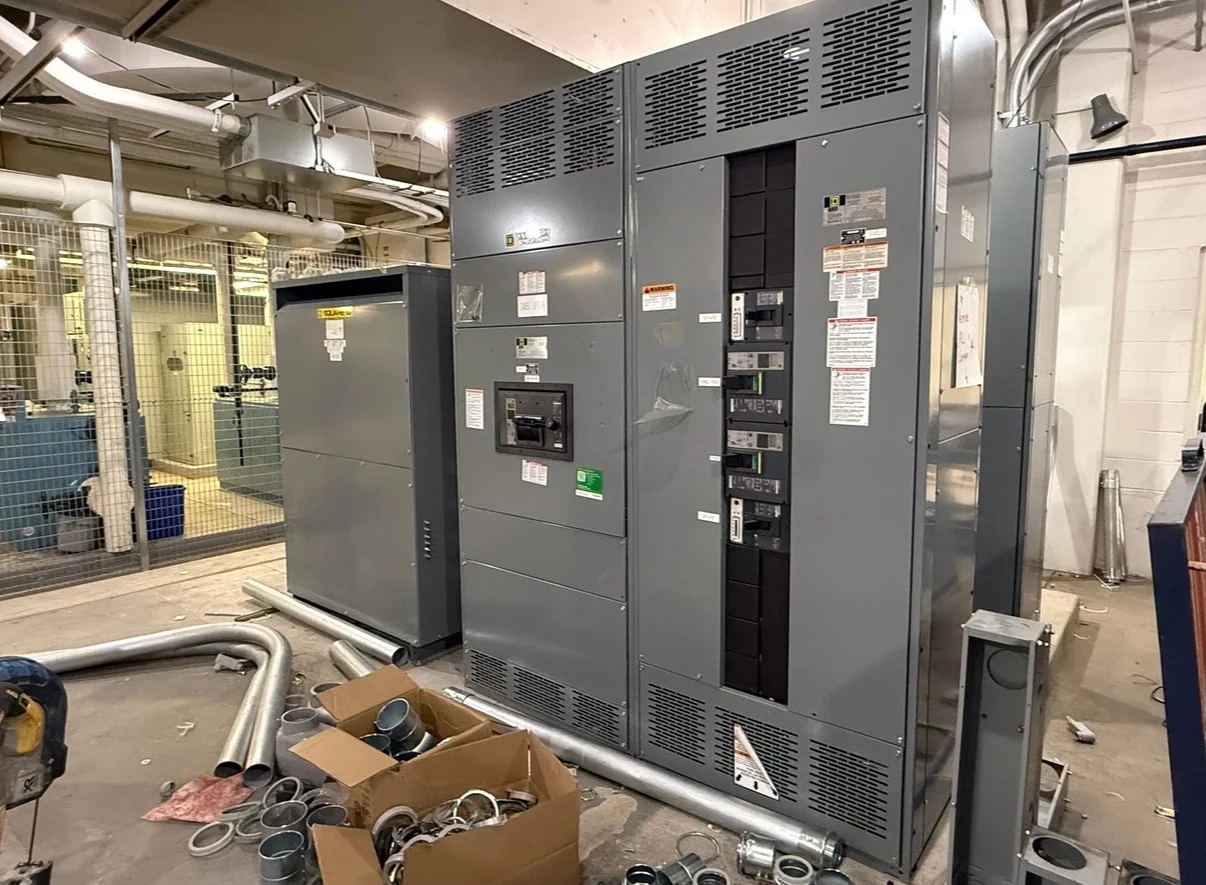
How Sections Shape the Lineup
A sectionalized switchboard is arranged as connected sections that form one distribution lineup. Each section can house a defined portion of the service or distribution equipment, such as an incoming service device, feeder breakers, metering provisions, or a transition to another assembly. The arrangement should reflect the electrical one-line and operating needs.
Section boundaries are more than convenient enclosure breaks. They affect bus continuity, internal wiring, access for maintenance, and how crews handle and join the equipment at the site. During design, confirm which devices belong together, which sections require clear working space, and whether the intended assembly must be accessible from the front or rear.
Group Feeders by Function
Feeder groupings should follow the distribution plan rather than an arbitrary count of breakers per section. Group circuits by load area, downstream panel, process, or other useful operating boundary, while considering feeder ratings, conductor entry, and the physical space each device requires. The final arrangement depends on the actual schedule and equipment selection.
Provide a current one-line diagram and feeder schedule for a quote, including device type, frame or trip requirements where established, load descriptions, and spare or future provisions. Identify any circuits that need separation for operation or maintenance. The responsible engineer should verify load calculations, protection coordination, and code requirements for the project.
Choose Practical Shipping Splits
Shipping splits divide a complete lineup into sections or groups that can be transported and handled at the destination. The split plan must account for truck and route limits, unloading equipment, building entrances, elevators, corridors, and the space available to stage sections. A lineup that fits electrically may still need different shipping divisions to reach its room.
Share delivery constraints before the equipment layout is finalized: maximum allowable dimensions or weights if known, access route details, receiving hours, and lifting or rigging limitations. Shipping splits can affect where bus joints, wiring interfaces, and enclosure transitions occur. Confirm the planned division and reconnection sequence with the manufacturer and installing contractor before release.
Plan Field Bus Connections
When adjacent sections ship separately, field assembly commonly includes making specified bus connections between sections. The design must provide a compatible interface and account for the bus arrangement, joint accessibility, and installation sequence. Required hardware, joint preparation, and tightening procedures should be identified in the equipment documentation rather than assumed by the field crew.
Confirm whether the shipping division crosses the main bus, a vertical bus, or another connection, and establish how installers will access the joint after sections are positioned. Site alignment and anchorage also matter. Field work should follow manufacturer instructions and project procedures, with the responsible electrical professional verifying the completed assembly.
Coordinate Conductors and Entry Points
Incoming and outgoing conductors need workable routes into the selected sections. Top or bottom entry, conduit locations, cable bending space, pull access, and the direction of feeder exits can affect section dimensions and internal device placement. These details are especially important where large conductors, multiple parallel sets, or crowded electrical rooms constrain installation.
For preliminary design and quotation, identify conductor material and size when available, quantities per phase, grounding and neutral requirements, entry direction, and intended conduit or cable-tray approach. Confirm actual termination provisions and bending space against the selected equipment and applicable requirements. Do not rely on a generic section arrangement when project-specific conductor details are unresolved.
Account for Site and Room Conditions
Section dimensions and access needs should be checked against the electrical room before the lineup is approved. Confirm overall wall space, door openings, ceiling height, floor conditions, working clearances, and any obstructions that affect installation or operation. The layout should also preserve access to handles, instruments, covers, and field-connected compartments.
Environmental and service conditions can influence enclosure and equipment choices. Provide the project voltage, phase and frequency, available fault-current information, service conditions, ambient or location concerns, and any applicable specifications. A responsible engineer should coordinate the design with the utility and authority having jurisdiction where their review or requirements apply.
Define Interfaces Across Sections
A lineup may include service equipment, distribution sections, metering, control components, or connections to other assemblies, but each interface must be defined for the project. Establish which devices are in the switchboard, what equipment is furnished separately, and where control wiring or communications cross section boundaries. Clear boundaries help prevent gaps in scope and installation planning.
Provide drawings or specifications showing upstream and downstream equipment, required instrumentation, control functions, and any interface points. Identify whether field wiring is expected between sections or to external systems, and who is responsible for terminations. Verify compatibility and responsibility assignments before fabrication so contractors can plan conduit, wire, and commissioning tasks.
Prepare a Complete Quote Package
A useful request for quote includes the one-line diagram, feeder schedule, system voltage, main and feeder device requirements, available fault-current data, metering needs, and project specifications. Add room and access drawings, conductor-entry details, preferred lineup orientation, and known shipping constraints. Mark unresolved items clearly so assumptions can be reviewed rather than mistaken for confirmed requirements.
The manufacturer builds new switchboards in the U.S. with American components and can provide custom fabrication, short lead times, and nationwide shipping. Lead time depends on project scope and confirmed requirements. Identify the requested delivery location and schedule, then review drawings and shipping splits with the manufacturer before approval. Final design should be checked by the responsible engineer.