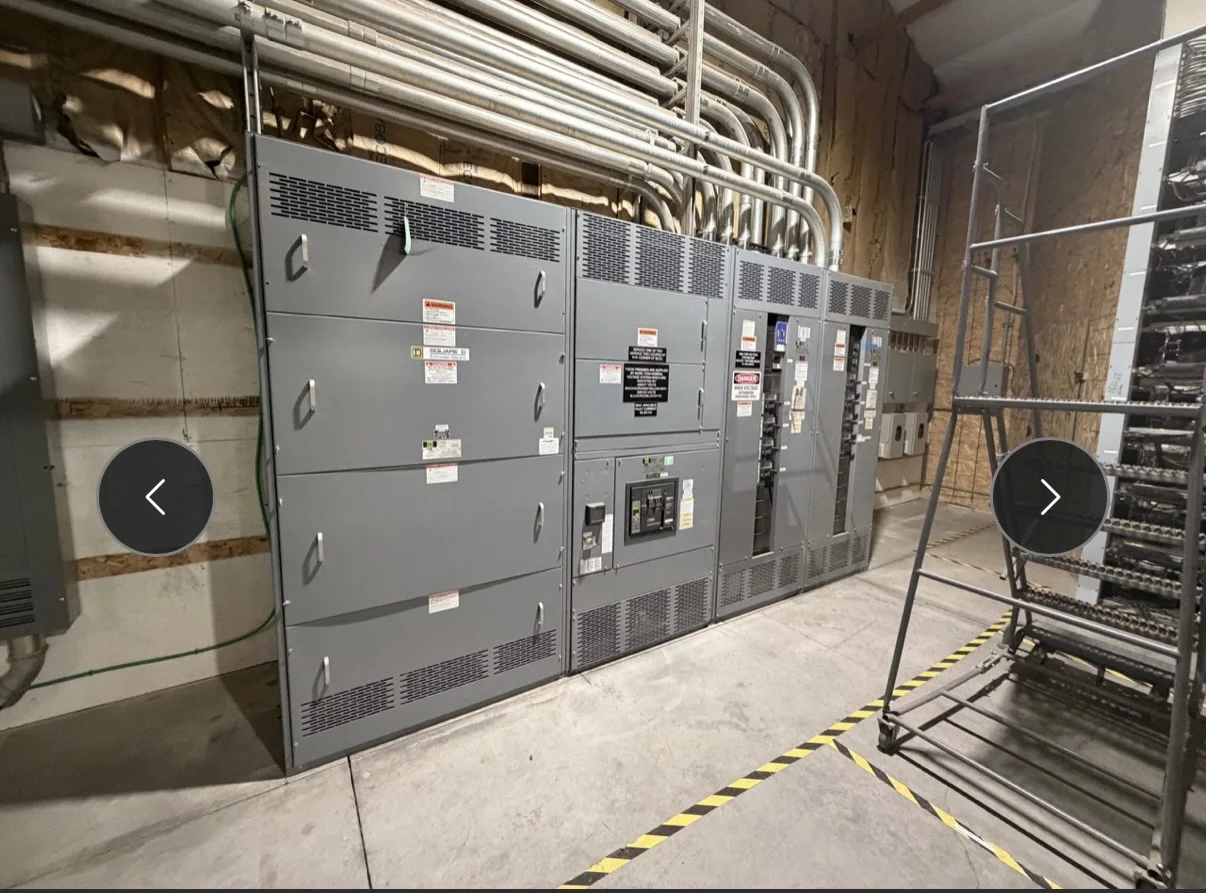
Start With the Lighting Load Schedule
A lighting panelboard is organized around the branch circuits that serve luminaires, controls, receptacles, and related loads assigned to the panel. Before specifying equipment, gather the circuit schedule, connected load information, intended use, and any known future additions. These details help establish a workable circuit count and panel configuration.
Do not size a panel from fixture quantity alone. Drivers, switching arrangements, emergency lighting, signage, and other connected equipment can affect circuiting and load calculations. The responsible electrical engineer should determine demand, conductor sizing, overcurrent protection, and applicable code requirements for the installation.
Match Voltage and System Configuration
Confirm the available system voltage and configuration at the proposed panel location, including phase, frequency, and whether the system provides a neutral. Lighting loads may be specified for different voltages within one facility, so verify each load's nameplate requirements rather than assuming all fixtures share the same connection.
The panelboard must be configured for the intended supply and distribution arrangement. Provide the one-line diagram or describe the source, feeder, and downstream loads when requesting a quote. Have the design checked against the facility's electrical system and applicable requirements before releasing equipment for production.
Plan Branch Circuits for How Spaces Operate
Branch-circuit grouping affects switching, troubleshooting, and how occupants use a space. Separate areas or functions when the operating plan calls for independent control, and identify lighting intended for normal, emergency, exterior, or specialized service. Circuit labels should correspond to room names or other identifiers used on site drawings.
A circuit schedule should show poles, load descriptions, estimated or calculated loads, and any specified breaker characteristics. Confirm whether controls or dedicated equipment impose requirements beyond ordinary lighting circuits. Final circuit assignments and protective-device selection belong to the project design, not an assumed standard panel arrangement.
Specify Neutral Connections Deliberately
Neutral requirements depend on the supply system and the loads served. Identify which circuits require a neutral, whether shared-neutral arrangements are intended, and how neutral conductors are to be organized. Electronic lighting drivers and controls can make correct neutral identification and circuit coordination especially important.
Provide the engineer's neutral and grounding scheme, including any project-specific isolation or bonding requirements. Do not assume a neutral bar arrangement or capacity without reviewing the system design and equipment configuration. The feeder conductors, panelboard construction, and installation details must align with applicable codes and the approved drawings.
Allow Useful Space for Lighting Loads
Physical circuit positions are only one measure of capacity. Consider the number of planned branch circuits, anticipated additions, control equipment, and available wall or electrical-room space. A panel with no practical room for future circuits may lead to disruptive changes when tenant improvements or lighting upgrades occur.
Discuss spare positions as a project requirement, not as a guaranteed percentage. Space needs depend on the selected enclosure, circuit arrangement, and other specified components. Provide location dimensions, access clearances, mounting conditions, and any restrictions on enclosure depth or door swing for configuration review.
Coordinate Breakers, Controls, and Labels
Identify required branch-circuit breaker ratings and pole counts from the load schedule and design documents. Note any control devices, metering, surge protection, or other components requested for the panel. Their suitability and inclusion depend on the project specification, available configuration, and applicable approvals for the completed equipment.
Clear, consistent circuit identification saves time during installation and service. Submit the preferred naming convention, room references, and any required directory format with the schedule. Confirm whether field changes are expected, and ensure the final labels reflect the issued design rather than preliminary room names or superseded drawings.
Prepare Complete Information for a Quote
A useful quote package includes the one-line diagram, panel schedule, system voltage and phase, feeder information, requested circuit count, enclosure location, and any specified options. Include project quantity, delivery destination, required submittal information, and the design documents' revision status so the equipment can be reviewed against current requirements.
If details remain undecided, list open items rather than filling gaps with assumptions. In particular, flag neutral arrangements, spare-space expectations, environmental conditions, and unusual loads. We can review the requested configuration for a new build, while the responsible engineer confirms design intent and the authority having jurisdiction determines applicable acceptance requirements.
Build and Coordinate New Equipment
We manufacture new electrical distribution equipment in the U.S. using American components and offer custom fabrication for project-specific requirements. Each requested feature should be documented and reviewed for compatibility with the proposed panelboard configuration; availability, construction details, and approvals must be confirmed for the particular build.
Short lead times and nationwide shipping are available, with timing dependent on the finalized scope, component requirements, and production schedule. Before release, coordinate submittals, feeder and branch-circuit details, installation conditions, and delivery plans with the project team. The responsible engineer, utility, and AHJ should review matters within their respective authority.