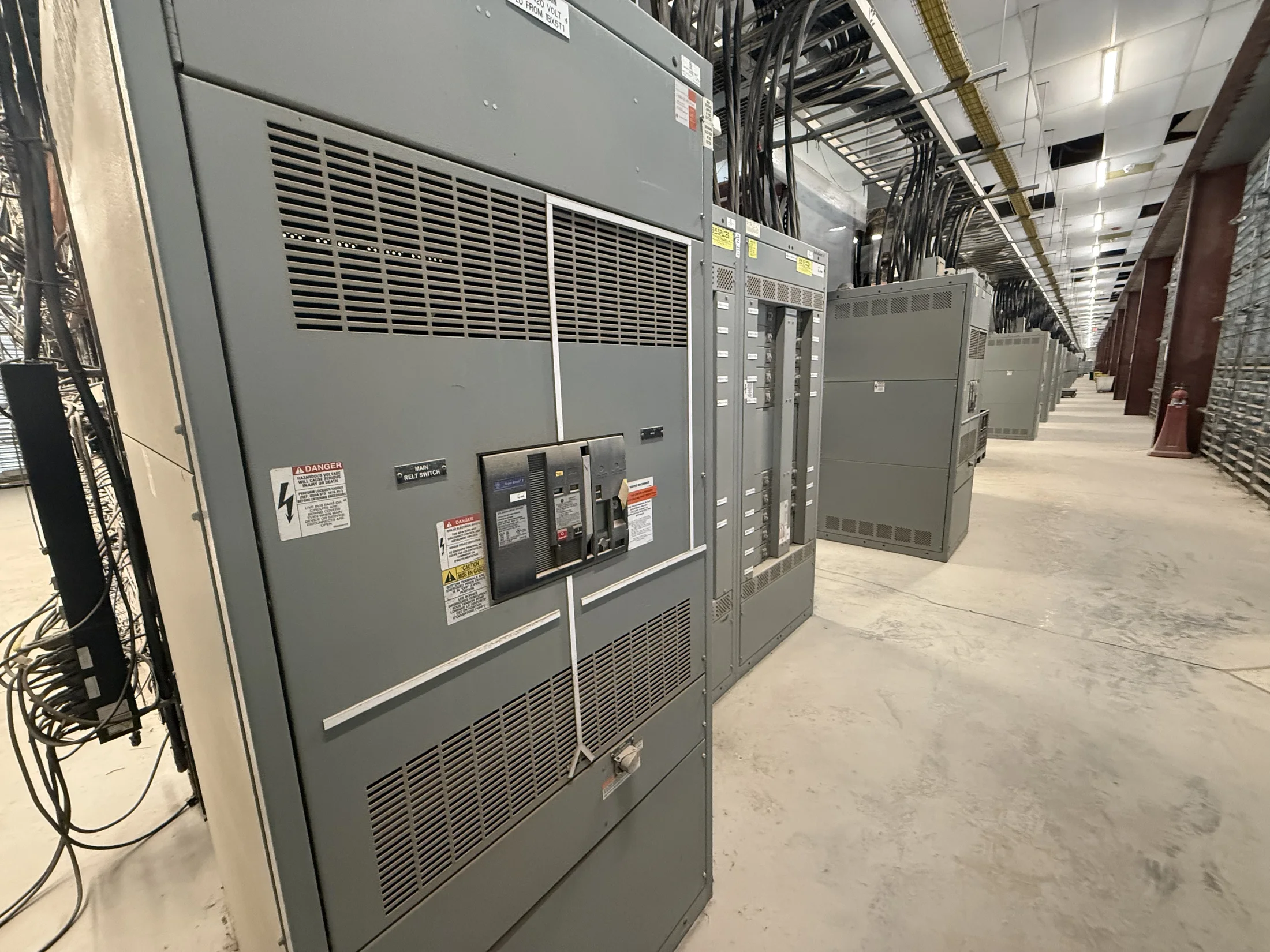
Define the Voltage Class and System Duty
Start with the highest system voltage the equipment must accommodate, rather than relying only on the nominal operating voltage. Identify frequency, grounding method, normal and maximum operating conditions, and whether the installation connects to a utility, generator, transformer, or industrial distribution network. These details establish the basis for selecting equipment and insulation.
Clarify the equipment’s function in the one-line diagram: incoming service, transformer interface, bus tie, feeder control, or another application. Document expected load, switching frequency, and system expansion plans. A qualified engineer should reconcile these requirements with utility criteria and applicable codes before a manufacturer develops a configuration or quotation.
Match Insulation to Installation Conditions
Insulation coordination is specific to the system and installation. The design team should evaluate rated voltage, power-frequency withstand, impulse withstand, clearances, and the grounding and surge-protection arrangement. Altitude, pollution, moisture, temperature, and indoor or outdoor exposure can also affect insulation requirements and equipment selection.
Describe the site environment and any known abnormal conditions, including condensation risk, corrosive atmospheres, dust, or limited ventilation. Ask the manufacturer to identify the insulation system and environmental assumptions proposed for the build, then have the responsible engineer review them against the project specification. Do not infer suitability from voltage class alone.
Choose a Configuration That Fits the One-Line
Configuration follows circuit function and operating needs. Specify the number and type of incoming and outgoing circuits, bus arrangement, sectionalizing points, metering locations, and provisions for future connections. Clarify whether switching, isolation, grounding, or visible-break requirements apply, and how each device must coordinate with the system’s operating procedures.
Physical arrangement matters alongside the electrical diagram. Provide available room dimensions, access and egress constraints, cable or bus connections, equipment orientation, and lifting or service clearances. For outdoor installations, identify foundations, enclosures, and environmental exposure. These project inputs help determine whether a proposed lineup can be installed and maintained as intended.
Coordinate Protection, Controls, and Communications
Protection requirements should be described by function and interface, not just by naming a relay. Share fault-study assumptions, relay settings responsibility, required protective zones, trip and close logic, and any interlocks. Confirm instrument-transformer ratios and accuracy needs, control-power sources, and how breaker failure or backup protection is handled in the larger system.
List required indications, alarms, remote-control points, and communications protocols, including the intended connection to supervisory systems. Identify who supplies, programs, tests, and documents the protection and control scheme. Coordination among the switchgear manufacturer, protection engineer, utility, and controls integrator should be addressed early to resolve interface boundaries and avoid assumptions.
Verify Fault Duty and Switching Requirements
A quote request should include the available short-circuit current at the connection point, system X/R information where available, and the study basis or utility data source. State required continuous current, fault-interruption duty, and any special switching or operating sequence. These values must be checked against the selected devices and complete assembly design.
Confirm whether the project requires particular operating cycles, transfer functions, synchronism checks, or remote operation. Do not treat a nominal voltage rating as proof that equipment can interrupt the project’s fault current. The responsible engineer must validate system studies and protection coordination; the supplier should identify the ratings and assumptions applicable to the proposed equipment.
Assess Standards and Supplier Capability
High-voltage equipment is not interchangeable with low-voltage distribution gear. UL 891 applies to low-voltage switchboards, not medium- or high-voltage switchgear; UL 1558 addresses low-voltage switchgear. For a high-voltage application, identify the governing standards, utility specifications, and project-required evidence with the engineer and AHJ.
Verify that a prospective supplier can support the required voltage class, insulation system, switching devices, protection interfaces, and documentation. Ask what design and manufacturing scope the supplier will perform, which components are proposed, and how deviations are reviewed. Confirm applicable certifications or approvals for the specific configuration rather than assuming every custom build carries the same status.
Prepare a Complete Request for Quotation
A useful inquiry includes the one-line diagram, voltage and grounding data, load and fault information, environmental conditions, layout, cable-entry preferences, and protection and control requirements. Attach the project specification and identify mandatory standards, exceptions, drawing submittals, inspection points, and required documentation. Mark unresolved items explicitly so they can be clarified before design proceeds.
State the delivery location, requested schedule, installation constraints, and whether startup support or field services are in scope. The manufacturer builds new equipment in the United States with American components, offers custom fabrication, and ships nationwide; confirm project-specific availability, lead time, scope, and logistics during quotation rather than assuming them.
Review Submittals Before Release
Before approving a build, compare drawings and technical data with the one-line, specification, and installation conditions. Check ratings, circuit arrangement, dimensions, interfaces, wiring, protection responsibilities, and any stated exclusions. Resolve differences in writing, particularly where utility requirements, site conditions, or operating practices changed after the original inquiry.
Have the responsible engineer review final equipment selections and coordinate with the utility and AHJ where required. Confirm who owns relay settings, field connections, commissioning procedures, and acceptance records. A clear release process helps align custom-fabricated equipment with the project design, while preserving responsibility for system studies and installation decisions with the appropriate project professionals.