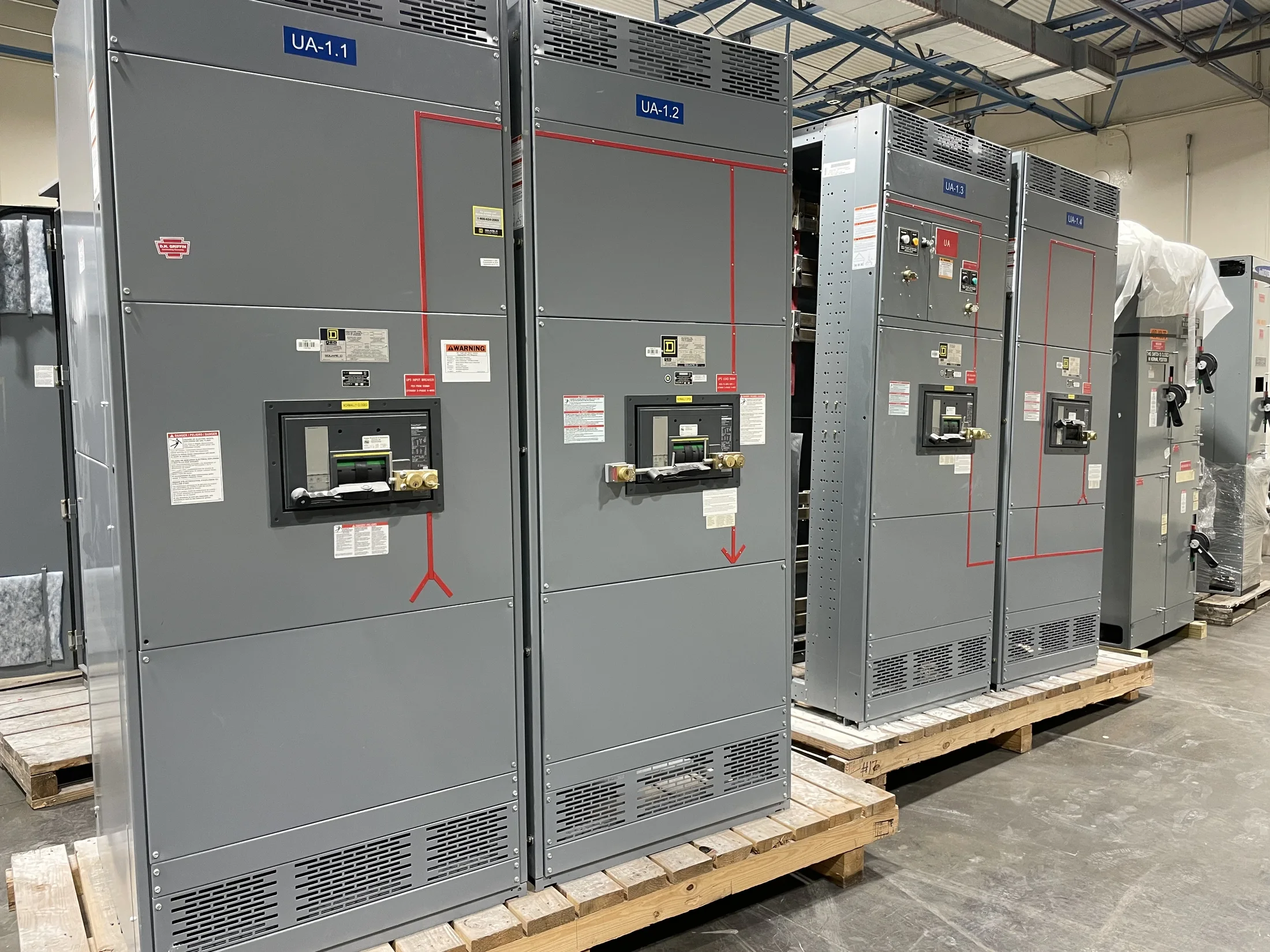
What Metal-Enclosed Means
Metal-enclosed switchgear places switching and related electrical components within a metal enclosure. The term describes an enclosure approach, not one fixed internal arrangement or a blanket rating. Depending on equipment class and design, the enclosure may contain breakers, switches, fuses, bus, instrument transformers, control wiring or combinations selected for the application.
For a project, identify the equipment’s intended role in the distribution system rather than relying on the name alone. Confirm voltage class, normal and emergency operating conditions, fault-current duty, switching frequency and required protection functions with the responsible engineer. These inputs shape the equipment design and determine which construction standards and product category apply.
How It Differs From Metal-Clad Construction
Metal-clad switchgear is a more specifically compartmentalized construction category, commonly associated with medium-voltage equipment. Its design uses metal barriers to separate major functional sections, such as the circuit breaker, bus and cable compartments, subject to the applicable standard and construction. Metal-enclosed equipment may use a different arrangement and should not be assumed to provide metal-clad construction.
The distinction matters when a specification calls for drawout breakers, segregated compartments, shuttering, barriers or particular access controls. Those details must be explicitly reviewed against the project standard and the offered design. “Metal-enclosed” alone does not establish interchangeability with metal-clad gear, nor does it define the enclosure’s internal separation or maintenance procedures.
Start With Voltage and Application
Determine whether the project requires low-voltage distribution, medium-voltage switching, or another equipment class before selecting a construction. UL 891 applies to low-voltage switchboards; it does not cover medium- or high-voltage switchgear. UL 1558 is a separate standard for low-voltage switchgear. Medium-voltage equipment must be specified under the standards and requirements applicable to that equipment.
A one-line diagram, nominal system voltage, grounding method and available fault-current study help establish the application. Also identify the source arrangement, transformer interfaces, tie points, load types and utility requirements. Equipment selection depends on the complete electrical system and project documents; the manufacturer should not infer a required category or listing from a general request for metal-enclosed gear.
Choose Switching and Protection Functions
Define what the lineup must switch and protect: incoming sources, feeders, transformers, motors, capacitors or other loads. Specify the intended interrupting or switching device, protection functions, metering, relaying, control power and required operating sequence. The appropriate device and its ratings depend on system duty and the applicable equipment class, not simply on enclosure terminology.
Provide coordination and protection criteria, including relay requirements where applicable, trip interfaces, alarms, communications and any interlocking scheme. Confirm whether local or remote operation is needed and how control wiring will connect to the facility. These requirements affect component selection, compartment layout and drawings. Final settings and coordination remain subject to responsible engineering review.
Review Compartments, Access and Maintenance
Ask how the proposed arrangement separates bus, switching devices, cable terminations and control components, and which parts are accessible during inspection or service. A metal enclosure does not by itself establish compartment boundaries, barriers or safe work procedures. Review the manufacturer’s construction drawings and maintenance documentation for the specific configuration under consideration.
Consider front, rear or side access, cable-entry direction, working clearances, lifting routes and space for device withdrawal or replacement where applicable. Site conditions may limit lineup depth, aisle space or the use of particular arrangements. Confirm these constraints early with the electrical contractor and facility team; do not assume a standard enclosure fits an existing room or foundation.
Coordinate Ratings and Site Conditions
Confirm continuous current, short-circuit withstand or interrupting requirements, insulation levels where relevant, frequency, temperature and altitude conditions, and any enclosure environmental requirements. The applicable ratings and terms differ by voltage class and equipment type. Do not compare values unless their definitions, test basis and standard are appropriate to the same equipment category and application.
Document indoor or outdoor placement, ambient conditions, contamination, moisture exposure, seismic or other project-specific criteria, and utility interface requirements. Identify cable type, conductor size and termination provisions, grounding details, bus connections and phase arrangement. The responsible engineer, utility and authority having jurisdiction should review requirements that affect system design, installation or acceptance.
Prepare a Complete Quote Package
For a useful quotation, provide the one-line diagram, specifications, equipment schedule, voltage and frequency, system grounding, fault-current information and required standards. Include the desired number and function of sections, device types, ratings, metering, relaying, control voltage, communications and accessory list. Mark any deviations or open items so configuration choices can be evaluated rather than assumed.
Add site dimensions, access and cable-entry constraints, indoor or outdoor conditions, shipping destination, requested delivery window and drawing-submittal needs. State whether the request is budgetary or for a defined project, and identify utility or consultant requirements. Complete information helps the manufacturer assess custom fabrication, scope and schedule without implying that unconfirmed features or delivery dates are guaranteed.
Plan Procurement and Project Review
The manufacturer builds new switchgear and power distribution equipment in the United States with American components, offers custom fabrication and nationwide shipping, and serves projects in Ohio and across the country. Lead time depends on the approved scope, component availability, engineering review and production schedule; confirm current timing for the specific order rather than relying on a general estimate.
Before release, reconcile the proposal, drawings and project specification, including construction category, ratings, device arrangement, interfaces and exclusions. Submit deviations for engineer review and coordinate utility and AHJ requirements where applicable. New metal-enclosed equipment should be ordered for the documented application; installation, commissioning and operating procedures must follow approved project documents and manufacturer instructions.