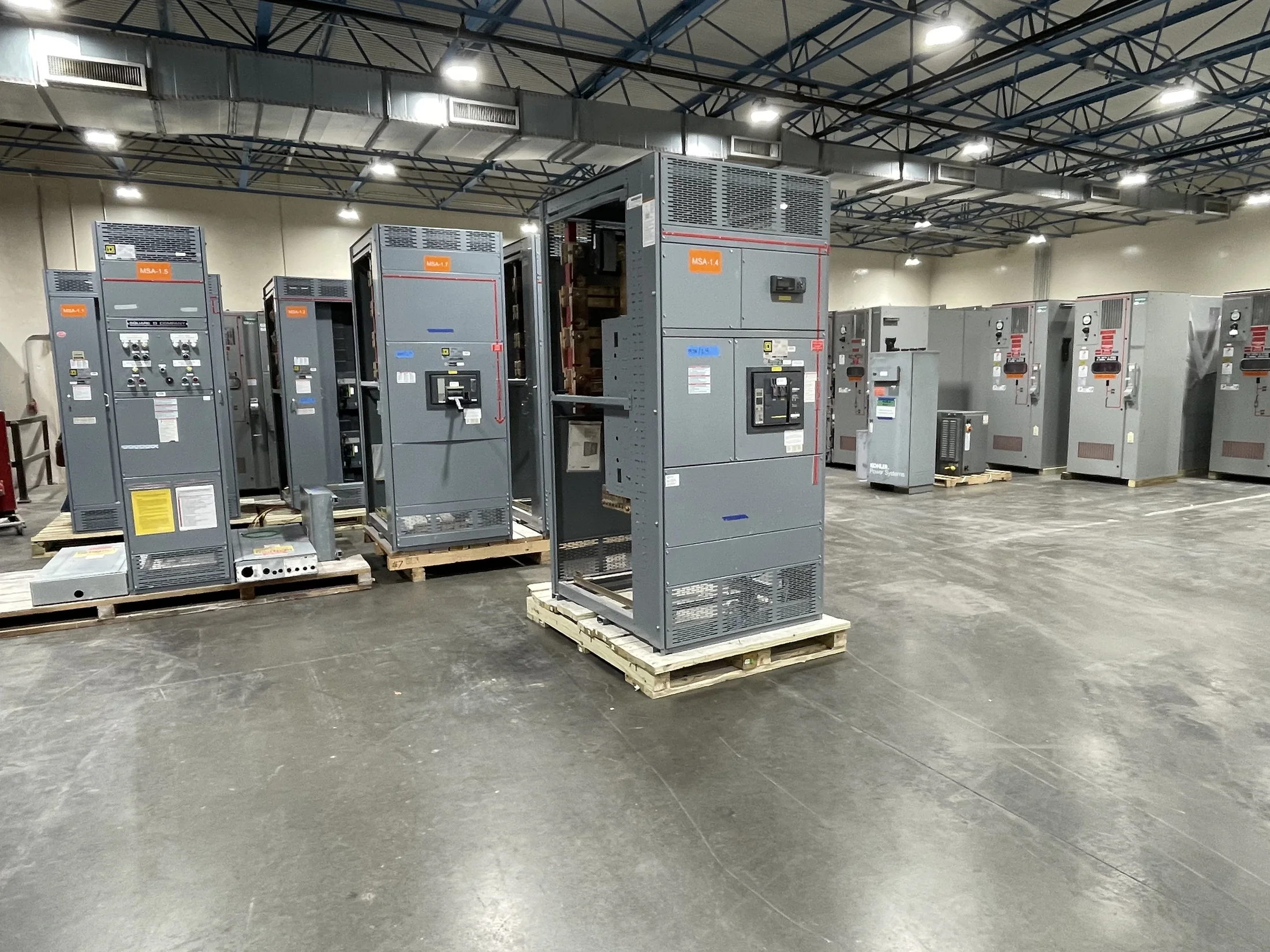
Define the Switching Application
Start with the electrical role: service entrance, feeder sectionalizing, loop switching, or isolation of a transformer or other load. These functions drive the arrangement of switches, protective devices, and cable ways. Identify normal and alternate power paths, operating sequence, and who will operate the equipment before selecting a configuration.
Confirm system voltage, continuous current, available fault current, grounding method, and required interrupting or withstand duties with the responsible engineer and utility. Pad-mounted equipment is not a single rating class, and medium-voltage designs differ from low-voltage switchboards. Do not assume a familiar enclosure or catalog arrangement suits the project.
Choose a Configuration Around the Circuit
The one-line diagram should show source and load connections, transformer interfaces, tie points, and switching states. Determine whether the project needs load-interrupting switches, fuses, circuit breakers, or a combination, then confirm protection coordination and operating requirements. Device selection and arrangement depend on the system design, not just the equipment name.
For loop-fed service, clarify whether both source ways must be switched and how the load is isolated during maintenance. Radial applications may call for a different number of ways and protective scheme. Provide a current one-line, equipment schedule, and sequence of operation so the manufacturer can develop a buildable proposal.
Coordinate Cable Interfaces Early
Cable terminations are a key enclosure and layout decision. Confirm cable type, conductor size and material, insulation class, number of parallel runs, entry direction, and termination style. Specify separable connectors or other interfaces only after the cable design and applicable equipment requirements are established by the project engineer.
Indicate whether cables enter from below, from a duct bank, or through another defined route. Provide conduit or cable locations, bend-radius limits, trench elevation, and the intended phase arrangement. These details affect compartment dimensions and working room; late changes can conflict with barriers, operating mechanisms, or neighboring cable positions.
Plan Compartments and Safe Access
Review the proposed compartment arrangement against the required operating and maintenance tasks. Identify which doors or panels must be opened, which devices need front access, and whether any equipment requires rear or side access. Confirm door swing, removable covers, lifting provisions, and clearances with the site layout and installation plan.
Access control and internal separation should follow the project specification and applicable codes, standards, and utility practices. Confirm lock provisions, labeling, interlocks, and provisions for operating tools where required. The responsible engineer should review approach space and work practices; equipment geometry alone does not establish safe working conditions.
Match the Enclosure to Site Conditions
Outdoor location requires more than choosing a weather-resistant enclosure. Document ambient temperature range, precipitation, wind exposure, altitude where relevant, corrosive or coastal conditions, dust, and expected sunlight. Confirm the specified enclosure construction and finish with the manufacturer against these conditions and the project requirements.
Also review drainage, snow accumulation, landscaping, vehicle exposure, and nearby heat sources. A pad, bollards, barriers, or other protection may be needed, subject to civil design and local requirements. Do not place access doors where fences, stored materials, parked vehicles, or adjacent equipment will obstruct operation or maintenance.
Coordinate the Pad, Ducts, and Grounding
Civil and electrical drawings should agree on pad dimensions, elevation, anchor or mounting details, conduit stub-ups, and cable entry locations. Confirm the equipment footprint and weight for the foundation design, along with any lifting or placement constraints. The pad and anchorage must be designed for actual site and equipment conditions.
Establish the grounding and bonding approach with the responsible electrical engineer, including connections to the site grounding system and any specified ground grid. Coordinate utility requirements, neutral treatment, and cable shields as applicable. Utility and AHJ review may be necessary, and their acceptance should not be presumed from a proposed equipment arrangement.
Prepare Complete Information for a Quote
A useful quotation package includes the one-line diagram, voltage and current requirements, fault-duty information, protection and switching functions, cable schedule, termination details, and applicable specifications. Add the requested standards, control or auxiliary requirements, metering needs, finish, and document submittals. Clearly mark unresolved items so assumptions can be identified and reviewed.
Include site drawings showing pad, conduits, clearances, access routes, and environmental conditions, plus the planned delivery and installation sequence. State whether the project requires utility-specific details or coordination documents. Complete inputs help the manufacturer evaluate custom fabrication, identify interface questions, and provide a scope aligned with the intended new equipment.
Review Submittals and Delivery Interfaces
Before release, compare manufacturer drawings with the approved one-line, cable schedule, civil plan, and equipment specification. Check terminal orientation, phase identification, compartment access, dimensions, lifting points, and conduit alignment. Resolve discrepancies through the responsible engineer, utility, and AHJ as applicable; a drawing review is not a substitute for design approval.
Our U.S.-built equipment uses American components, supports custom fabrication, and can be shipped nationwide. Confirm the project’s requested delivery window, shipping access, unloading responsibility, and site readiness during quotation and order coordination. Lead time depends on the final scope and material requirements, so confirm the current schedule for the specific build.