Start With What the Equipment Must Do
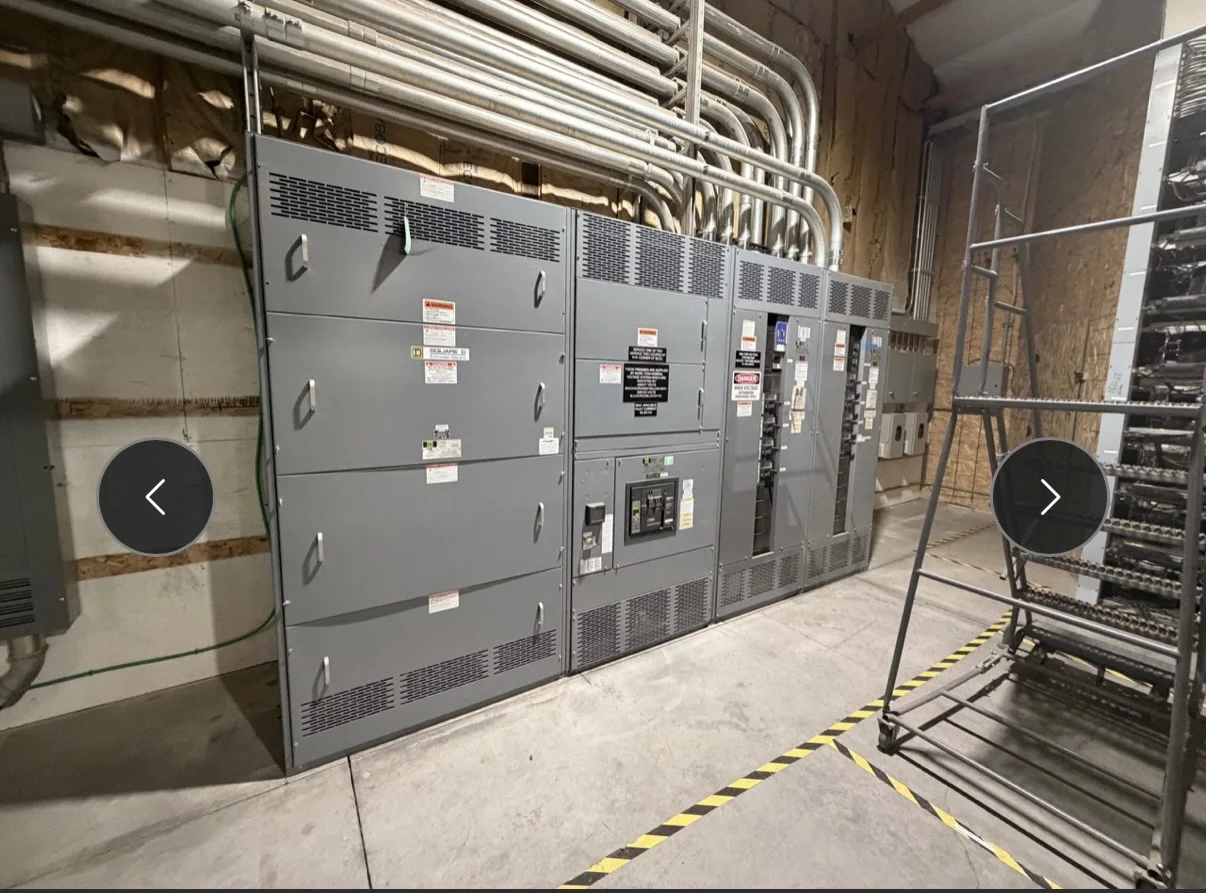
Switchgear and switchboards are assemblies used to control and distribute electrical power, but the terms do not describe interchangeable products. Their internal construction, arrangement of protective devices, applicable standards, and intended system duties can differ. A selection should begin with the one-line diagram and project specifications, not simply the name used in a budget or equipment schedule.
Both can serve as central distribution points, feed downstream panels, and include breakers or other components selected for the application. The decisive question is how the assembly must operate within the system: its voltage class, current and fault-duty requirements, service arrangement, maintainability needs, and installation constraints. Confirm terminology with the engineer of record and the equipment manufacturer before comparing proposals.
Construction and Internal Arrangement
Low-voltage switchgear is commonly built as coordinated sections with individual compartments that separate major devices and bus compartments. Depending on the design and specified construction, barriers and drawout breaker arrangements may support isolation or servicing procedures. These features are configuration-dependent; they are not implied by the word switchgear alone and should be confirmed against approved drawings and specifications.
A switchboard is generally an assembly of panels or sections arranged for power distribution, with breakers or other devices mounted in the equipment structure. Its construction and access arrangement vary by design. Compare the actual device mounting, barriers, cable access, bus layout, and maintenance clearances rather than assuming every switchboard has one fixed construction or that every switchgear lineup is fully compartmentalized.
Understand the Applicable Standards
UL 891 is a standard for dead-front switchboards. It is not the standard for low-voltage switchgear, and it does not cover medium- or high-voltage equipment. For low-voltage metal-enclosed switchgear, UL 1558 is the relevant product standard to discuss when the project calls for that equipment. Verify the specified standard and required evaluation for the proposed assembly.
Medium-voltage switchgear is a separate equipment category, with different voltage-class requirements and applicable standards than either UL 891 switchboards or UL 1558 low-voltage switchgear. Do not infer a medium-voltage rating from a low-voltage standard or product label. The responsible engineer should establish system voltage, applicable codes, utility requirements, and acceptance criteria for the specific installation.
Compare Protective Devices and Coordination
Either equipment type may be specified with protective devices suited to its design, but the device options, mounting, and operating method depend on the particular assembly. Breakers can differ in frame size, trip functions, adjustment ranges, accessories, and whether they are fixed-mounted or drawout. Confirm the required features and compatibility instead of assuming a category automatically provides a preferred breaker arrangement.
Protection must coordinate with the available fault current, upstream and downstream devices, conductor limits, and the system's operating objectives. Selectivity, ground-fault protection, arc-energy-reduction provisions, and monitoring requirements should be addressed in the project design where applicable. Ask the manufacturer to identify the proposed devices and furnish documentation needed for engineering review; do not treat a catalog description as a completed coordination study.
Match the Choice to the Application
A switchboard may suit a building service or distribution application when its construction, ratings, and device arrangement meet the design. Low-voltage switchgear may be selected where the project specifies its construction or breaker configuration, or where operational and maintenance requirements favor that arrangement. Neither category is universally superior; the correct choice depends on documented system duties and facility priorities.
For industrial plants, campuses, and critical facilities, evaluate load continuity, planned maintenance, space, personnel procedures, and the consequences of an outage. For commercial projects, service configuration, feeder count, metering, and available electrical-room space may be central. These are decision points, not guarantees associated with a product name. Have the responsible engineer reconcile operational goals with code and utility requirements.
Check Ratings, Service Conditions, and Space
Before choosing equipment, establish nominal system voltage, phase and wire arrangement, continuous current, available fault current, and required short-circuit withstand or interrupting ratings. Also identify the incoming source, main-device needs, feeder quantities, and whether future circuits are anticipated. Ratings must be appropriate for the installation and supported by the equipment design; they cannot be selected from the switchgear or switchboard label alone.
Confirm indoor or outdoor installation, ambient and environmental conditions, enclosure requirements, cable entry and exit directions, conductor sizes, and working clearances. Review room access, shipping dimensions, lifting routes, and connection space with the project team. Where the equipment interfaces with a generator, transformer, transfer equipment, or utility source, verify the complete system arrangement and interface requirements before finalizing a configuration.
Plan Integration, Operation, and Maintenance
The assembly must fit the electrical distribution plan, including bus connections, metering, control wiring, communications, and any required interlocking. Specify where these functions are needed and how they connect to other equipment. Custom fabrication can address project-specific layouts, but each requested feature must be reviewed for compatibility, engineering feasibility, and its effect on drawings, construction, and schedule.
Maintenance planning should consider device access, safe work procedures, isolation points, spare parts, and the skills available to facility personnel. A drawout device, if specified, does not replace established operating procedures or determine maintenance intervals. Confirm that the proposed arrangement aligns with the facility's practices and applicable safety requirements, and have qualified personnel review operating and maintenance documentation.
Prepare a Complete Equipment Inquiry
A useful request for quotation includes the one-line diagram, equipment schedule, project specifications, system voltage, main and feeder data, available fault current, and required ratings. Include the applicable standard, device preferences, metering or control requirements, enclosure conditions, cable details, and preferred lineup dimensions. Identify options as required, preferred, or open for review so the manufacturer can clearly resolve questions.
Also provide the project location, requested delivery window, drawing-submittal needs, shipping constraints, and any utility or consultant requirements. A U.S. manufacturer can build new switchboards and switchgear with American components, custom fabrication, short lead times, and nationwide shipping; actual scope and timing depend on the design and order. Review proposed drawings with the responsible engineer, utility, and AHJ as applicable before release.
Make the Decision From the Project Design
In short, compare equipment construction and device arrangement, then verify the governing standard for the voltage class and equipment type. UL 891 switchboards and UL 1558 low-voltage switchgear are distinct categories; medium-voltage equipment requires its own applicable standards and engineering review. The specification should name the intended equipment clearly and state measurable electrical and installation requirements.
If the project documents use switchgear and switchboard inconsistently, request clarification before procurement. Confirm ratings, protective-device details, construction, interfaces, dimensions, and submittal requirements in writing. The manufacturer can help develop a buildable configuration from the project information, while the engineer of record remains responsible for system design and coordination, with utility and AHJ review where relevant.