Where Each Fits in the Distribution System
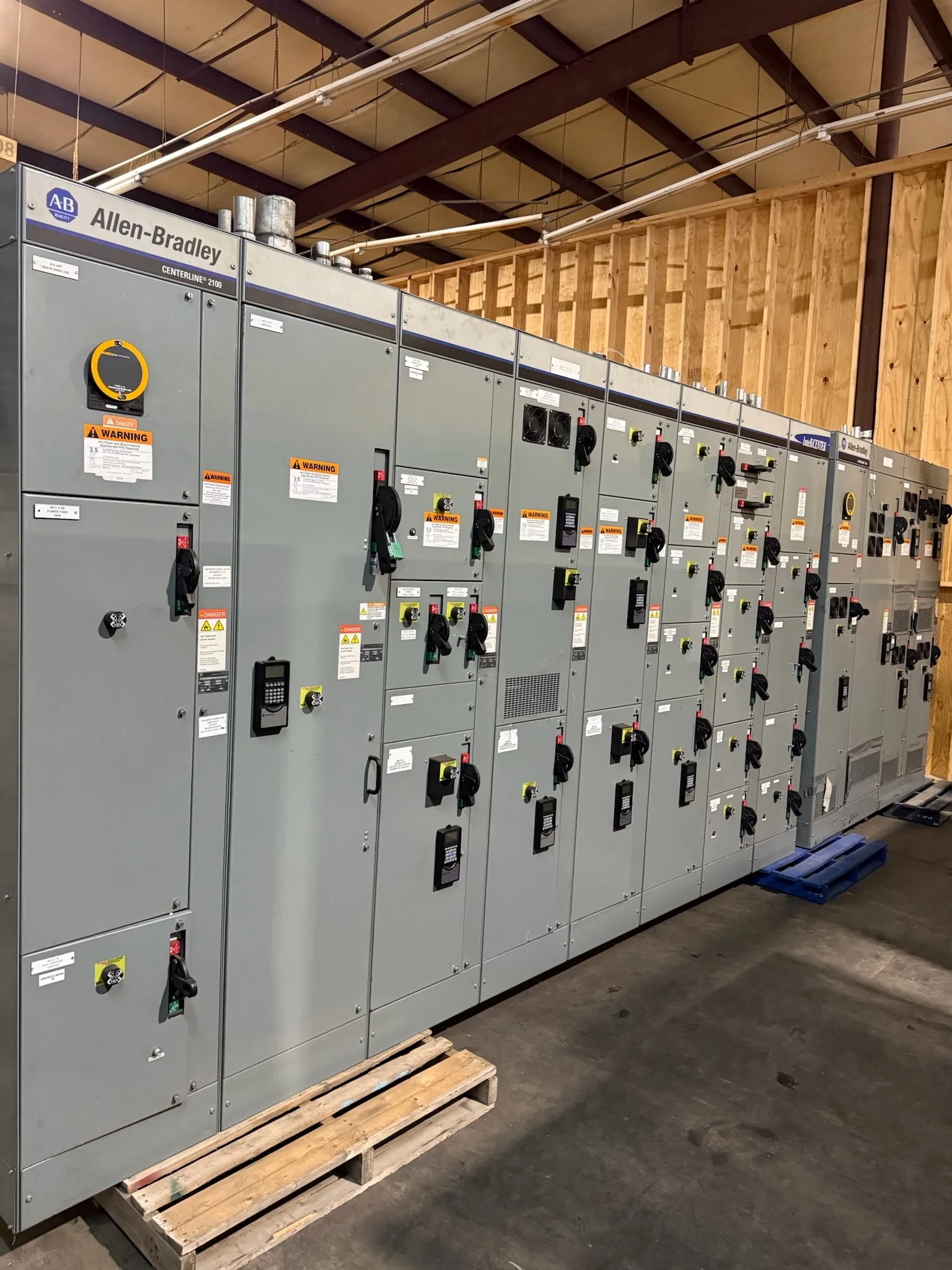
Switchgear generally serves as major distribution equipment, receiving power from a utility service, transformer, or generator and directing it to large downstream loads or distribution sections. A panelboard typically sits farther downstream, supplying branch circuits to lighting, receptacles, small equipment, or other defined loads. The actual arrangement depends on the one-line diagram.
These names describe common roles, not an automatic hierarchy or a fixed system design. A facility may use switchboards, switchgear, panelboards, motor control centers, or other assemblies at different points. The responsible engineer should confirm the equipment function, source and load relationships, and applicable code requirements for the specific installation.
Construction and Circuit Capacity
Low-voltage switchgear is commonly arranged in sections with individually compartmented devices, bus, and wiring spaces configured for the specified service and feeder requirements. A panelboard is generally a compact assembly of bus and overcurrent devices in an enclosure, with branch-circuit positions organized for a particular voltage, phase, and load arrangement.
Configuration choices are project-specific. Confirm incoming and outgoing conductor arrangements, breaker or fusible-device requirements, neutral and ground provisions, enclosure type, access and working clearances, and space for future circuits. Do not assume that either category automatically provides a particular compartment design, drawout construction, device type, or expansion capacity.
Protection and Switching Duties
Both types of equipment can provide overcurrent protection and switching, but the devices and duties differ with the system design. Main distribution equipment may coordinate service, tie, feeder, or large-load functions. Panelboard devices commonly protect individual branch circuits. The engineer must select ratings and protective functions based on calculated loads and fault conditions.
Short-circuit current ratings, interrupting ratings, selective coordination, ground-fault protection, and available fault current deserve careful review. These values are not interchangeable, nor can they be inferred from an equipment label alone. Confirm the utility or source contribution, upstream protective devices, conductor details, and applicable code and project criteria before finalizing a specification.
Standards Are Not Interchangeable
UL 891 applies to switchboards, while UL 1558 applies to low-voltage switchgear. These are distinct equipment categories and standards; a designer should not specify one as a substitute for the other without checking the intended construction and listing requirements. Panelboards are evaluated under a different product standard, appropriate to their construction and application.
Medium-voltage equipment is a separate category with different insulation, switching, protection, and installation considerations. Neither UL 891 nor UL 1558 should be presented as covering medium- or high-voltage equipment. Confirm the system voltage, equipment classification, required certifications, and acceptance criteria with the engineer, utility, and authority having jurisdiction.
Choosing the Right Point of Distribution
Start with the loads and their location in the distribution system. Large feeders, service functions, source transfer arrangements, or centralized distribution may call for a switchgear or switchboard evaluation. A group of lower-level branch circuits near the served loads may be better organized with panelboards. The one-line diagram should show the intended relationships.
Physical conditions also affect the choice: available electrical-room space, access for operation and maintenance, cable entry direction, routing, environmental exposure, and required working clearances. Confirm whether equipment must be installed indoors or outdoors and whether the room layout supports the proposed assembly. These are design checks, not features to assume from the equipment category.
Coordination, Metering, and Future Needs
Protection coordination should be assessed across the complete system, from the source through main distribution to branch circuits. Device settings, trip functions, fault levels, and the operating sequence can influence equipment selection and configuration. Where metering, communications, or monitoring are needed, identify the required points, signals, protocols, and interfaces early.
Future capacity should be defined rather than described only as room to grow. Provide expected spare circuit counts, anticipated load additions, and any required provisions for future sections or devices. Confirm whether the design calls for installed spare devices, blank positions, or simply physical space. Each option affects layout and should be reviewed by the project engineer.
Information to Provide for a Quote
A useful request for new equipment should identify the equipment role, nominal voltage, phase and wire count, service or feeder configuration, bus and device requirements, and applicable standard. Include the one-line diagram, load schedule, available fault-current information, protective-device preferences, enclosure requirements, and project specifications when available.
Also provide installation location, conductor entry and termination details, dimensions or room constraints, metering and control needs, and the required submittal or delivery milestones. Note any utility or AHJ requirements and identify who will approve the final design. A manufacturer can review the information and clarify open items before preparing a project-specific proposal.
New Equipment Built for the Application
A manufacturer-built assembly can be configured around documented project requirements rather than treated as a generic replacement for every distribution need. We manufacture and supply new switchgear, switchboards, and power distribution equipment in the United States using American components, with custom fabrication options for specified layouts and interfaces.
Short lead times and nationwide shipping are available considerations, but schedules depend on the approved scope, components, design review, and production requirements. For Ohio projects and customers elsewhere, verify delivery, installation, and approval needs during planning. Have the responsible engineer check the proposed equipment against the system design, utility requirements, and AHJ direction.