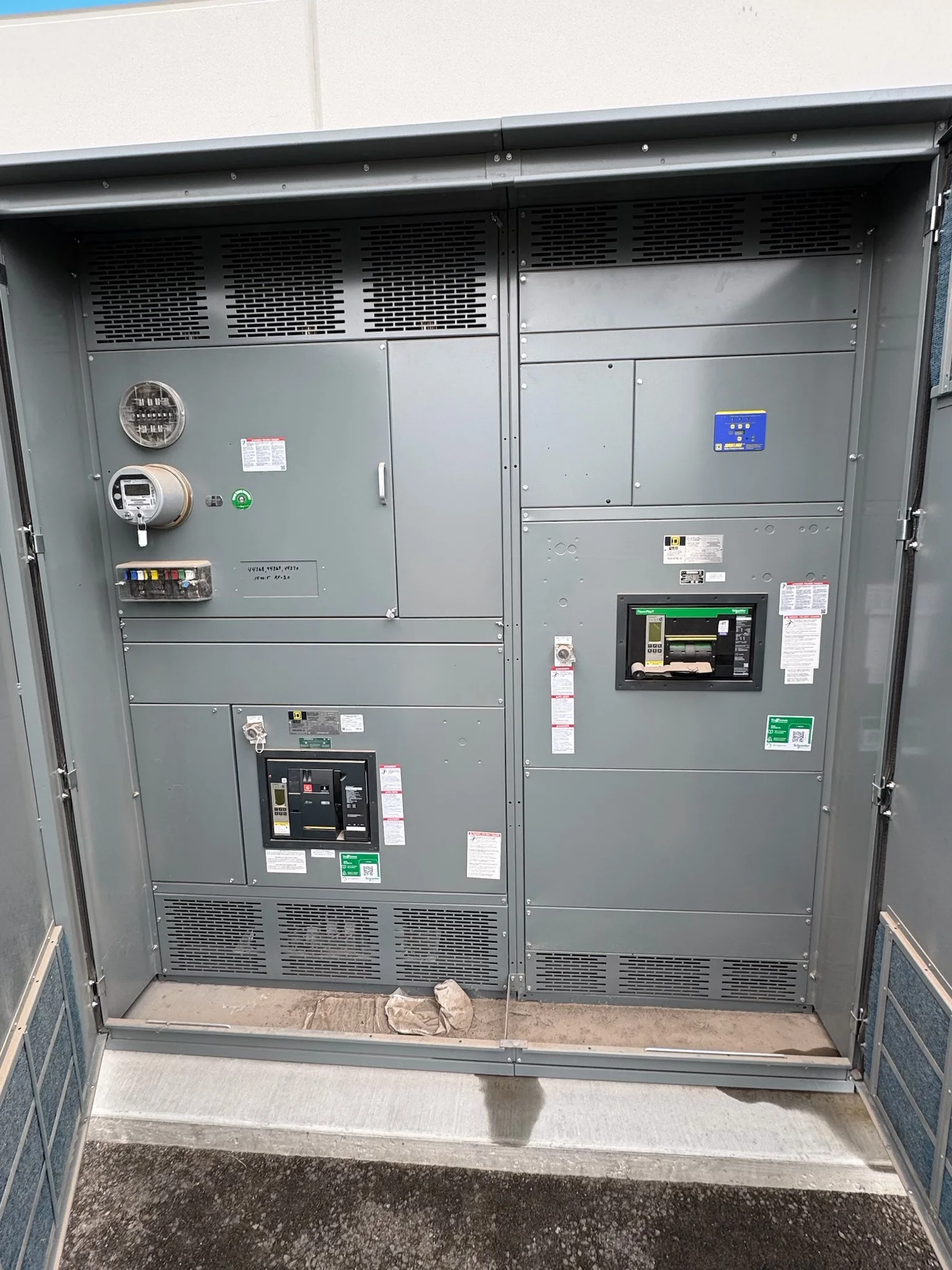
What the Term Means
Arc-resistant equipment is constructed and evaluated to control specified effects of an internal arcing fault, such as hot gases, pressure, and expelled material, for a defined arrangement and test condition. The term describes a design and test objective, not immunity from faults or a guarantee that people can remain near equipment during every event.
Performance depends on the tested construction, fault-current level, duration, access conditions, and installation details. The applicable standard and product category matter: low-voltage switchgear, switchboards, and medium-voltage equipment are not interchangeable terms. Confirm the equipment type and governing test basis before comparing proposals or treating an arc-resistant designation as a complete safety assessment.
What Testing Establishes—and Does Not
A test evaluates a representative equipment configuration under stated conditions, including specified fault current and time. The test’s acceptance criteria address defined effects at designated locations; they do not establish protection against every possible fault, installation error, maintenance condition, or exposure. Ask for the applicable standard, test configuration, and ratings that support the offered design.
Do not infer a specific arc rating from the phrase alone. Verify whether documentation applies to the proposed lineup, voltage class, compartments, doors, and exhaust arrangement. Changes to dimensions, components, barriers, or field connections may affect applicability. The responsible engineer should review the evidence and determine how it fits the project’s risk assessment and operating procedures.
Equipment Types and Standards
For low-voltage distribution, UL 891 applies to switchboards; it is not a medium- or high-voltage equipment standard. Low-voltage metal-enclosed switchgear is a distinct equipment category, commonly evaluated under UL 1558 when that standard applies. Arc-resistant design or testing should be discussed separately from basic product category and listing requirements.
Medium-voltage switchgear has different insulation, switching, protection, and test considerations from low-voltage assemblies. Specify system voltage and equipment type rather than relying on a broad label. Confirm the applicable standard and documentation for the actual product and configuration; do not assume a low-voltage standard or test result establishes medium-voltage performance.
Configuration and Exhaust Path
Arc-resistant performance can depend on how the lineup is arranged and where fault gases are directed. Depending on the design, an exhaust path may route upward or through a plenum, duct, or other specified passage. Required clearances, ceiling conditions, room layout, and outlet location therefore belong in early coordination, not as afterthoughts.
Confirm whether the project needs restricted or unrestricted access conditions, front-only or other access, and which sides may be exposed to personnel. These terms have specific meanings in the applicable test basis. A wall, cable trench, adjacent equipment, or field-added obstruction can conflict with the tested arrangement, so review the installation drawings before release.
Protection and Fault Conditions
The protective device and its clearing time are central to the conditions an arc-resistant design is evaluated against. Obtain available fault current, upstream protection information, and expected clearing times from the project study. Confirm that the proposed equipment’s documented test conditions align with those values and the intended system configuration.
Protection settings, relays, current transformers, and coordination choices affect system behavior and should be reviewed together. Faster clearing may reduce exposure, but it is not a substitute for appropriate equipment selection, maintenance, safe work practices, and a project-specific hazard assessment. Have the responsible engineer verify coordination, utility data, and any assumptions before finalizing the specification.
Installation, Operation, and Limits
The equipment must be installed in the arrangement represented by its documentation, including required clearances, anchorage, doors, covers, and exhaust components. Cable entry, conduit, grounding, and connections should follow approved drawings and manufacturer instructions. Field modifications or omitted parts can change the assembly and may invalidate reliance on a tested configuration.
Arc-resistant construction does not make energized work safe or remove the need for an electrical safety program. Workers still need appropriate procedures, training, boundaries, and protective measures based on the task and risk assessment. Maintenance condition also matters: inspect and service equipment as specified, and investigate damage or unauthorized alterations before returning it to service.
Selecting a Suitable Design
Start by identifying the distribution function, nominal voltage, continuous load, available fault current, and required arrangement. Then define access sides, room constraints, cable entry, exhaust routing, and any applicable customer or utility requirements. These project inputs help determine whether an arc-resistant option is feasible and what documentation must accompany the proposed assembly.
Balance the intended protection objective against footprint, installation complexity, maintainability, and future expansion. Confirm that the desired construction is available for the selected equipment category and that the evidence covers the project’s configuration. A qualified engineer should check the design against applicable codes, coordination studies, utility requirements, and the authority having jurisdiction.
Information to Provide for a Quote
For a useful quotation, provide a one-line diagram, equipment schedule, voltage and phase, bus and feeder requirements, available fault-current data, and protective-device details when available. Include the requested standard, any arc-resistant test basis or access condition, and project drawings showing room dimensions, adjoining walls, ceiling height, and exhaust destination.
Also identify delivery location, schedule constraints, cable-entry preferences, environmental conditions, and required submittals. The manufacturer can review these inputs to develop a custom-fabricated new equipment proposal; unresolved engineering assumptions should be clearly noted rather than treated as guaranteed features. U.S.-built equipment using American components can be supplied nationwide, with lead time confirmed for the specific scope.