Two Ratings Answer Different Questions
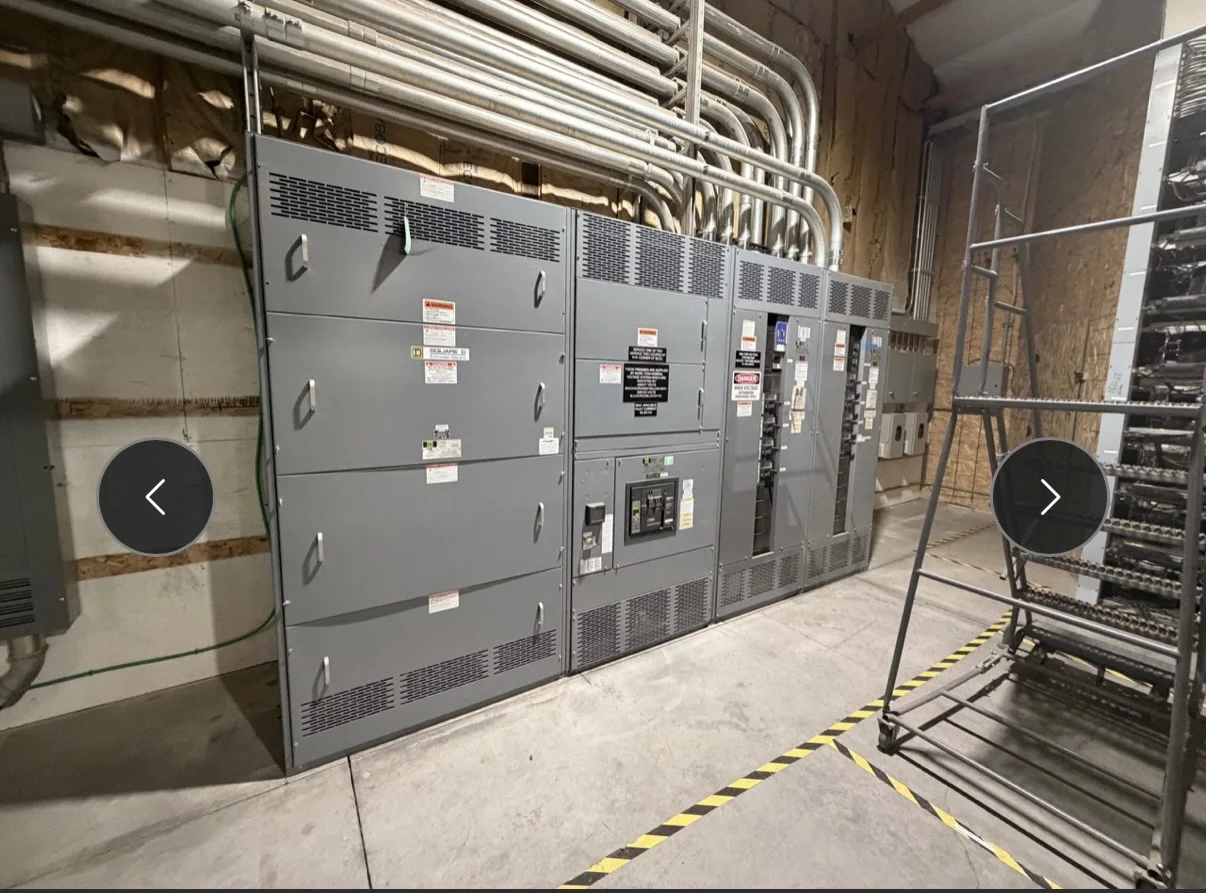
Short-circuit current rating, or SCCR, applies to an electrical assembly: it indicates the maximum prospective short-circuit current the assembly can withstand under specified conditions. It addresses the assembly as a configured unit, including its bus, supports, devices, and other relevant components—not just one breaker inside it.
Interrupting rating applies to a circuit breaker or fuse. It states the maximum short-circuit current that device can safely interrupt at a stated voltage and under applicable conditions. A device’s ability to open a fault does not, by itself, establish the withstand capability of the switchboard or switchgear containing it.
Why Neither Rating Replaces the Other
A protective device may have an interrupting rating high enough for the available fault current, while the assembly’s SCCR is lower. In that case, the device might interrupt the fault, but the assembly may not be suitable for the available current. Conversely, a strong assembly does not compensate for a device unable to interrupt that current.
The design must coordinate the available fault current at the equipment location with both ratings and the specified protective arrangement. Compare values at the applicable system voltage, and consider the exact configuration and conditions used to establish them. Do not select equipment by comparing a single label value without reviewing its context.
Establish Available Fault Current First
Available fault current is the prospective short-circuit current at a particular point in the electrical system. It depends on factors such as the utility source, transformer characteristics, conductor impedance, and system configuration. The value can differ between service equipment and downstream distribution, so a project-wide estimate may not answer every equipment question.
For a specification or quote, provide the responsible engineer’s fault-current study or the best verified source data available. Identify voltage, transformer information, service arrangement, and the equipment location. Confirm assumptions with the utility where necessary, then have the responsible engineer determine the applicable current and evaluate changes that could affect it.
Assembly Configuration Sets the Context
SCCR is tied to the actual assembly configuration, not simply its general product category. Bus construction, installed protective devices, feeder arrangements, and any tested or evaluated protective combination can affect the rating. A substitution or field change may alter the basis for the stated SCCR, even when the enclosure or lineup appears unchanged.
When comparing proposed equipment, review the manufacturer’s documentation for the complete assembly and the specific configuration being supplied. Confirm that the arrangement, voltage, and protective-device details match the project. Do not assume an SCCR transfers automatically to another lineup, a different device, or a revised one-line diagram.
Protective Device Ratings Need Exact Matching
Interrupting ratings depend on the protective device and its application conditions. Check the device type, catalog identification, voltage, and applicable rating rather than relying on frame size or a broad product description. A rating stated at one voltage should not be presumed valid at another without confirmation from the device documentation.
If a series-rated or other tested protective combination is proposed, verify that the exact upstream and downstream devices, ratings, and installation conditions are permitted by the applicable documentation and code requirements. Such a combination is not a general assumption. The responsible engineer should confirm its suitability for the specific system and equipment configuration.
Match Equipment Type to Its Applicable Standard
For low-voltage distribution, distinguish a UL 891 switchboard from UL 1558 low-voltage switchgear. They are different equipment categories, and the project specification, construction, and evaluation basis should identify the intended type. Neither standard should be treated as a universal substitute for checking the assembly’s applicable short-circuit rating.
Medium-voltage equipment has separate design and rating considerations; UL 891 does not cover medium- or high-voltage equipment. State the system voltage and equipment application clearly when requesting a design or quote. The responsible engineer should confirm the applicable standards and requirements with the utility and authority having jurisdiction where relevant.
What to Provide for a Useful Equipment Quote
A useful quote package identifies the required equipment type, nominal voltage, phase, service or feeder arrangement, one-line diagram, and available fault-current information. Include the desired SCCR or project fault-current requirement, breaker or fuse details, and any required protective-device coordination or series-rating basis, if applicable.
Also provide enclosure and installation conditions, incoming and outgoing connections, metering or control needs, and project specifications that affect fabrication. Flag substitutions, future expansion, and interface constraints early. These details help the manufacturer assess the proposed configuration; they do not establish an unverified rating or guarantee a particular device combination.
Verify the Final Design and Documentation
Before release, compare the equipment submittal with the one-line diagram, fault-current study, and project specification. Check assembly SCCR separately from the interrupting ratings of installed protective devices, and confirm each value applies at the system voltage and in the supplied configuration. Resolve discrepancies before procurement or installation.
A U.S. manufacturer building new switchboards and power distribution equipment with American components can review project requirements and provide custom fabrication, short lead times, and nationwide shipping. Ask what information is needed for the proposed design. The responsible engineer, utility, and AHJ should verify system assumptions and code compliance as applicable.