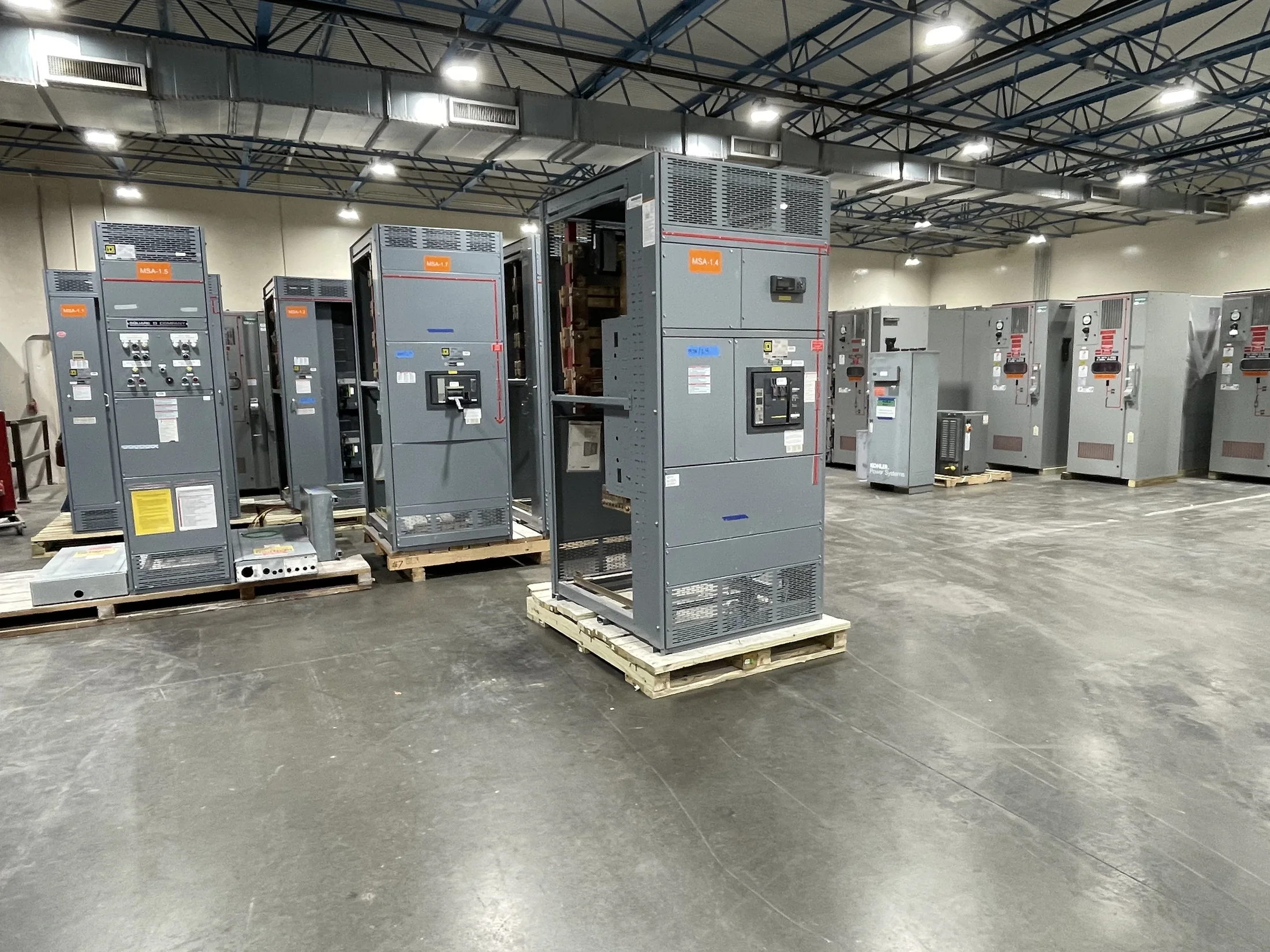
Start with the equipment’s job
Describe the work the equipment must perform: distribute power to facility loads, switch and protect feeders, control motors, or replace an existing lineup with newly manufactured equipment. Identify the application and project stage, such as a new facility, expansion, or planned upgrade. This context helps frame the quote around the actual scope.
If the request covers several equipment types, list each separately and explain how they connect. A distribution switchboard, low-voltage switchgear lineup, and motor control center serve different functions and may require different design information. Note which items are included in the request and which related equipment will be supplied by others.
Provide electrical ratings and system details
Share the system voltage, phase, frequency, and conductor arrangement, along with the equipment’s intended continuous current rating if known. Include the available fault current or source information used to establish it, and identify the upstream protective device. These values are project inputs to verify, not assumptions that should be inferred from a general description.
For multiple sources, identify utility service, generators, transformers, and any alternate feeds. Explain whether sources operate separately or in parallel and whether transfer or tie functions are required. The responsible engineer should confirm the one-line diagram, coordination approach, grounding method, and applicable system calculations before final equipment design.
Clarify construction and protection needs
Describe the desired arrangement: main devices, feeder count and sizes, bus or tie sections, metering, and any spare or future provisions. For motor control, provide motor quantities, horsepower or load data, starting methods, and whether starters, drives, or other control components are in scope. Identify required control voltage and interface points when established.
List protective, monitoring, and control functions that the project requires, such as relaying, communications, alarms, or remote operation. State preferred device types or manufacturer constraints only when they are genuine project requirements. The final configuration depends on engineering review, selected components, and the applicable equipment standard and listing scope.
Identify the correct equipment category
For low-voltage distribution, distinguish a UL 891 switchboard from UL 1558 low-voltage switchgear in the request. Their construction and application differ, so provide the project specification or design basis rather than treating the names as interchangeable. The applicable product standard, configuration, ratings, and listing requirements must be confirmed for the specific build.
If the project involves medium-voltage switching, state the system voltage and describe the required lineup and switching function. Medium-voltage equipment is a distinct category; UL 891 applies to switchboards, not medium- or high-voltage equipment. Provide the governing specification and ask the responsible engineer to confirm standards, protection, and utility requirements.
Share drawings, dimensions, and site conditions
Attach the latest one-line diagram, equipment schedule, and written specification when available. Mark preliminary documents as such and call out unresolved items. Existing photographs or drawings can help explain interfaces, but the quote should be based on the intended new equipment scope, not an assumption that old dimensions or connections remain suitable.
Provide available room dimensions, access and handling limits, cable entry direction, conduit locations, and installation orientation. Note indoor or outdoor placement and any known environmental, seismic, corrosion, or enclosure constraints. Confirm site conditions, working clearances, and installation details with the project engineer and authority having jurisdiction where applicable.
Explain the project schedule and delivery plan
Give the requested delivery window, required-on-site date, and major project milestones, including drawing review, release for manufacture, shutdowns, or commissioning. Identify schedule dependencies and whether the date is fixed or preferred. Short lead times may be available depending on the design, component availability, approval process, and manufacturing workload; timing is confirmed against the specific scope.
Provide the delivery destination, receiving limitations, and whether shipment needs coordination with a jobsite or staging location. Nationwide shipping is available, but access, unloading equipment, appointment rules, and delivery sequence can affect planning. Include the contractor or receiving contact when known, and distinguish requested delivery from installation or commissioning services.
Define documentation and commercial scope
List required submittals and closeout documents, such as drawings, bills of material, wiring information, manuals, or test documentation, where applicable to the project. Identify review deadlines and any required formats. Do not assume a particular approval, test, rating, or listed status; requirements must be evaluated for the proposed configuration and stated in the quote.
Clarify whether the inquiry includes equipment only or also accessories, field services, startup support, or coordination with other vendors. Provide the project name, purchasing organization, and preferred contact details so questions can be routed efficiently. Custom fabrication and U.S. manufacturing with American components can be considered within the project scope.
Send the request for technical review
Before submitting, check that the equipment function, quantity, system data, key options, drawings, and schedule are included. If a value is unknown, label it as pending rather than guessing. A clear list of open questions helps distinguish quote assumptions from confirmed requirements and reduces the risk of comparing proposals built around different scopes.
After review, the proposed scope may require clarification or engineering coordination before it can be finalized. Have the responsible engineer verify design decisions, and consult the utility and AHJ when their requirements apply. A quote is based on the information provided; approved drawings and agreed specifications govern the final new equipment build.