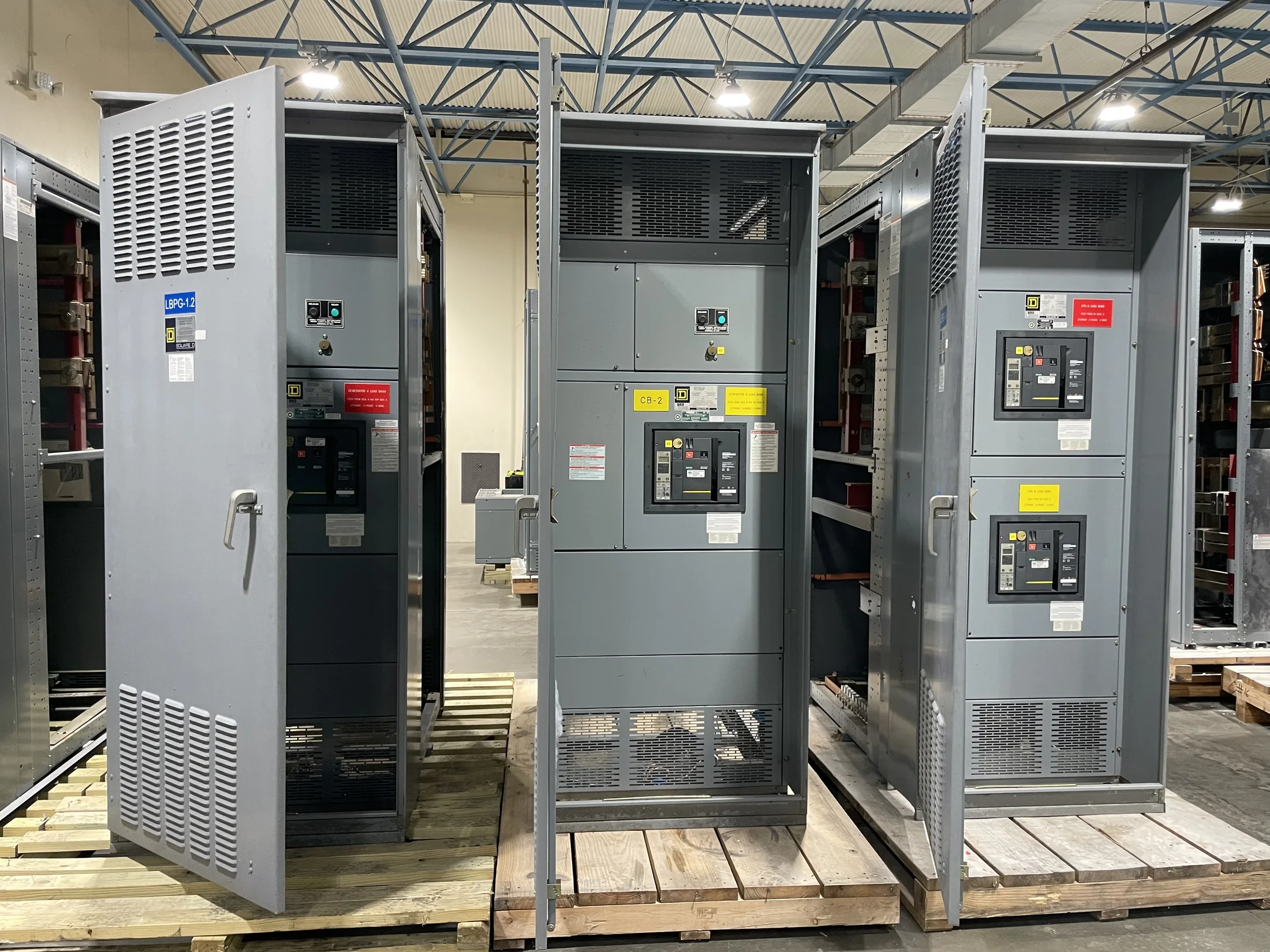
What Available Fault Current Describes
Available fault current is the current a power system can deliver at a particular point during a short circuit. It depends on sources, transformers, conductors and system configuration, so it is not one universal value for an entire facility. Engineers use it to assess equipment duty at each relevant location.
The value is usually expressed as symmetrical RMS amperes, with peak and asymmetrical effects also relevant to equipment withstand. The responsible engineer should identify the calculation basis, system voltage and operating configuration. A number without its location and assumptions can mislead equipment selection or a later review.
Why Ratings Must Match the Installation
Switchgear and distribution equipment must have ratings appropriate to the fault current available where they will be installed. If the calculated duty exceeds an applicable rating, equipment may be exposed to mechanical or thermal stresses beyond its evaluated capability. A rating comparison therefore needs consistent voltage, current and fault-duty definitions.
For low-voltage applications, distinguish UL 891 switchboards from UL 1558 low-voltage switchgear; they are different equipment categories and standards. Medium-voltage equipment requires its own applicable ratings and standards. UL 891 does not cover medium- or high-voltage equipment, and a product category alone does not establish adequate fault duty.
Protective Devices Need Interrupting Capacity
Circuit breakers and fuses need an interrupting rating suitable for the fault current available at their installation point, at the applicable system voltage. A device that cannot interrupt the prospective current may not safely clear the fault. The engineer must also consider how the device is applied within the assembly and system.
A series-rated combination may be permitted only when the specific upstream and downstream devices are evaluated and applied under applicable rules. It should not be assumed from breaker brands or nominal sizes. Provide the proposed device arrangement and supporting design basis for review by the responsible engineer and, where applicable, the AHJ.
Withstand and Short-Circuit Current Ratings
Assembly withstand capability and a protective device’s interrupting rating address related but distinct questions. Switchboards and switchgear may have short-circuit current ratings, while a breaker has an interrupting rating. The selected combination and protection scheme must be suitable for the available fault current, not just for normal load current.
Confirm the equipment rating at the specified voltage and configuration, including any conditions tied to upstream protection or tested combinations. Do not infer a rating from enclosure size, bus dimensions or a single component label. Submittals should identify the intended protective devices and applicable assembly rating for engineering review.
Fault Current Can Change Over Time
Utility source conditions, transformer replacement, generator additions, parallel operation and changes to feeder length or conductor size can alter available fault current. A facility’s older study may no longer describe the present installation. Confirm whether the value reflects normal and alternate operating arrangements, including ties that can connect additional sources.
Distributed generation and energy storage can contribute fault current, with contribution depending on source technology and controls. Their effect is not captured by assuming utility data alone is complete. Ask the engineer to evaluate relevant sources and operating modes, and to identify the study date and system changes since the calculation.
Location, Voltage and Configuration Matter
Fault current generally changes as power passes through transformers and conductors, so a value at the service entrance may not apply to a downstream panel or lineup. Request the calculated duty at the equipment connection point. Include transformer impedance, conductor material and length, and the source arrangement when available.
Equipment configuration can also affect selection: service entrance use, main and tie arrangements, feeder counts, bus sections, voltage and phase should be defined. For medium-voltage projects, identify the system voltage class and relevant switching and protective devices. The responsible engineer must establish which standards and ratings apply to the design.
Information to Provide for a Quote
A useful quote request includes the one-line diagram, system voltage, available fault current at the proposed connection, study basis and known utility source data. Also provide transformer details, incoming and outgoing feeder requirements, main or tie configuration, intended protective devices, enclosure conditions and any specified equipment standard.
If fault-duty information is missing or uncertain, state that clearly rather than substituting an unverified estimate. The manufacturer can review the supplied scope and identify information needed to define the equipment build, but the responsible engineer must establish or validate system calculations. Utility confirmation and AHJ review may also be needed.
Coordinate the Design Before Release
Fault-duty selection connects equipment ratings with protection, coordination and system changes. The engineer should verify interrupting capacity, assembly short-circuit rating, voltage, protective-device application and any conditions governing a combination. Coordination objectives and incident-energy analysis are related engineering tasks, but they do not replace checking equipment fault ratings.
A U.S. manufacturer can custom-fabricate new switchgear and power distribution equipment for projects in Ohio and nationwide, with short lead times and nationwide shipping. Confirm project-specific requirements, drawings, ratings and review responsibilities before release. The final design should be checked by the responsible engineer and, where relevant, the utility and AHJ.