Start with the Project and Purchase Question
Use this contact route to ask about purchasing new switchgear and power distribution equipment built by our U.S. manufacturing team. You may be developing a budget, comparing configurations, preparing a bid, or resolving a procurement detail. Tell us which decision is pending so the response can address the actual project need.
Include your organization, project location, preferred contact method, and schedule milestones. If plans are preliminary, say so rather than estimating details as confirmed. A clear distinction between established requirements, assumptions, and open questions helps us determine what information is needed before preparing a useful response or proposal.
Describe the Equipment and Electrical System
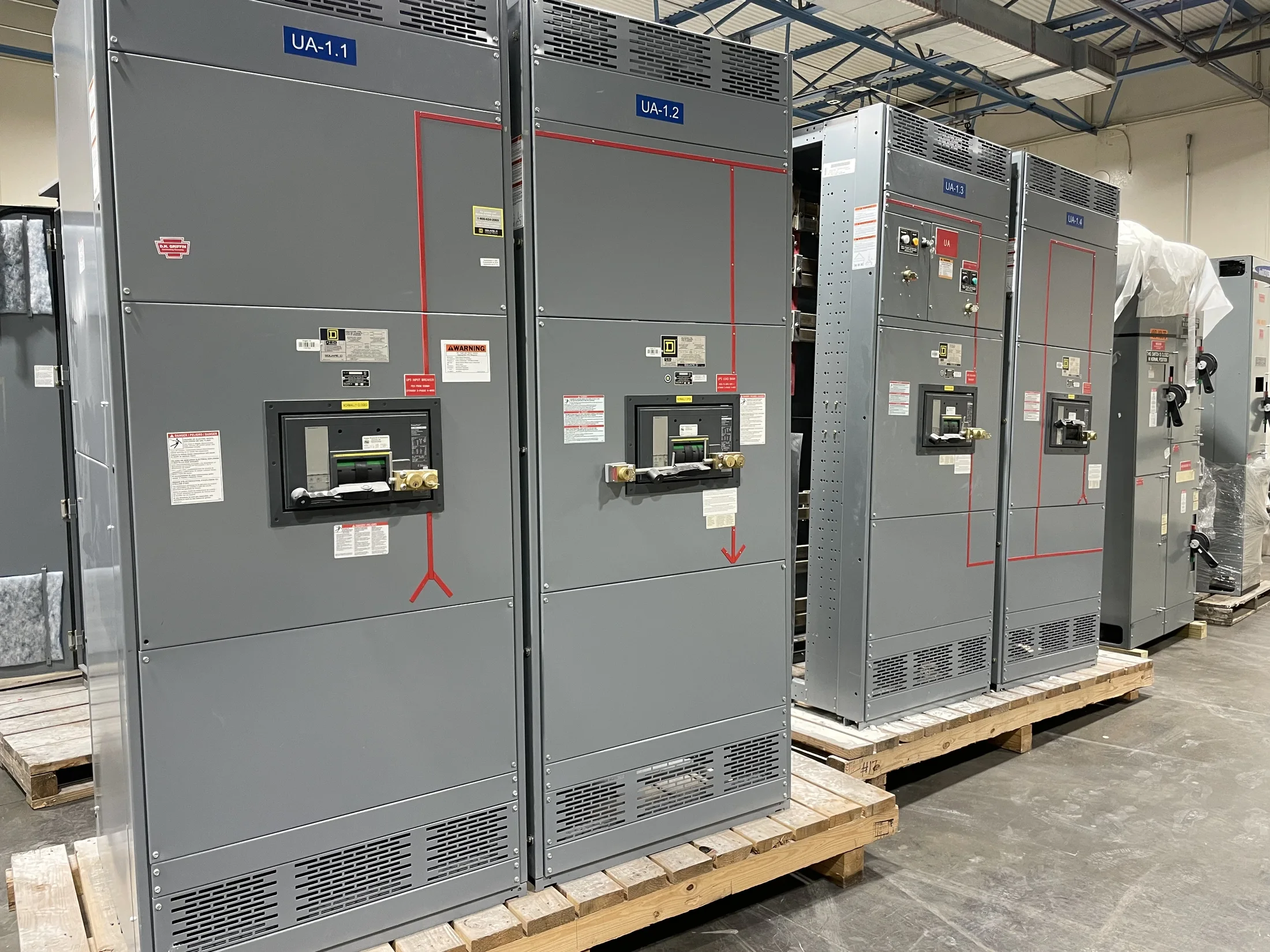
Identify the equipment under consideration, such as a low-voltage switchboard, low-voltage switchgear, or medium-voltage assembly. These categories are not interchangeable. For example, UL 891 applies to switchboards, while UL 1558 applies to low-voltage switchgear; neither designation should be used to describe medium-voltage equipment.
Share system voltage, phase and frequency, service or distribution role, and available fault-current information if established. Indicate whether the lineup is indoor or outdoor and note its connection to transformers, generators, utility service, or downstream panels. The responsible engineer should verify design inputs and applicable ratings for the actual installation.
Clarify Proposal Scope and Boundaries
For a proposal request, specify the quantity and intended scope: complete lineup, replacement assembly for a defined application, or equipment associated with a particular project package. Identify included sections, incoming and outgoing connections, metering, protective devices, and accessories when known. Attach schedules or one-line diagrams if available and approved for sharing.
State what the proposal should address and what remains outside the equipment scope, such as field installation, site wiring, commissioning, or coordination studies. Those responsibilities depend on the project contract and design. Ask about assumptions or exclusions that could affect comparison, so procurement and engineering teams can review scope consistently.
Provide Constraints That Shape Configuration
Physical and electrical conditions can influence a build. Provide available room dimensions, access routes, mounting conditions, cable entry preferences, and required working clearances where documented. Note environmental exposure, elevation, ambient conditions, seismic or other project criteria only when specified; each requirement needs review against the intended equipment and installation.
For electrical coordination, share the one-line diagram, bus arrangement, device schedule, grounding approach, and protection requirements as applicable. Indicate whether the project requires specific metering, communications, interlocking, or compartment arrangements. These are design inputs to confirm, not assumed features. The responsible engineer, utility, and authority having jurisdiction should review requirements where relevant.
Plan Delivery Around Site Readiness
For delivery planning, provide the needed-at-site date, destination, receiving hours, unloading capability, and any access or carrier restrictions. Explain whether the date is firm or a planning target. Shipping arrangements and production timing depend on the finalized configuration, approved information, material availability, and project coordination; avoid treating an early estimate as a commitment.
Mention construction sequencing, storage limitations, phased delivery needs, and coordination with other equipment if these affect the plan. Confirm who will receive the shipment and whether the site can accommodate the proposed delivery method. Our team manufactures in the United States and ships nationwide; project-specific routing and timing should be discussed directly.
Identify Documentation Needed for Review
List the documents required for purchasing, engineering review, submittal, installation, and turnover. Depending on project scope, these may include proposed equipment descriptions, drawings, dimensional information, product data, wiring details, or operation and maintenance materials. State required formats, review milestones, and any customer or consultant templates that must be followed.
Distinguish documents needed with the proposal from those required after an order or during submittal review. If specifications call for particular standards, labels, or test documentation, provide the exact language for evaluation. Applicable documentation and product details must be confirmed for the specific build; do not assume every item applies to every configuration.
Prepare Useful Files and Follow-Up Details
Useful attachments may include a specification, one-line diagram, equipment schedule, room layout, cable information, and project milestone list. Identify each file's revision and status, and flag conflicts or pending changes. If drawings are not ready, send a concise description of the unresolved items and ask what preliminary information would help advance the discussion.
Include the project name or reference number in your message and identify the person authorized to resolve technical or commercial questions. Note whether a contractor, engineer, owner, or purchasing agent is coordinating the inquiry. Protect sensitive information using your organization's approved process, and share only files appropriate for proposal review.
What Happens After You Contact Us
We can review the inquiry for equipment scope, missing inputs, delivery considerations, and requested documentation, then identify questions that need clarification. Custom fabrication and short lead times may be relevant to a project, but feasibility and schedule depend on its defined requirements and order details. No configuration, approval, or delivery date is assumed before review.
For design decisions, have the responsible electrical engineer verify system conditions, protective coordination, ratings, and code requirements. Coordinate utility-specific requirements with the utility and installation acceptance with the AHJ where applicable. Contact us with purchasing questions and available project information to discuss newly manufactured equipment for your Ohio project or another U.S. destination.