Start With the Application and the Question
A useful technical inquiry begins with the equipment’s role and the decision you need to make. Tell us whether the project involves a new facility, an expansion, a replacement of existing equipment, or a design study. Identify the load served and whether your question concerns a switchboard, low-voltage switchgear, or medium-voltage equipment.
Then describe the uncertainty plainly: for example, whether an interrupting rating aligns with available fault-current information, whether a drawing shows the intended cable entry, or how a control interface should be represented. A focused question helps our team identify relevant details and request missing information without assuming a standard configuration fits.
Provide System Ratings and Source Information
For rating questions, include nominal system voltage, frequency, phase and wire arrangement, and the equipment’s intended function. If available, provide the transformer or source data, protective-device information, and calculated or utility-provided available fault current at the proposed connection point. Note the study date and location in the system when practical.
These inputs support a meaningful review but do not establish a final rating by themselves. Configuration, protective devices, system grounding, and the upstream source can affect selection. The responsible engineer should confirm design assumptions, and utility requirements and AHJ review may also apply before equipment ratings are finalized or specified.
Identify the Equipment Type and Configuration
Use the equipment type and intended service to frame configuration questions. UL 891 switchboards and UL 1558 low-voltage switchgear are distinct equipment categories; the correct basis depends on the application and project specification. Medium-voltage equipment is a separate category, with its own system and procurement requirements, not equipment covered by UL 891.
List the nominal voltage class, main and feeder arrangement, number of sections or lineups if known, and whether the project calls for service entrance use, tie capability, metering, or a particular distribution scheme. Treat these as design inputs to confirm, not assumed features. Attach the specification or one-line diagram when asking for configuration guidance.
Send Drawings That Show the Decision Point
For drawing questions, send the latest available one-line diagram, plan or elevation, and relevant specification pages. Mark the exact sheet, revision, device, dimension, or note in question. If you are comparing a proposed lineup with a room or existing system, include the relevant clearances, access constraints, and surrounding equipment shown in the design.
Tell us what the drawing must resolve: footprint, section sequence, cable routing, bus connection, device placement, or coordination with adjacent gear. Identify whether dimensions are preliminary or fixed, and who owns the drawing revision. A marked-up document is often more useful than an unannotated file, especially when several layouts or revisions are circulating.
Describe Cable, Bus, and Physical Interfaces
Interface questions benefit from details about conductor material and size, quantity per phase, termination method, and entry direction, when those requirements are known. For bus connections, identify the mating equipment or connection point and share interface drawings or dimensions. Also note whether conduits, cable tray, or rear access constrain the proposed arrangement.
Do not infer that a particular lug, entry location, bus arrangement, or enclosure detail is included without confirmation. Available space, conductor bending requirements, installation sequence, and project specifications can change the design. Provide room drawings and the installer’s relevant constraints so the proposed interface can be reviewed against actual site conditions.
Explain Controls, Communications, and Coordination
When asking about controls or communications, identify the devices that must exchange signals and the expected function of each interface. Useful material may include control schematics, points lists, network requirements, interlocking descriptions, metering needs, and the names or types of connected systems. Clarify which signals are mandatory and which remain under design review.
Interfaces can involve equipment from multiple manufacturers and disciplines, so responsibility boundaries matter. State which party supplies field wiring, network infrastructure, external relays, or control logic, if defined. Do not assume a protocol, communication capability, or interlock is part of a proposed build until it is documented and confirmed for the specific project.
Include Site Conditions and Project Constraints
Application requirements extend beyond electrical ratings. Share indoor or outdoor location, ambient conditions, altitude if relevant, contamination or moisture concerns, seismic criteria if specified, and any enclosure or access requirements. Include the installation setting, available working space, transportation limits, and schedule milestones that could affect fabrication, delivery, or installation planning.
Identify the project location and applicable utility or owner standards, along with the specification revision and any approved deviations. These details help distinguish a firm requirement from a preference still open to discussion. Final suitability depends on the complete design and applicable codes; the responsible engineer, utility, and AHJ should confirm their respective requirements.
Prepare Information for a New-Equipment Quote
For a quote, provide the equipment scope, system data, one-line diagram, specification, desired configuration, and known interface requirements. Include quantities, delivery destination, requested schedule, and the current stage of design. If some items remain undecided, label them as open rather than filling gaps with assumptions; our team can identify information needed to develop the proposal.
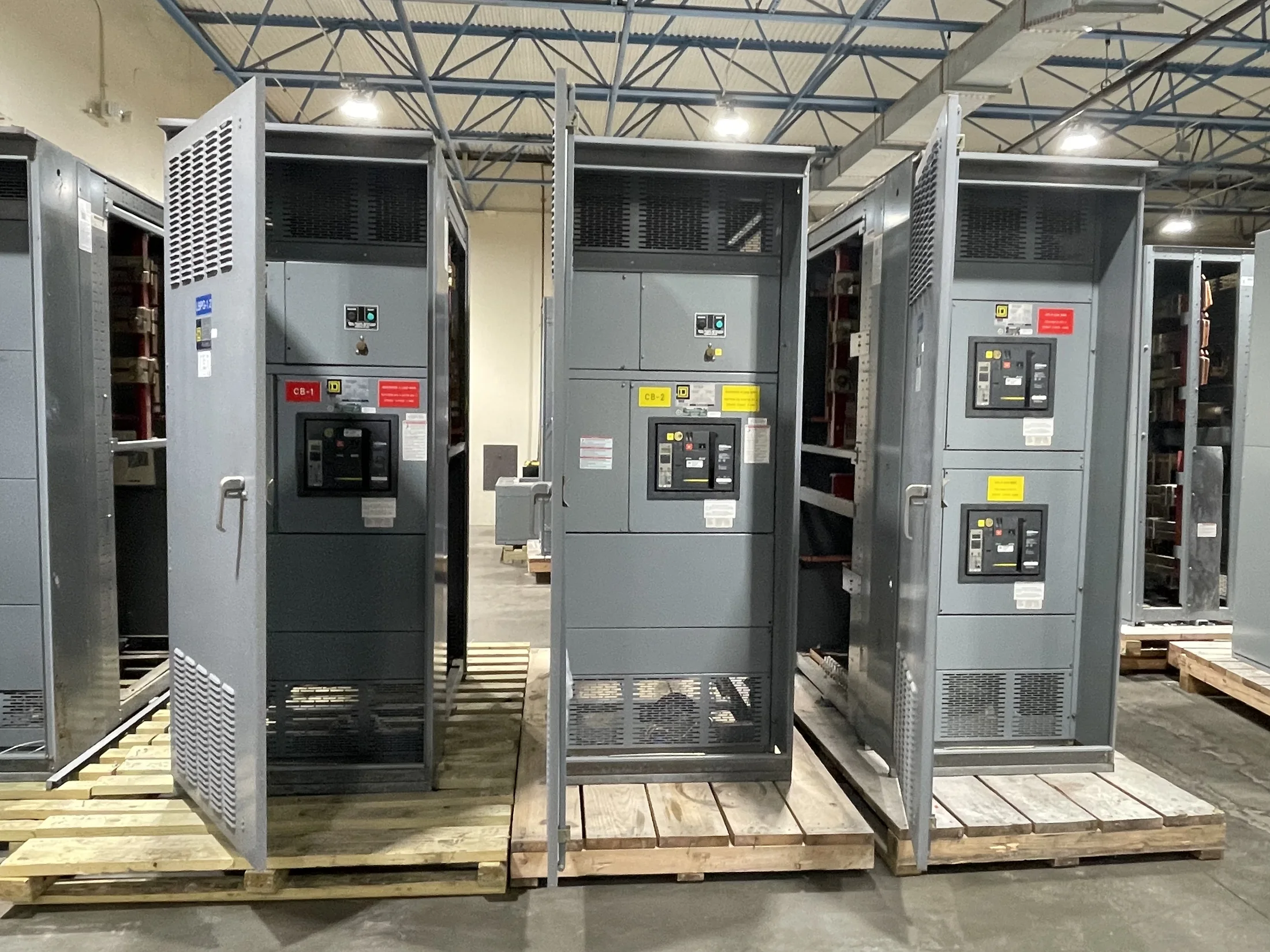
We build new switchgear and power distribution equipment in the United States using American components, with custom fabrication, short lead times, and nationwide shipping. Lead time and scope depend on the project and must be confirmed for the requested configuration. Send technical questions and available project documents through our contact channel for review and next steps.