Start with the consequence of an interruption
Define what happens when the normal source fails: which loads stop, how long they can remain off, and whether a person can safely reach the transfer equipment. A short interruption may be acceptable for some process loads, while other operations require prompt restoration or a planned shutdown sequence.
Separate essential loads from equipment that can remain disconnected. Consider life-safety obligations, process risks, product loss, environmental conditions, and recovery time. The responsible engineer should establish the project’s continuity criteria and confirm applicable requirements with the utility and authority having jurisdiction, rather than choosing a transfer method from load size alone.
Manual transfer relies on an available operator
A manual arrangement requires an authorized person to recognize the source problem, access the equipment, verify conditions, and operate the transfer mechanism according to site procedures. It can suit facilities with staffed coverage, infrequent transfers, and loads for which an operator response time is acceptable.
Evaluate nights, weekends, severe weather, access restrictions, and staffing changes, not only normal shifts. The operating plan should address source verification, switching sequence, protective-device coordination, and return to normal power. Manual operation is not a substitute for defining safe work practices or required electrical interlocks.
Automatic transfer adds sensing and control decisions
Automatic transfer equipment monitors specified source conditions and initiates a programmed sequence when those conditions fall outside configured limits. Depending on the design, the sequence may include a delay, transfer to an alternate source, and retransfer after normal power returns. Actual sensing, timing, and control functions must be confirmed for the project.
Automation reduces dependence on an operator being immediately present, but it requires a suitable alternate source and a clear control strategy. Confirm how the system responds to abnormal voltage or frequency, source failure, generator start availability, failed transfer, and restoration. Do not assume every automatic configuration includes the same functions or alarms.
Match transfer speed to load behavior
The acceptable interruption is a system requirement, not simply a choice between a hand-operated and automatic device. Some loads tolerate an outage while a generator starts; others may trip, lose data, or require controlled shutdown. Identify ride-through limits, restart behavior, and any loads requiring separate continuity measures.
A transfer device cannot provide uninterrupted power by itself. Where the load cannot tolerate even a brief break, the engineer may need to assess uninterruptible power supplies, stored energy, or other system arrangements alongside the transfer scheme. Verify sequencing and compatibility among the normal source, alternate source, transfer equipment, and connected loads.
Consider source arrangement and switching method
Document whether the project transfers between utility and generator, two utility sources, or another defined pair of sources. Confirm voltage, phase, frequency, available fault current, grounding arrangement, service configuration, and load current. These details affect equipment selection, protective coordination, and the physical integration plan.
The engineer must also determine whether transfer is open-transition, closed-transition, or another permitted arrangement. Closed-transition operation can involve momentary source paralleling and may require utility approval and specific controls. Never infer that a device supports a particular switching method, rating, or listing without confirming the exact design and applicable requirements.
Plan controls, signals, and human interface
Automatic systems need defined control inputs and outputs, including source-status sensing, generator start or inhibit signals where applicable, alarms, and remote monitoring interfaces. Specify the control power source, communications expectations, local indication, and what operators should see during normal operation, transfer, and a fault condition.
Manual systems still need an understandable operating interface and clear identification of sources and positions. Decide who is authorized to operate the equipment, whether local or remote operation is needed, and how the status reaches building controls. Confirm control wiring, terminal requirements, and interface responsibilities before fabrication.
Check installation, ratings, and governing requirements
Transfer equipment must fit the electrical distribution design and installation conditions. Confirm enclosure location, available space, cable or bus connections, environmental conditions, access and working clearances, and coordination with upstream and downstream protective devices. The responsible engineer should review fault-current assumptions and applicable code and utility requirements.
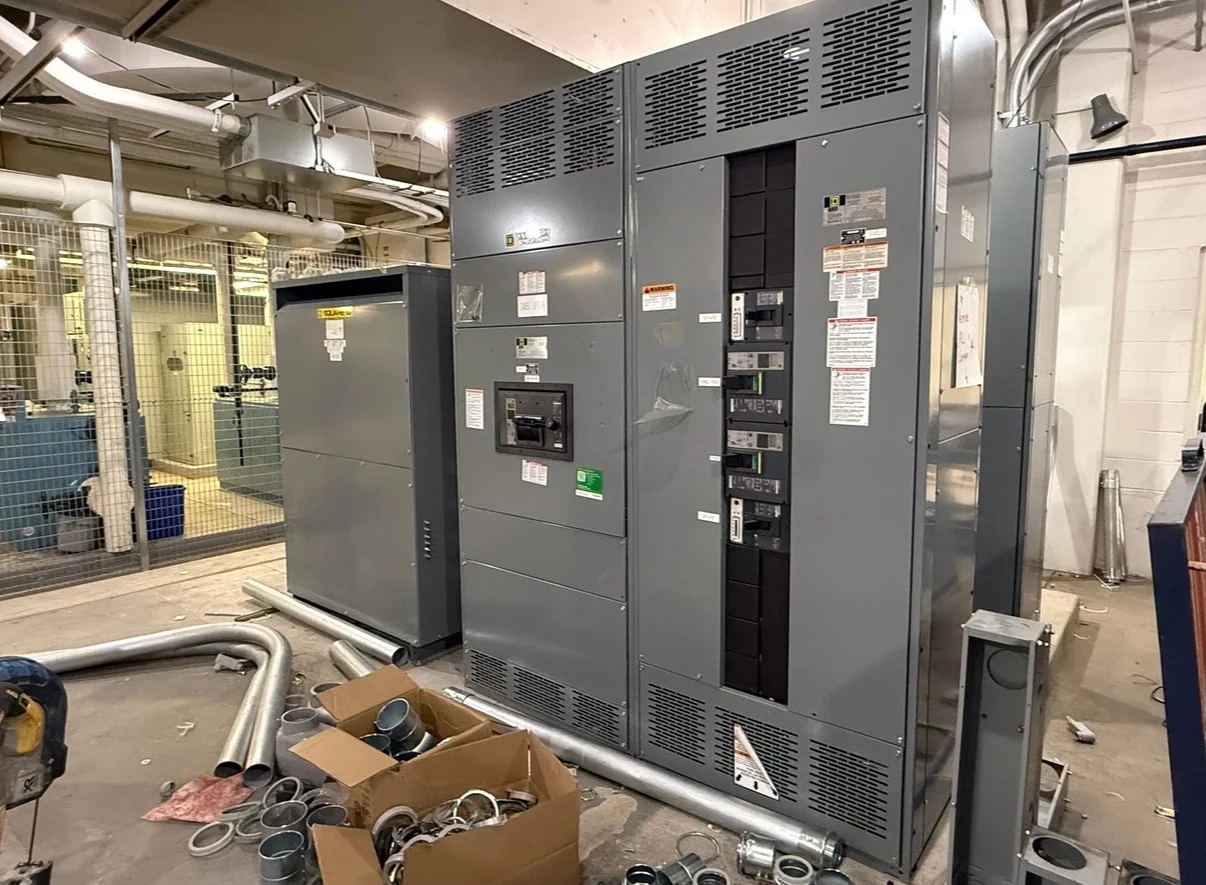
The required product category and construction depend on the application. UL 891 applies to switchboards; UL 1558 applies to low-voltage switchgear; neither should be treated as a blanket description of medium-voltage equipment. Identify the intended assembly and project-specific compliance needs, then verify what applies to the proposed build.
Prepare a useful equipment quote request
For a new equipment quote, provide the one-line diagram, source and load data, voltage and phase, ampacity, fault-current information, transfer sequence, and preferred operating method. Include the acceptable interruption, alternate-source details, control points, required alarms, enclosure conditions, and any specified standards or project documents.
Also identify dimensions, connection orientation, cable or bus entry, shipping destination, schedule needs, and coordination contacts. A U.S. manufacturer building with American components can review custom fabrication requirements and nationwide shipping needs; lead time depends on the finalized scope. Have the responsible engineer, utility, and AHJ review applicable design decisions.