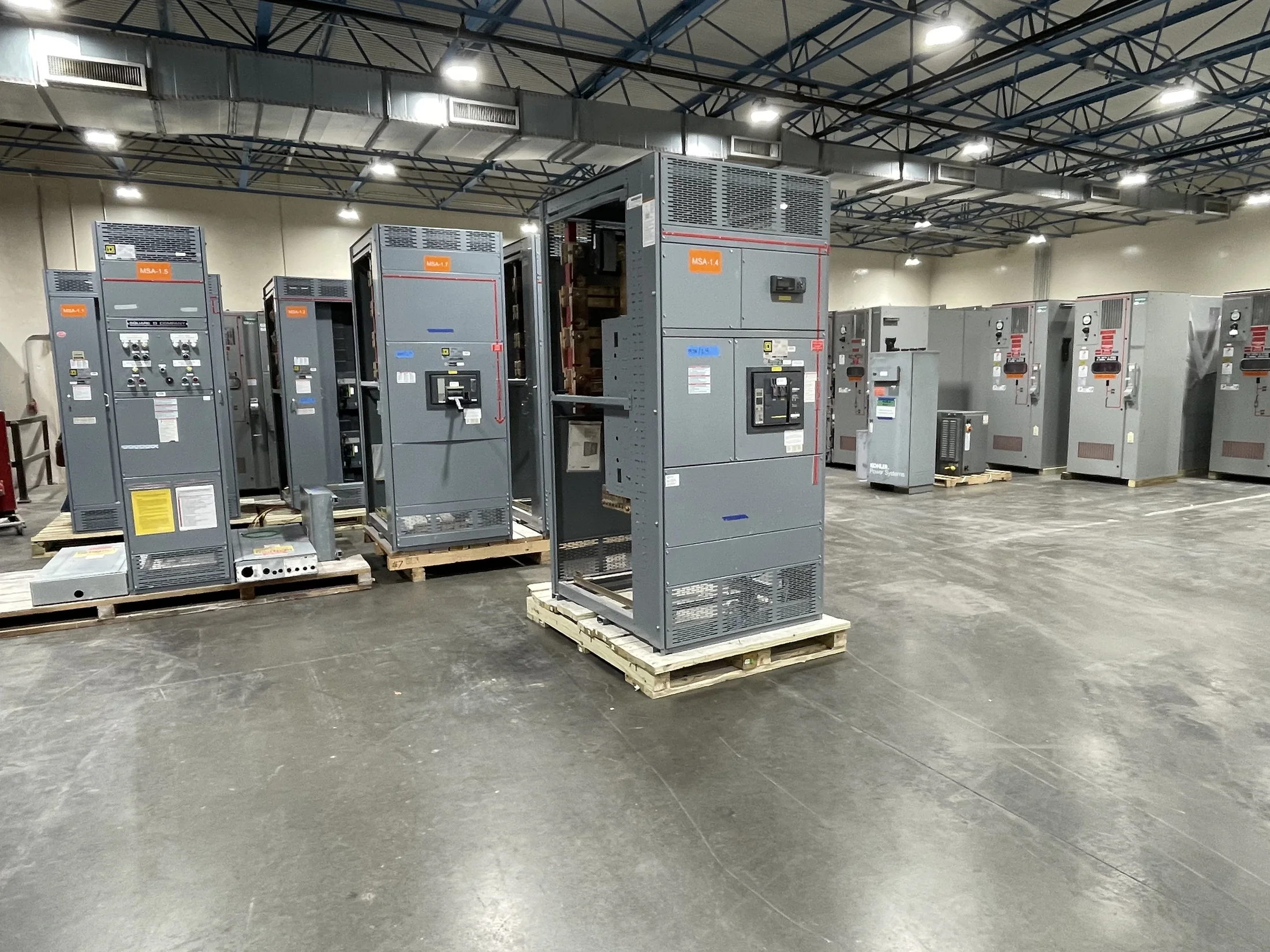
Start with the equipment your project actually requires
Begin by defining whether the project calls for a low-voltage switchboard, low-voltage switchgear, or medium-voltage equipment. These terms describe different equipment classes and standards, not interchangeable product labels. The service voltage, available fault current, system arrangement, and application help establish which category belongs in the design.
For example, UL 891 applies to switchboards; it does not cover medium- or high-voltage equipment. UL 1558 applies to low-voltage switchgear. Confirm the required construction and applicable standards with the responsible engineer, utility, and authority having jurisdiction (AHJ) before requesting proposals or comparing manufacturers.
Choose a supplier that builds the equipment
A direct manufacturer relationship lets project teams discuss equipment layout and project-specific requirements with the company responsible for fabrication. Ask whether the supplier manufactures new equipment, what information its engineering team needs, and how it handles design review, drawing coordination, and changes during the quote process.
For U.S. projects, a manufacturer building equipment in the United States with American components may offer a straightforward path for communicating specifications and sourcing expectations. Confirm component-origin requirements for your contract rather than assuming every component has a particular origin. The manufacturer serves customers in Ohio and nationwide.
Define the electrical and physical configuration
Prepare the one-line diagram and identify service voltage, phase, frequency, main and feeder arrangement, bus requirements, and anticipated load. Include available fault current and the protection or metering functions required by the design. These details affect equipment selection and must be checked against the project’s electrical study and utility requirements.
Document installation constraints as well: indoor or outdoor location, environmental conditions, available floor space, access for maintenance, cable entry direction, and connection preferences. Record dimensions and equipment-room access limits where known. A manufacturer can review these inputs for a proposed build, but final suitability depends on approved project documents and site conditions.
Send a complete request for quotation
A useful request for quotation identifies the project location, application, equipment type, required quantity, target schedule, and design status. Attach the latest one-line diagram, specifications, load information, and relevant drawings. State whether the inquiry is for a new installation, replacement, or expansion so the supplier understands the scope.
List options as requirements or items to confirm, not assumptions: metering, protective devices, control power, communications, enclosure details, labeling, and coordination with adjacent equipment. Identify required documentation, submittals, and any contract-specific standards. Clear, current inputs help the manufacturer identify open questions before preparing a technically meaningful proposal.
Compare proposals on scope, not just price
Review each proposal against the same documents and note exclusions, assumptions, and deviations. Check that the quoted equipment class, voltage, configuration, and stated ratings align with the project design. Confirm what is included for engineering drawings, review cycles, accessories, documentation, and shipping rather than treating a brief price comparison as a complete evaluation.
Ask the manufacturer to explain unresolved selections and identify information needed to finalize the build. Verify the quoted schedule’s basis, including drawing approval, component availability, and customer-furnished data. Short lead times may be available, but timing depends on the configuration and project inputs; do not assume a particular duration without written confirmation.
Coordinate standards, approvals, and interfaces
Applicable standards depend on equipment type and project requirements. Confirm the requested construction standard and any specification clauses with the engineer of record. Do not treat a switchboard standard as a switchgear standard, or either low-voltage standard as applying to medium-voltage equipment. Ask the supplier to state the basis of its proposed equipment in writing.
Coordinate utility service requirements, protective-device settings, grounding, metering, and upstream or downstream interfaces with the responsible parties. The engineer should review equipment selections against system studies and design documents; the utility and AHJ should confirm requirements within their authority. No proposal alone replaces project-specific engineering review or approval.
Plan delivery and installation before release
Nationwide shipping makes it possible to source new equipment from a manufacturer serving projects beyond its home region, including Ohio. Before placing an order, confirm the delivery destination, receiving access, unloading responsibility, site readiness, and any schedule constraints. Clarify packaging and shipment coordination with the supplier for the specific order.
Installation planning should account for the approved drawings, equipment clearances, anchorage, conduit or cable routes, and field connections. Confirm who will review submittals and who can authorize changes. Coordinate delivery timing with construction progress, because early shipment to an unprepared site can create storage and handling complications.
Move from inquiry to an approved order
After selecting a supplier, compare the final proposal with the purchase documents and approved design. Resolve substitutions, open technical questions, and commercial terms before release. Establish who approves drawings, how revisions are documented, and which project contact can make decisions so fabrication does not proceed on outdated or incomplete information.
A U.S. manufacturer offering custom fabrication can address project-specific layouts and requirements, subject to engineering review and confirmation for the individual build. Provide prompt, consolidated drawing comments and keep the engineer, contractor, facility team, and utility informed where relevant. Clear coordination supports a more predictable path from quote through manufacture and delivery.