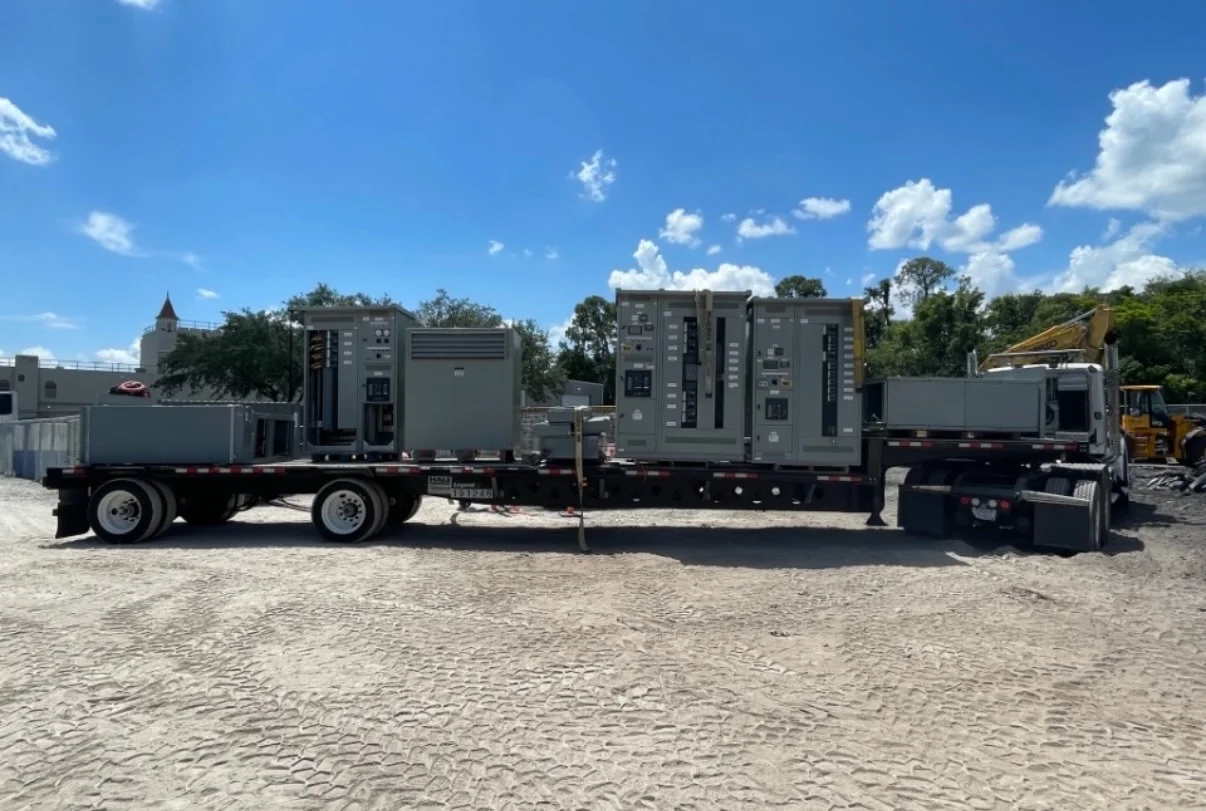
Start with the project basis and equipment type
Before checking individual dimensions or devices, confirm that the submittal identifies the intended equipment class and governing project documents. Low-voltage switchboards built to UL 891 are not interchangeable with low-voltage switchgear built to UL 1558; medium-voltage equipment is a separate category with different design and application requirements.
Compare the equipment description, one-line diagram, specifications, and purchase documents. Note voltage, phase, frequency, service role, and any stated construction standard, then flag conflicts for resolution. The responsible engineer should establish the design basis; the manufacturer needs the approved documents and a clear list of deviations to prepare an accurate quote.
Verify electrical ratings against system conditions
Review nominal system voltage, continuous current, short-circuit or interrupting requirements, and the specified withstand or available fault-current basis as applicable to the equipment type. Check that the main device, distribution devices, bus, and stated assembly ratings are coordinated with the project documents, rather than relying on one rating shown prominently on a cover sheet.
Confirm whether the utility or engineer has supplied available fault-current information, and whether protective-device coordination or selective coordination criteria apply. Ratings and combinations depend on the actual design and listed configuration; do not assume a particular value or feature from a typical drawing. Refer discrepancies to the responsible engineer before approving the submittal.
Check lineup arrangement, access, and dimensions
Compare the elevation and plan views with the electrical room layout, equipment schedule, and architectural or structural constraints. Check lineup length, section sequence, depth, height, shipping splits, access clearances, cable entry space, and working space against project requirements. Confirm that doors, removable covers, and operating handles can be accessed in the installed position.
Review floor conditions, housekeeping pads, anchorage assumptions, overhead restrictions, and the route from the delivery point to the final location. These details can change section arrangement or fabrication. Identify dimensions that remain preliminary and ask who must confirm them. For a custom-built lineup, provide controlled room drawings and current field dimensions before manufacturing release.
Reconcile the one-line diagram with device schedules
Trace each feeder and main shown on the one-line to the submittal’s device schedule and lineup section. Confirm device type, pole count, frame or sensor details where specified, trip or fuse requirements, connection arrangement, and feeder designation. Check that spare positions, future provisions, metering devices, and required accessories are identified rather than inferred from blank spaces.
Verify that the schedule reflects the latest load list and approved protection criteria, including any special control or metering requirements. A device designation alone may not define trip settings, communications, or accessory scope. List unresolved selections explicitly, identify who supplies each item, and obtain engineer direction where the documents conflict or leave a design decision open.
Inspect bus, grounding, and termination details
Check the submittal’s bus arrangement, phase identification, neutral requirements, and grounding provisions against the system configuration and specifications. Confirm any required bus rating, material, finish, or bracing criteria are stated for the proposed equipment. For a separately derived system or unusual grounding scheme, verify the intended neutral-to-ground arrangement with the engineer.
Review incoming and outgoing termination locations, conductor entry direction, lug provisions, and space for the specified conductors. Cable size, quantity, bend radius, and conduit placement may affect section design, so provide these inputs early. Do not treat a generic lug note as confirmation of compatibility; record required conductor details and resolve supply boundaries before approval.
Map controls, communications, and external interfaces
Identify every interface between the equipment and the rest of the project: control power, remote trip or close circuits, interlocks, alarms, metering outputs, communications, and building or plant control connections. Compare terminal plans, schematics, and point lists with the control narrative. Confirm voltage sources, contact expectations, protocol requirements, and who furnishes wiring beyond the equipment terminals.
Where an interface depends on another vendor, utility, generator, transfer scheme, or field-installed device, name the responsible party and document the required signal or connection. Do not assume that a communication card, control transformer, or programmed function is included unless the submittal says so. Send open interface questions to the engineer and relevant suppliers for coordinated answers.
Review notes, exceptions, and document revision status
Read every general note, exception, qualification, and blank schedule field, not only the marked-up drawing. Sort each item as accepted, rejected, or requiring clarification, and identify its effect on ratings, dimensions, scope, schedule, or installation. A deviation should be stated plainly; silence on a specification requirement is not a dependable approval.
Check drawing numbers, revision dates, equipment tags, and referenced specifications against the current project set. Maintain a comment log with a responsible reviewer and a disposition for each item, then verify that revised drawings incorporate agreed changes. Approval should not be treated as closing unresolved engineering decisions or transferring design responsibility to the equipment manufacturer.
Prepare a complete quote and release package
For a new equipment quote or revised proposal, provide the current one-line, specifications, load and device schedules, room plan, cable and termination data, control diagrams, and required delivery or shipping constraints. Include the expected quantity, service conditions, applicable project standards, and any requested options. A concise exceptions list helps the manufacturer distinguish requirements from preferences.
After comments are resolved, confirm the final configuration, approved drawing revision, scope boundaries, and required submittal documents before authorizing release. U.S.-built equipment, American components, custom fabrication, short lead times, and nationwide shipping may support project planning, but configuration and schedule depend on the confirmed scope. Have the responsible engineer, utility, and AHJ review matters within their authority.