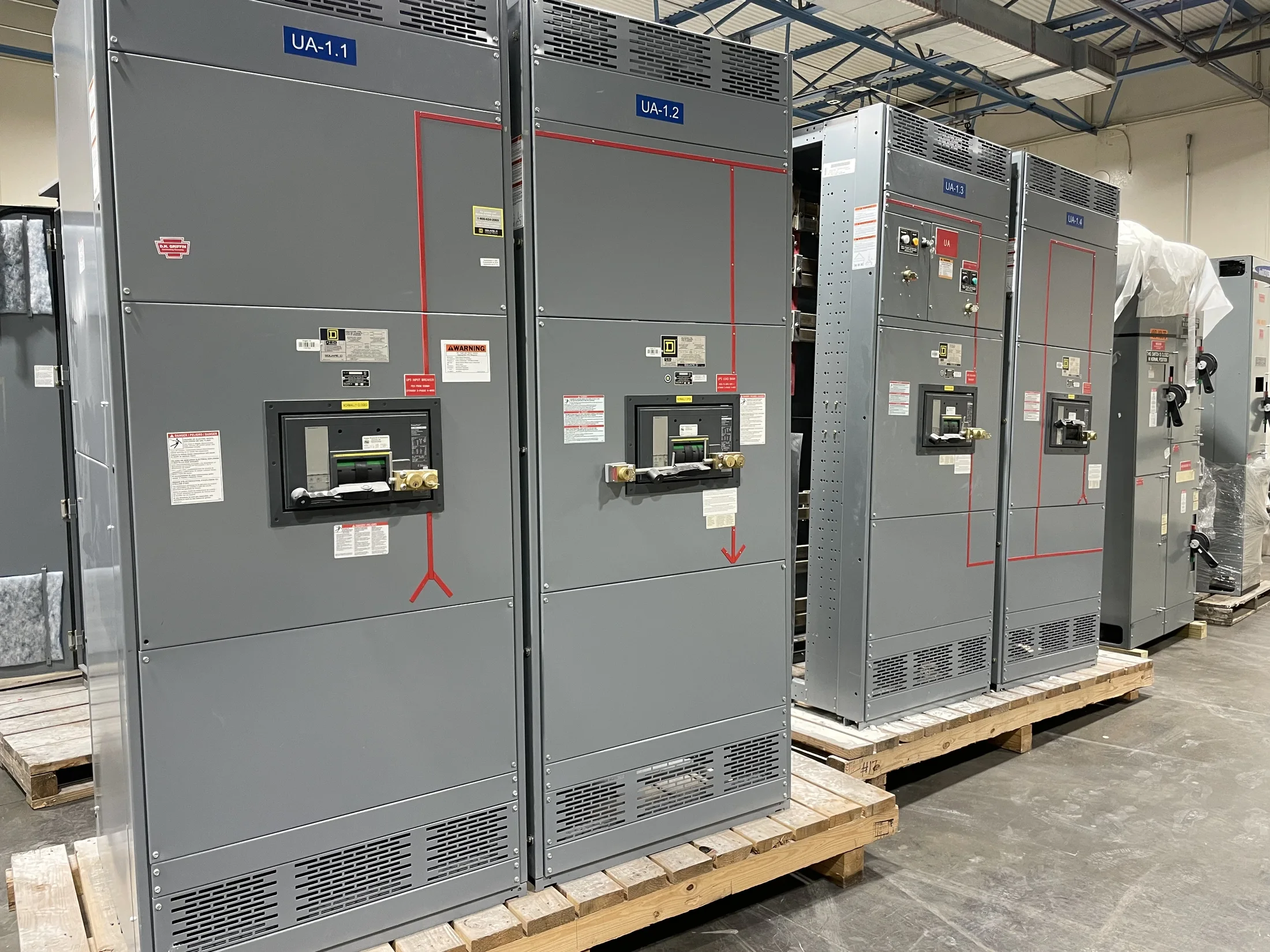
Start with the project and site
Identify the facility, project location in Ohio, and the type of work: new construction, expansion, replacement, or a planned capacity change. Include the owner or end user, engineering contact, electrical contractor, and purchasing contact when known. These details help clarify who can answer technical questions and who will evaluate the proposal.
Describe the installation environment and project stage. Note whether the equipment will serve an industrial plant, commercial building, utility-related application, or another use, and whether design documents are preliminary or issued for construction. Pricing can change as the design develops, so identify assumptions and open decisions rather than presenting estimates as final requirements.
Provide the electrical basis of design
Send the latest one-line diagram, load schedule, electrical specifications, and relevant panel or control schematics if available. Mark the proposed switchgear location and connections to transformers, generators, utility service, downstream distribution, or other sources. If drawings are not ready, summarize the intended system and clearly label information that remains unconfirmed.
State the nominal voltage, phase, frequency, and system grounding arrangement, along with available fault-current information and its source. Identify the upstream protective device or transformer data when known. The responsible engineer should verify system calculations and coordination assumptions; a pricing request is not a substitute for design review or confirmation by the utility and AHJ.
Clarify the equipment type and ratings
Describe whether the request is for a low-voltage switchboard, low-voltage switchgear, or medium-voltage equipment. These are different equipment categories with distinct construction and application requirements. UL 891 applies to switchboards; UL 1558 applies to low-voltage switchgear. Neither standard should be treated as a medium- or high-voltage equipment standard.
Provide required continuous current, system voltage, short-circuit or interrupting requirements, and any specified withstand or accessibility criteria, identifying the design source for each. Do not infer ratings from existing equipment labels alone. The proposed configuration and applicable construction standard must be reviewed against the project documents and the electrical engineer’s requirements.
List mains, feeders, and protective devices
A useful request lists the expected number and type of incoming sources, mains, bus ties, and outgoing feeders. For each feeder, include load served, quantity, frame or ampere rating if specified, and whether a breaker, fused switch, or other arrangement is called for. Distinguish firm requirements from preliminary counts or future provisions.
Share protection and control requirements, such as trip-unit functions, metering, ground-fault provisions, relaying, interlocking, or communications interfaces, only where applicable to the design. Include device schedules and coordination notes if available. Project-specific options affect scope and pricing, so state which functions are mandatory and which may be proposed for engineering review.
Describe layout and connection constraints
Provide available room dimensions, ceiling height, access route, equipment location, and required working clearances from the project drawings. Note wall placement, adjacent equipment, floor conditions, seismic criteria if specified, and whether rear access is possible. These constraints can influence lineup arrangement, section dimensions, cable entry, and the feasibility of moving equipment into position.
Identify cable or busway entry direction, conductor material and approximate size when established, termination space, and any top- or bottom-entry limitations. Include conduit stub-up plans or bus duct details if they affect the layout. Final arrangements depend on verified drawings and applicable codes; note unresolved field dimensions so they can be confirmed before release.
Include controls, metering, and interfaces
Explain what monitoring or control the facility expects from the equipment. Relevant details may include local meters, instrument transformers, annunciation, remote status, control power, protective relays, or communications to a building or plant system. Provide preferred protocols, points lists, and interface documents where they exist, and identify equipment supplied by others.
Call out requirements for labeling, mimic diagrams, terminal blocks, spare contacts, or control wiring schedules when specified. If the project needs factory documentation, drawings, or submittals in a defined format, include the applicable specification. These details help establish engineering and fabrication scope without implying every requested feature is standard or included.
Set the schedule and commercial scope
Give the required delivery date, desired approval-submittal timing, and any milestone that could affect procurement or construction. State whether the date is a target or a firm project need, and identify dependencies such as approved drawings, site readiness, or utility coordination. Short lead times may be available, but schedule feasibility depends on the final scope and current production requirements.
Specify whether the request covers equipment only or also includes startup support, field services, or other project-specific work. Identify bid form requirements, requested alternates, warranty terms, and any commercial conditions that must be reviewed. A complete scope reduces gaps between the priced equipment, contractor responsibilities, and the project’s procurement documents.
Confirm delivery details and next steps
Provide the Ohio delivery address or jobsite city and ZIP code, receiving hours, unloading arrangements, and any restrictions on truck access, staging, or delivery appointments. Explain whether the site can accept a complete lineup or requires coordinated shipments. Nationwide shipping is available, but site logistics and the requested delivery sequence should be reviewed with the project team.
Submit the available files in a clear, current set and identify the person authorized to answer technical questions. The manufacturer builds new equipment in the United States using American components and offers custom fabrication. Pricing remains project-specific; the responsible engineer, utility, and AHJ should confirm design decisions that require their review before equipment release.