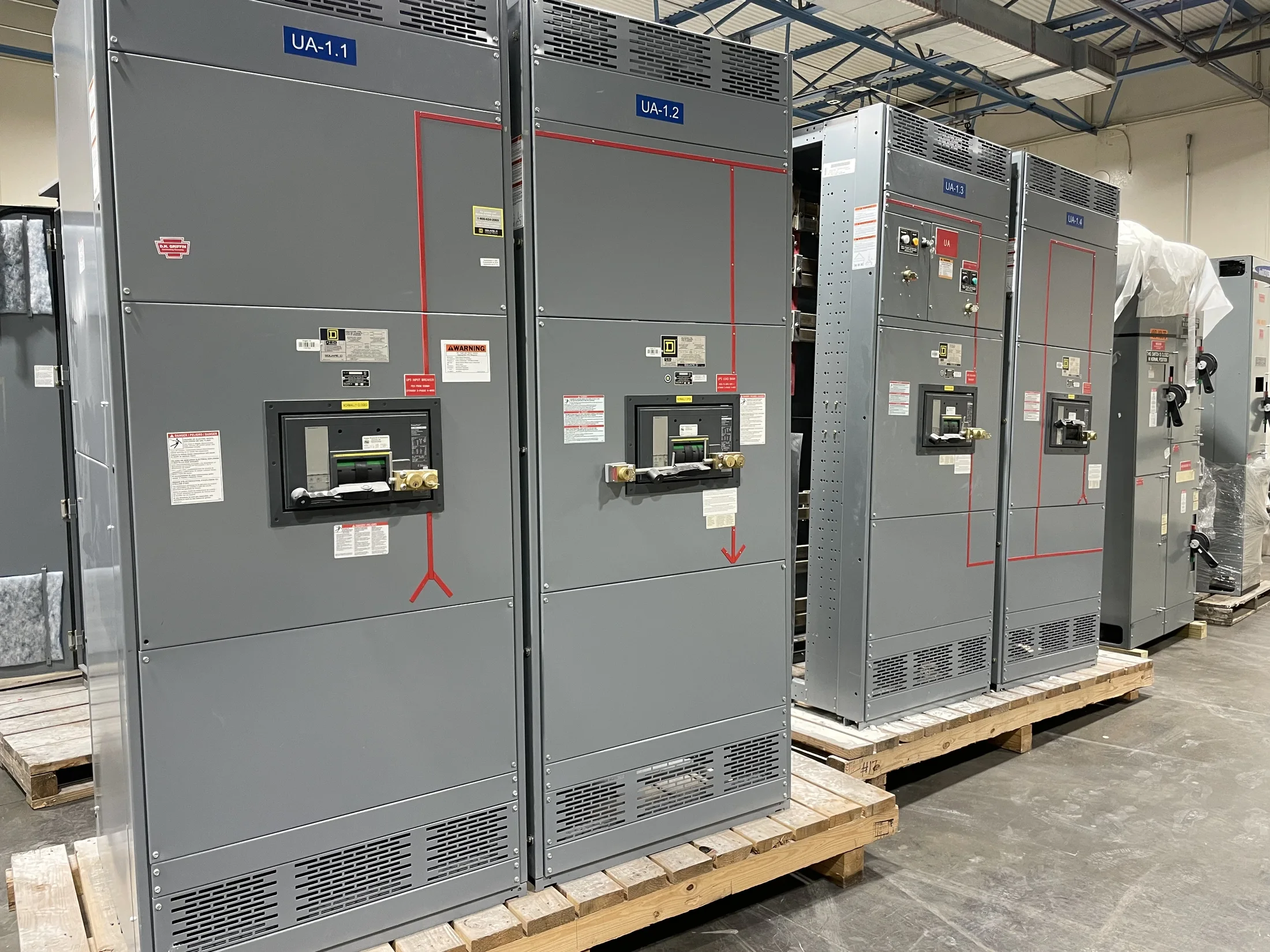
Treat Delivery Planning as Part of Equipment Selection
A new switchgear lineup must fit both its electrical location and its path to that location. During quotation, share the installation room layout, door and corridor clearances, available staging area, and any restrictions on delivery hours. These details can influence shipping configuration before fabrication begins.
The manufacturer builds new equipment in the United States using American components, with custom fabrication, short lead times, and nationwide shipping. Confirm the proposed shipment plan against the project schedule and receiving capabilities; production completion, carrier availability, and site readiness are separate coordination points.
Request Dimensions for the Actual Shipping Configuration
Ask for estimated shipping dimensions and weights for each transport section, including packaging, skids, and any protective enclosure. A lineup’s installed dimensions may not match its shipment envelope. Door widths, ceiling height, turning radii, elevator capacity, floor loading, and overhead obstructions can constrain movement.
The final shipping arrangement depends on the equipment design and what can be separated without compromising assembly or protection. Identify whether sections will ship assembled or divided, and confirm the number and sequence of pieces as details are finalized. Do not rely on preliminary dimensions for a lift plan.
Map the Route from Carrier to Installation Point
A delivery address alone does not establish that a truck can reach the receiving point. Provide the site’s truck entrance, road or driveway limitations, gate requirements, turning and backing space, dock information, and any bridge, weight, height, or time restrictions known to the project team.
Trace the movement route from unloading location to the electrical room. Note narrow passages, stairs, ramps, changes in elevation, temporary construction barriers, and areas where equipment must be turned or staged. The responsible site team should verify clearances and structural capacity before delivery and arrange any required route modifications.
Define Unloading Equipment and Qualified Labor
Clarify who supplies the crane, forklift, loading dock, rigging, and qualified personnel. Equipment weight, lift points, center of gravity, reach, ground conditions, and overhead obstructions determine whether proposed unloading equipment is suitable. Request shipping weights and handling instructions early enough for the rigging contractor to review them.
Do not assume the carrier will unload, move equipment indoors, or place it on its foundation. State the expected division of work in the purchase documents and delivery plan. The site contractor should coordinate permits, traffic control, exclusion zones, and a safe set-down area with the project’s safety lead.
Specify the Delivery Destination and Receiving Contact
Provide the complete delivery destination, including the correct facility entrance, building or project name, receiving dock or laydown area, and contact who can authorize receipt. For campuses and active plants, distinguish the shipping address from the precise unloading point and include check-in procedures, escort rules, and delivery-hour limits.
Confirm whether the site can accept equipment on the expected date or needs scheduled appointment delivery. Identify who will inspect packaging, document visible damage, sign carrier paperwork, and promptly notify the project team of exceptions. A contact who knows the shipment plan helps prevent a truck arriving before access or labor is ready.
Coordinate Staging, Protection, and Installation Sequence
If the electrical room is not ready, determine whether a secure, dry staging area is available and whether the equipment can remain there under the project’s storage conditions. Confirm space for every section, protection from construction activity, access for later movement, and any environmental requirements stated in the equipment documentation.
Align delivery sequence with the installation plan, especially where multiple sections must be set in a particular order or where other trades share the route. Establish who checks packaging and equipment condition on arrival, how exceptions are recorded, and where the shipment will be held if the final room is unavailable.
Make Freight and Handling Responsibilities Explicit
Before issuing a purchase order, clarify the quoted freight scope: destination, delivery method, appointment requirements, and whether charges include unloading, inside delivery, or only transport to a specified point. These services are not interchangeable. Ask what assumptions underlie the quote and identify exclusions that the buyer must arrange.
Document when responsibility for freight coordination, transit risk, unloading, and custody changes, using the purchase terms and carrier arrangement rather than informal assumptions. Confirm how concealed or visible damage must be reported and who coordinates a claim. The buyer, manufacturer, carrier, and site contractor may have distinct duties.
Provide Quote Inputs and Verify Before Release
For a useful delivery quote, provide the destination ZIP code and exact receiving point, requested delivery window, access restrictions, dock or ground-level conditions, unloading plan, and whether appointment scheduling is required. Include the equipment lineup configuration when known, plus any limits on truck type, shipment size, or delivery hours.
Before release, compare the approved equipment layout and shipping-section plan with current site conditions. Have the responsible engineer review electrical configuration and installation constraints; confirm logistics with the contractor and receiving team. Coordinate utility requirements and AHJ review where relevant, and resolve open access or handling questions before dispatch.