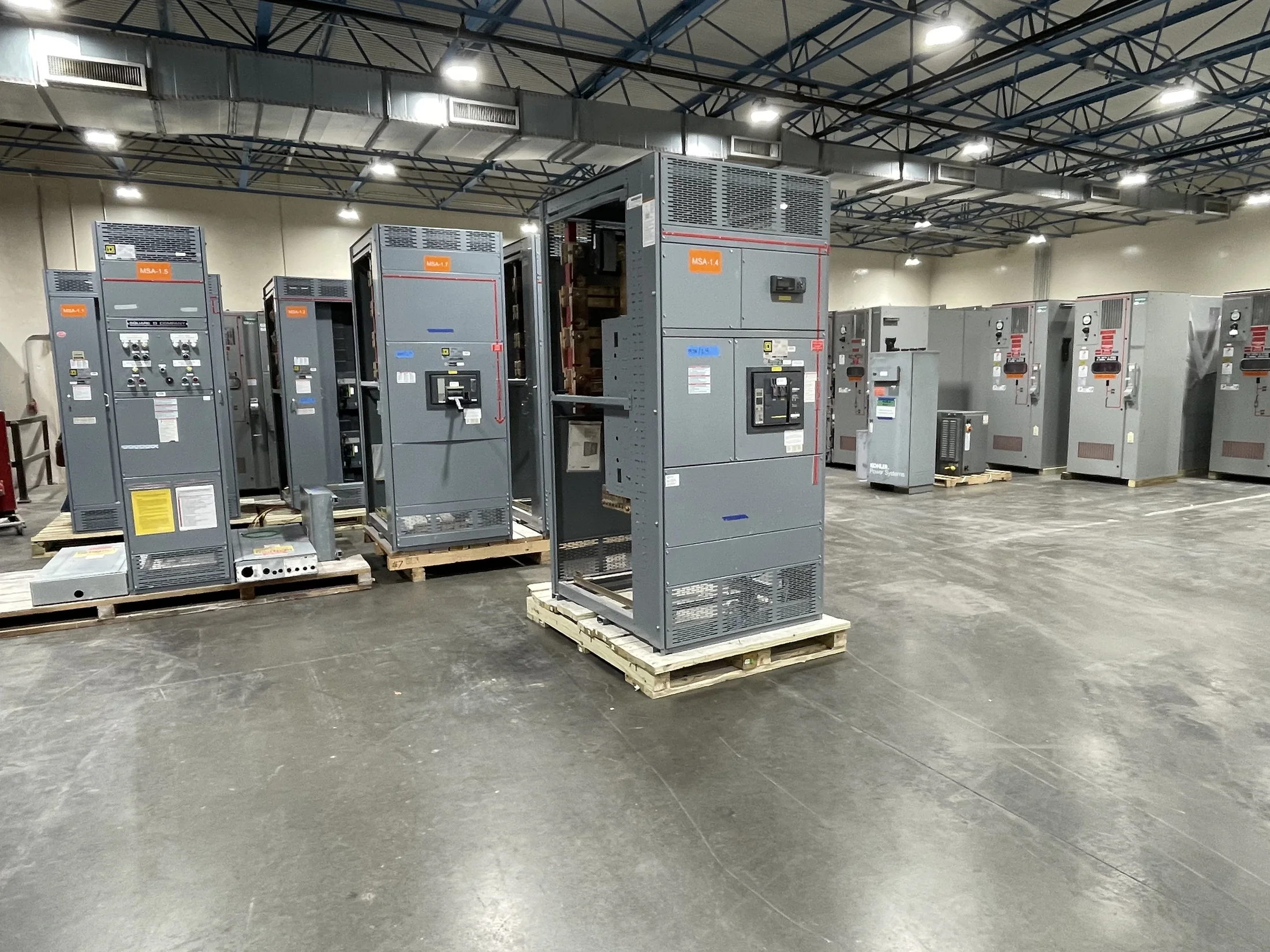
Start with the project and procurement basis
Identify the project, site, purchasing contact, engineer of record, and anticipated award and delivery milestones. State whether the request covers a complete new lineup, replacement equipment for a planned outage, or a defined portion of a larger distribution system. Include the bid due date and any required quotation format.
Tell bidders whether the design is preliminary, issued for bid, or approved for construction. Include the governing project specifications and applicable code or owner standards. If documents conflict, identify the intended order of precedence or ask the manufacturer to list exceptions rather than silently choosing an interpretation.
Provide a readable, coordinated one-line
Send the latest electrical one-line in a legible, searchable or high-resolution format, with revision date and drawing number. Show the source, transformers, buses, mains, ties, feeders, loads, and downstream equipment relevant to the requested assembly. Mark the equipment boundary and identify which devices are furnished by others.
A one-line supports pricing only when its assumptions are clear. Note normal and alternate sources, open or closed tie operation, transfer scheme, and any intended paralleling. Flag discrepancies between the drawing and specifications. The responsible engineer should confirm design intent, fault-current basis, and coordination requirements before release.
Define equipment type, ratings, and standards
Specify the intended equipment class and applicable standard rather than using switchgear as an umbrella term. A low-voltage switchboard designed to UL 891 is distinct from low-voltage switchgear designed to UL 1558; neither designation describes medium-voltage equipment. State the system voltage, frequency, phase, and grounding arrangement.
Provide required continuous current, short-circuit or withstand basis, and any specified interrupting ratings for individual devices. Identify the source data used to establish available fault current. Confirm the rating method and coordination with the engineer; do not assume a listed value, construction feature, or protective-device combination applies to every custom build.
Attach schedules and device-level details
Include feeder and load schedules with circuit identifiers, quantities, load descriptions, and connected or design currents where established. For each breaker or other protective device, specify frame or trip requirements, poles, trip functions, and accessories called for by the documents. Separate firm requirements from items still under engineering review.
Call out metering, relaying, control power, communications, and required interface signals. Identify CT and PT needs, metering accuracy requirements if specified, and who supplies external wiring or network connections. Device schedules should agree with the one-line and panel or lineup arrangement; ask the engineer to resolve mismatches before quotation.
Describe physical arrangement and site constraints
Provide room plans, equipment elevations, access routes, and known dimensional limits. State preferred lineup orientation, cable entry direction, working-space constraints, and whether equipment must pass through doors, elevators, or other restricted paths. Include installation location and environmental conditions that may affect enclosure or arrangement selection.
Identify front, rear, or side access expectations and any requirements for seismic design, special enclosures, or unusual ambient conditions. These are project-specific items to confirm, not automatic features. Have the design team verify clearances, anchorage, ventilation, and cable bending space against applicable requirements and actual site conditions.
Make scope boundaries and assumptions explicit
List what the quotation should include: switchgear or switchboard assembly, protective devices, control components, meters, drawings, and any specified accessories. Then identify exclusions and by-others scope, such as conductors, terminations, field installation, commissioning, or upstream protection. State whether spare devices or future provisions are required and how many.
Clarify responsibilities for engineering, coordination studies, utility interfaces, and field verification. Note whether the manufacturer should price options separately, such as alternate metering or device arrangements. Where details remain open, provide a basis for pricing and request that assumptions, exceptions, and unresolved questions appear plainly in the quotation.
Set submittal, testing, and delivery expectations
List required submittals and review milestones, including drawings, bills of material, and data sheets when applicable. Specify project documentation, labeling, language, and electronic file requirements. Identify any inspection or testing requirements stated in the project documents, and distinguish factory scope from field services or tests by others.
Provide the requested ship-to location, delivery window, receiving limitations, and whether phased shipments are acceptable. Lead time depends on the final configuration, component availability, approvals, and production scheduling, so treat schedule dates as requested milestones for confirmation. The manufacturer builds new equipment in the U.S. with American components and ships nationwide.
Send a controlled package and invite clarification
Assemble the one-line, specifications, schedules, plans, and addenda into a clearly indexed package. Use consistent project names and revision identifiers; replace superseded files or label them obsolete. A short RFQ cover sheet can summarize equipment quantity, type, voltage, required dates, options, and the person authorized to answer technical questions.
Ask the manufacturer to identify deviations, exclusions, and assumptions with the price, and to raise questions before the bid deadline. Custom fabrication can address project-specific arrangements, but it does not replace design review. Before purchase, the responsible engineer, utility, and authority having jurisdiction should review relevant design and interface requirements.