Start With the Facility’s Objectives
Before requesting a quote, identify the facility outcomes the project must support. These may include replacing aging distribution equipment, serving a new process line, adding capacity for planned expansion, or improving maintainability. Clarify which loads are essential, what growth is anticipated, and whether the project is a standalone replacement or part of a broader electrical upgrade.
Translate objectives into measurable design inputs with the responsible electrical engineer. Gather available one-line diagrams, load schedules, fault-current information, operating voltage, and proposed equipment location. Note known changes to utility service or connected loads. These records help distinguish required capacity from assumptions and give the manufacturer a sound basis for developing a new-equipment proposal.
Match Equipment to the Distribution System
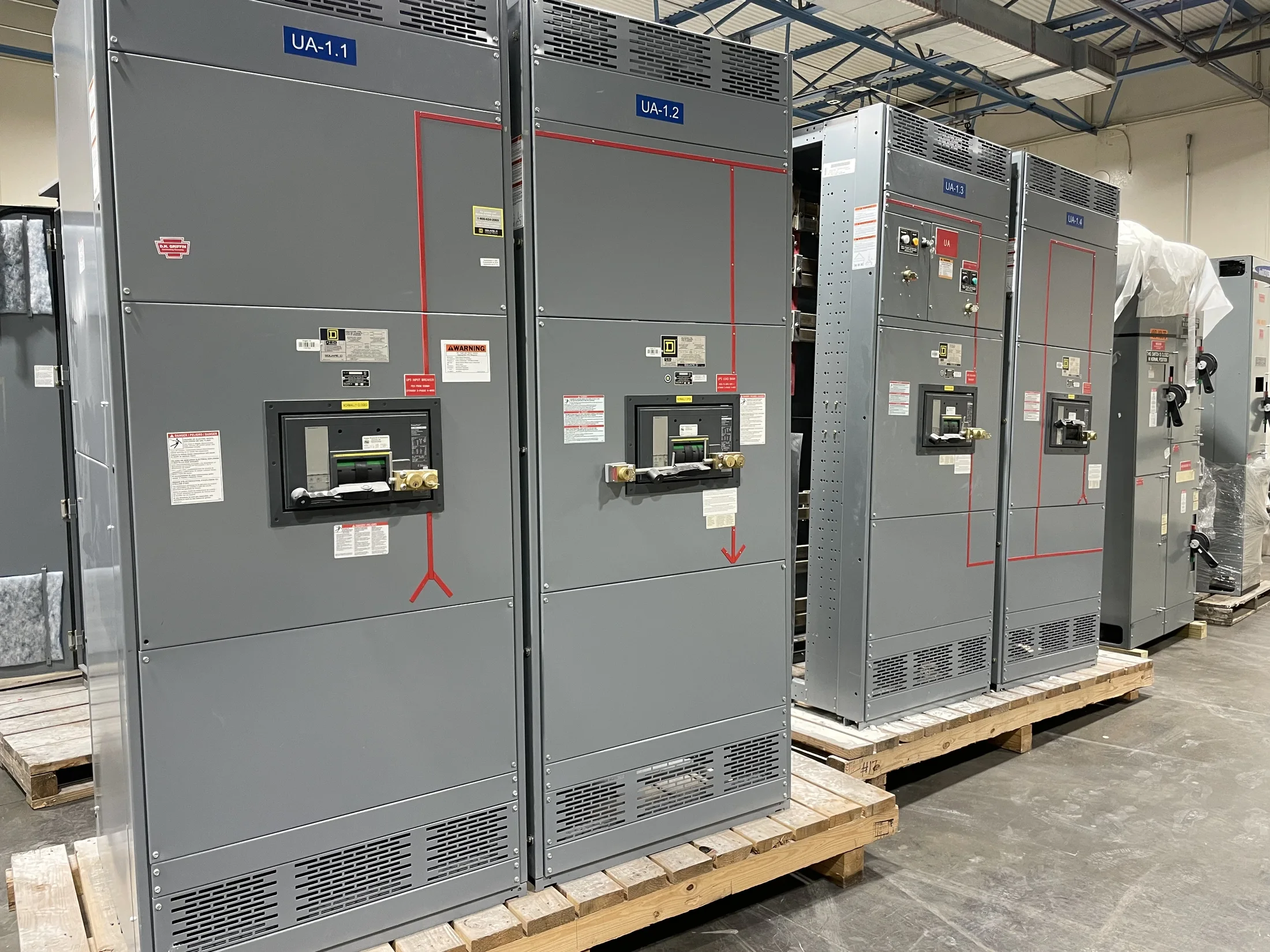
The equipment type follows the system design, not the project label. A low-voltage switchboard built to UL 891 is distinct from low-voltage switchgear built to UL 1558; neither designation describes medium-voltage equipment. Confirm system voltage, service arrangement, available fault current, and the engineer’s intended equipment classification before comparing configurations.
Discuss main and feeder arrangements, bus requirements, metering, protective devices, and incoming connections as project-specific choices. Ask whether future feeder spaces or provisions for later sections are needed, and how equipment will interface with existing distribution. Ratings, construction details, and listed status depend on the specified design and final build; do not treat them as universal.
Plan Around Operational Constraints
An owner’s operating schedule can strongly affect procurement and installation planning. Identify acceptable outage windows, loads that cannot be interrupted, temporary power needs, and any sequencing restrictions. The contractor and engineer can use this information to develop a cutover plan, while the manufacturer can review the proposed equipment arrangement and interface details during design coordination.
Confirm the equipment room’s access route, floor and wall conditions, clearances, ventilation, working space, and connection locations. Record door dimensions, turns, elevator limits, and restrictions on lifting or staging. These practical details affect section size, shipping configuration, and installation methods. The responsible engineer and AHJ should review applicable code and site requirements.
Set Maintenance Expectations Early
Owners should describe how maintenance is performed and who will perform it. Consider staffing, contractor access, safety procedures, preferred maintenance intervals, and the time available for planned shutdowns. Ask the engineer to evaluate whether the selected arrangement supports the facility’s maintenance approach, including access to devices and practical isolation of affected portions where the design permits.
Discuss documentation and service information needed by operations staff, such as equipment schedules, wiring and connection details, device identification, and manufacturer documentation supplied for the build. Confirm the project’s expectations for training or handover materials rather than assuming they are included. Maintenance tasks and intervals depend on equipment, environment, use, and applicable manufacturer guidance.
Consider Lifecycle and Future Changes
A purchase decision should account for more than initial installation. Ask how the proposed arrangement can accommodate anticipated load growth, changes in protective-device requirements, or future facility modifications. Expansion provisions, spare feeder positions, and space for later additions may affect initial footprint and cost, so define likely scenarios instead of requesting capacity without a clear basis.
Consider the owner’s expected service life, documentation retention, and plans for future renovations or replacements. Preserve approved drawings, settings records, equipment identifiers, and commissioning documents in the facility’s asset-management system. Confirm how the proposed equipment can be integrated with existing monitoring or control systems, if required, and identify interface responsibilities among the engineer, contractor, and supplier.
Coordinate Protection, Utility, and Code Needs
Protection and coordination decisions require project-specific engineering. Provide utility fault-current data, transformer information, existing protective-device details, and any available coordination study to the responsible engineer. Confirm whether arc-flash analysis, selective coordination, ground-fault protection, metering, or other functions apply to the project; requirements depend on the system, applicable codes, and facility criteria.
The utility’s service requirements and the AHJ’s review can affect the final design, interfaces, and submittals. Identify who will obtain utility data, prepare studies, review drawings, and secure approvals. New equipment should be specified against the approved design and applicable requirements. Do not assume a particular rating, protection feature, certification, or approval applies without confirmation for the actual build.
Prepare a Complete Quote Package
A useful quote request includes the project location, desired schedule, system voltage, service and distribution configuration, available fault-current information, load or feeder schedule, and relevant drawings. Add the equipment classification, requested standards, environmental conditions, enclosure needs, metering and protection preferences, and known connection details. Clearly label preliminary information and identify items still awaiting engineering confirmation.
Include operational and commercial constraints that affect the proposal: outage windows, access limitations, shipping and receiving conditions, installation phasing, documentation needs, and anticipated future provisions. State the desired scope boundary, including whether field services, installation, or studies are being handled by others. Complete inputs help the manufacturer identify assumptions, clarify exclusions, and develop a proposal aligned with the project.
Review the Proposal Before Release
Evaluate the proposal against the approved one-line diagram, project specifications, and owner’s operating requirements. Check equipment classification, voltage, arrangement, feeder quantities, device descriptions, physical dimensions, interfaces, and identified exceptions. Route technical questions to the responsible engineer and resolve deviations before release; a commercial comparison alone cannot establish that a configuration is suitable for the electrical system.
A U.S. manufacturer building new equipment with American components can support custom fabrication, short lead times, and nationwide shipping, subject to project scope and current production conditions. Confirm the schedule, submittal and approval process, shipping configuration, and responsibilities directly for the specific order. Final design should be checked by the responsible engineer, utility, and AHJ where applicable.