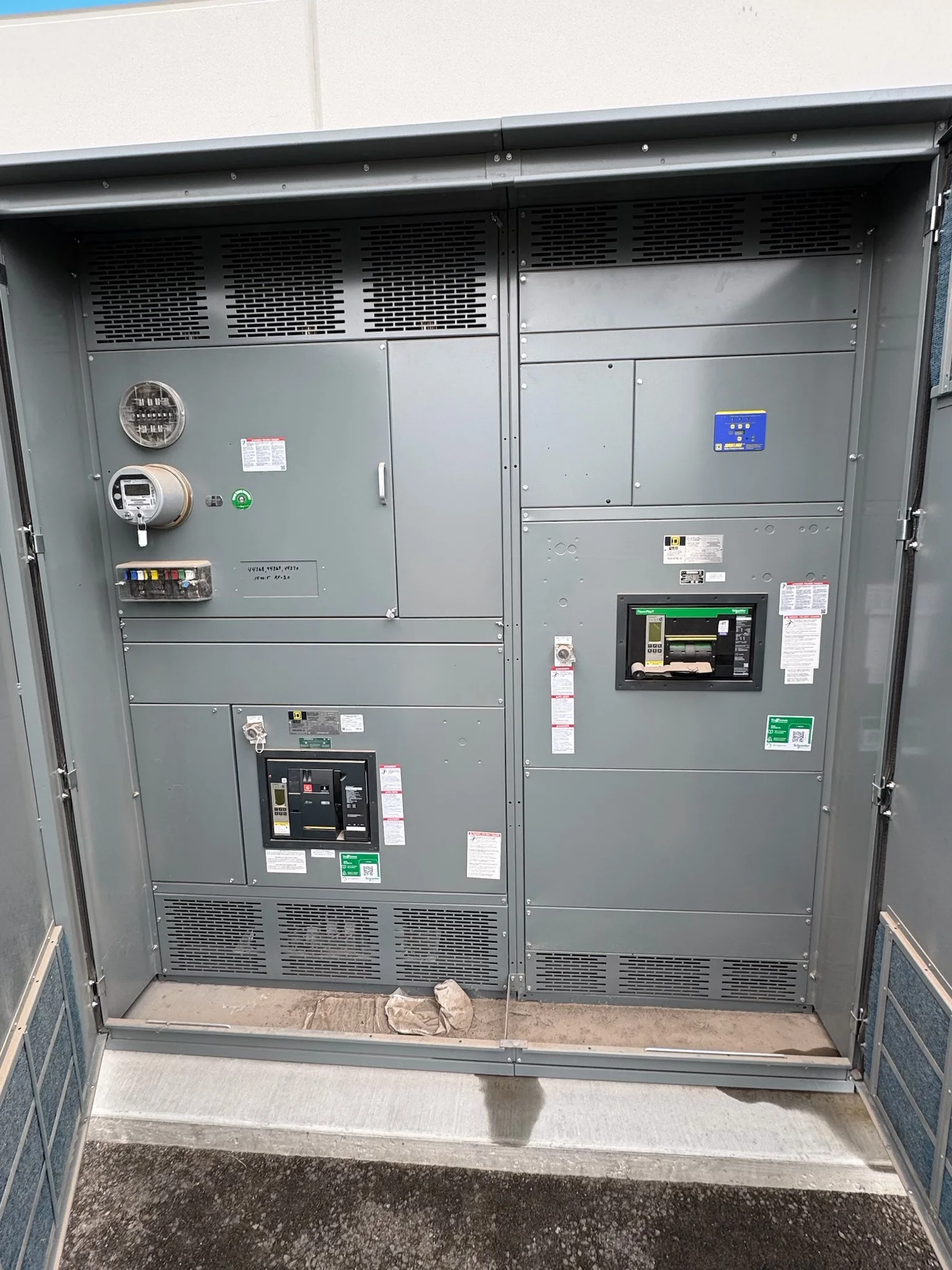
Start with the equipment class and application
First define what the project requires: a low-voltage switchboard, low-voltage switchgear, or medium-voltage equipment. These are not interchangeable categories. UL 891 applies to switchboards; UL 1558 applies to low-voltage switchgear. Medium-voltage equipment has separate design and evaluation requirements, so verify the applicable standards for the actual specification.
Describe the system voltage, frequency, available fault current, service arrangement, and intended installation environment. Note whether the equipment is for utility service, a generator, an industrial process, or another application. These details help determine whether a manufacturer’s demonstrated capabilities match the job rather than relying on a broad claim to build switchgear.
Check relevant manufacturing capability
Ask what equipment the manufacturer builds in-house and which engineering, fabrication, assembly, and testing activities are performed by others. Request examples of comparable configurations, voltage classes, and applications, while recognizing that past work does not automatically establish suitability for your project. Confirm the proposed scope and responsible parties in writing.
For a custom lineup, discuss enclosure dimensions, bus arrangement, incoming and outgoing devices, metering, control power, and required compartments. Identify constraints such as room access, floor loading, cable entry, ventilation, seismic criteria, or indoor versus outdoor placement. Confirm which requirements the manufacturer can meet and which need design review or clarification.
Review standards and evidence carefully
Request the exact standard references and supporting documentation applicable to the proposed equipment and configuration. Distinguish a manufacturer’s general capability from a particular assembly’s certification or listing. Ask whether the intended construction falls within the relevant evaluated design, and have any exceptions, component substitutions, or nonstandard features identified before purchase.
Check ratings as a coordinated set, not as isolated numbers on a brochure. Ask how voltage, continuous current, short-circuit withstand or interrupting ratings, and protective-device selections relate to the one-line diagram and system study. Confirm the responsible engineer, utility, and authority having jurisdiction will review project-specific requirements where applicable.
Assess quality practices and verification
Ask how drawings, bills of material, revisions, and approved deviations are controlled from design through production. A useful review explains how incoming components are identified, assembly work is inspected, and discrepancies are resolved. Request a description of the manufacturer’s quality procedures and determine whether they address the complexity and documentation needs of this project.
Clarify what routine inspections and production tests are planned, what records are supplied, and who witnesses or accepts them. Do not assume a factory test proves system-level performance or replaces field commissioning. Define acceptance criteria, test documentation, punch-list handling, and responsibilities for shipment inspection and startup before the purchase order is finalized.
Evaluate drawings and submittal support
A proposal should state what drawings and documents are included and when they will be provided for review. Depending on the project, useful submittals may include outline and layout drawings, elementary diagrams, connection details, device schedules, nameplate data, and installation instructions. Confirm review cycles, required customer inputs, and how late changes affect design and delivery.
Check that the manufacturer can coordinate interfaces with the project team. This may include conduit locations, cable space, protective relays, metering, communication protocols, control wiring, and connections to transformers or generators. Identify who supplies each interface item and who verifies compatibility. Resolve gaps between specifications, drawings, and the proposal rather than leaving them implicit.
Ask for relevant references and lessons
Request references for equipment reasonably similar in type, application, and project complexity, subject to customer permission and confidentiality. Ask what role the manufacturer performed, what documentation was delivered, and how design changes or schedule issues were handled. References can inform evaluation, but they do not substitute for reviewing the proposed design and its compliance evidence.
If references are unavailable or not comparable, use structured questions instead: ask for sample submittal formats, a description of change control, and a walk-through of how technical questions are resolved. Evaluate whether answers are specific and consistent. Avoid treating a general customer list, years in business, or a polished presentation as proof of project fit.
Compare proposals on scope and delivery
Compare proposals line by line for included devices, bus and enclosure construction, controls, metering, accessories, documentation, testing, freight, and exclusions. Ask vendors to identify assumptions and unresolved specification items. A lower initial price may reflect a narrower scope; establish the cost and schedule consequences of omitted components, alternate devices, or later engineering changes.
Request a schedule that shows design review, submittal approval, material procurement, production, testing, and shipment milestones. Confirm what information or approvals the customer must provide and how schedule changes are communicated. Short lead times may be available, but timing depends on configuration, component availability, review cycles, and current production capacity; obtain project-specific commitments in the proposal.
Prepare a complete request for quotation
Provide the one-line diagram, equipment schedule, specification, site conditions, and required standards with the request for quotation. Include utility requirements, available fault-current data, protective-device coordination information, and any arc-flash or selective-coordination criteria that govern the design. Mark known deviations and unresolved choices so the manufacturer can identify assumptions instead of silently filling gaps.
State quantities, target ship date, delivery location, installation constraints, preferred documentation format, and required review or witness points. The manufacturer builds new equipment in the United States using American components, offers custom fabrication, and ships nationwide; confirm the proposed configuration, schedule, scope, and freight arrangements for your project. Have the responsible engineer, utility, and AHJ review applicable design details.