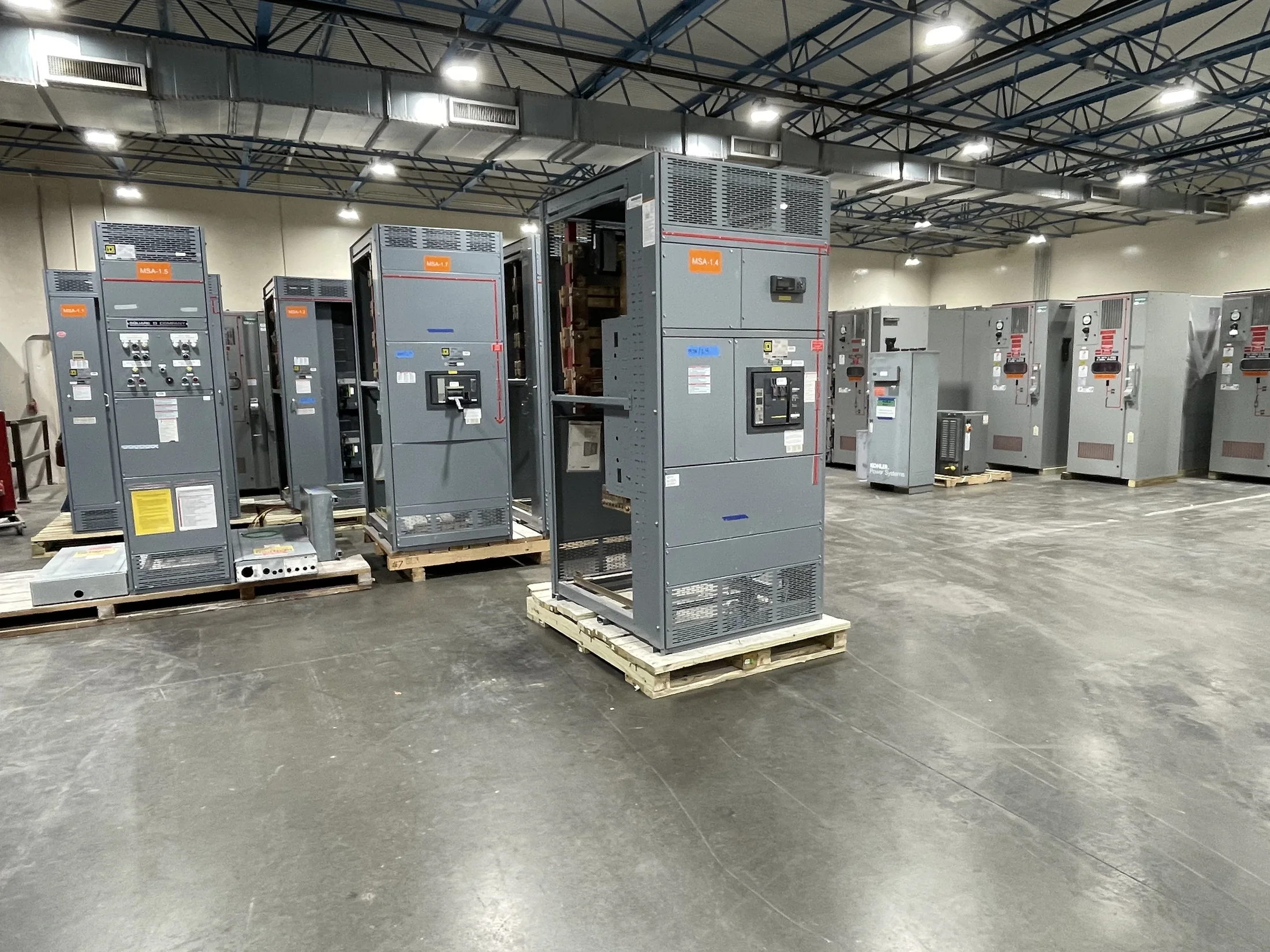
Set the responsibility map before ordering
The purchaser should name a project lead and identify who has authority to approve drawings, resolve scope questions, schedule outages, and accept equipment. This person coordinates the electrical contractor, engineer, utility contacts, commissioning provider, and manufacturer, while recording decisions and open items in a shared project schedule.
Define scope boundaries in writing: who supplies the switchgear, who unloads and sets it, who makes field connections, and who performs inspections and commissioning. State who provides temporary power, lifting plans, access coordination, and protection of the equipment after delivery. Clear boundaries prevent assumptions from becoming costly field changes.
Give the manufacturer a coordinated design basis
For a useful quotation, provide the one-line diagram, load information, system voltage, available fault-current data, service conditions, and required delivery location. Include the project schedule, applicable specifications, and known utility criteria. Identify whether the request is for a UL 891 switchboard, UL 1558 low-voltage switchgear, or medium-voltage equipment; these are distinct equipment categories.
The responsible engineer should define the electrical arrangement and confirm system grounding, protective-device functions, metering needs, and coordination requirements. Identify desired incoming and feeder configurations, source arrangements, and any requested accessories. The manufacturer can review the stated requirements and clarify buildable options, but the engineer retains responsibility for design decisions and system suitability.
Resolve utility and service-interface requirements
The purchaser and engineer should contact the serving utility early to confirm service voltage, metering arrangement, service-point location, transformer responsibilities, and rules for utility-owned or customer-owned equipment. Ask about required submittals, inspections, outage requests, and witness activities. Utility requirements can affect the lineup arrangement, compartment access, and the sequence for energization.
Document the boundary between utility work and customer work, including who furnishes conductors, terminations, metering components, and seals where applicable. Do not assume a utility will accept a proposed configuration because it appears on a preliminary drawing. Obtain the utility’s applicable requirements and have the responsible engineer reconcile them with the project design.
Approve drawings and technical changes deliberately
The purchaser should route manufacturer drawings to the engineer, contractor, and utility reviewers identified in the project plan. Review dimensions, access and working clearances, incoming and outgoing cable paths, conduit entry, equipment orientation, and connection details. Confirm that the proposed arrangement fits the electrical room and matches the latest architectural and structural information.
Resolve comments into one coordinated response before approval for production. Identify who may authorize substitutions, option changes, or schedule impacts, and require revised documents when an approved change affects interfaces. Equipment details depend on the order and project requirements; ratings, construction, certifications, and accessories should be verified for the specific configuration rather than presumed.
Prepare the site and installation sequence
The electrical contractor typically plans receiving, rigging, placement, assembly, anchoring, and field terminations, subject to the contract and local requirements. Confirm shipping access, doorway and corridor dimensions, floor loading, housekeeping-pad details, lifting clearances, and laydown space. The purchaser should ensure these site conditions are ready before the confirmed delivery window.
Agree how the equipment will be protected from moisture, dust, impact, and unauthorized access during construction and storage. Coordinate room completion, ventilation, lighting, grounding provisions, and required working space with the project team. Before installation, compare delivered sections and documentation with the approved submittals, and report shipping damage or discrepancies through the agreed process.
Coordinate field connections and pre-energization checks
Before making connections, the contractor should verify equipment identification, alignment, anchorage, bonding, conductor sizes and routing, termination requirements, and phase identification against approved documents and applicable codes. The engineer should review field changes that affect the design, including revised conductor paths or protection settings. Document deviations and obtain required approvals before they are treated as final.
Establish a pre-energization checklist that assigns responsibility for inspections, torque documentation where specified, control wiring checks, labeling, and removal of temporary grounds or shipping restraints. Confirm that protective-device settings match the approved study and equipment documentation. The responsible engineer, contractor, and commissioning provider should agree on prerequisites and safe work boundaries before testing begins.
Define commissioning scope, access, and acceptance
Select a qualified commissioning provider early enough to review the project requirements and planned test scope. Specify which inspections and electrical tests are included, applicable procedures, required instruments, documentation, and witness points. Clarify who supplies test personnel, coordinates switching, controls access, and communicates test results to the purchaser and engineer.
Commissioning is not a substitute for design review, installation workmanship, or utility approval. The project team should establish acceptance criteria and a process for recording deficiencies, assigning corrective actions, and retesting. Confirm whether testing must occur before or after final utility connections, and coordinate outage windows and operating restrictions with the utility and facility operations team.
Close the handoff with records and operational readiness
Before startup, verify that required inspections and approvals are complete, outstanding deficiencies are resolved or formally tracked, and the utility has authorized the planned energization where applicable. Agree who will direct switching, notify affected occupants, and monitor initial operation. The purchaser should confirm that operators understand access restrictions, emergency procedures, and escalation contacts.
Closeout documents should include approved as-built information, equipment instructions, test reports, protective-device settings, warranties, and records required by the contract. Identify who receives and maintains each item, and schedule operator orientation if included in scope. For a quotation, provide the intended acceptance process, commissioning expectations, project contacts, site constraints, and target delivery needs alongside technical documents.