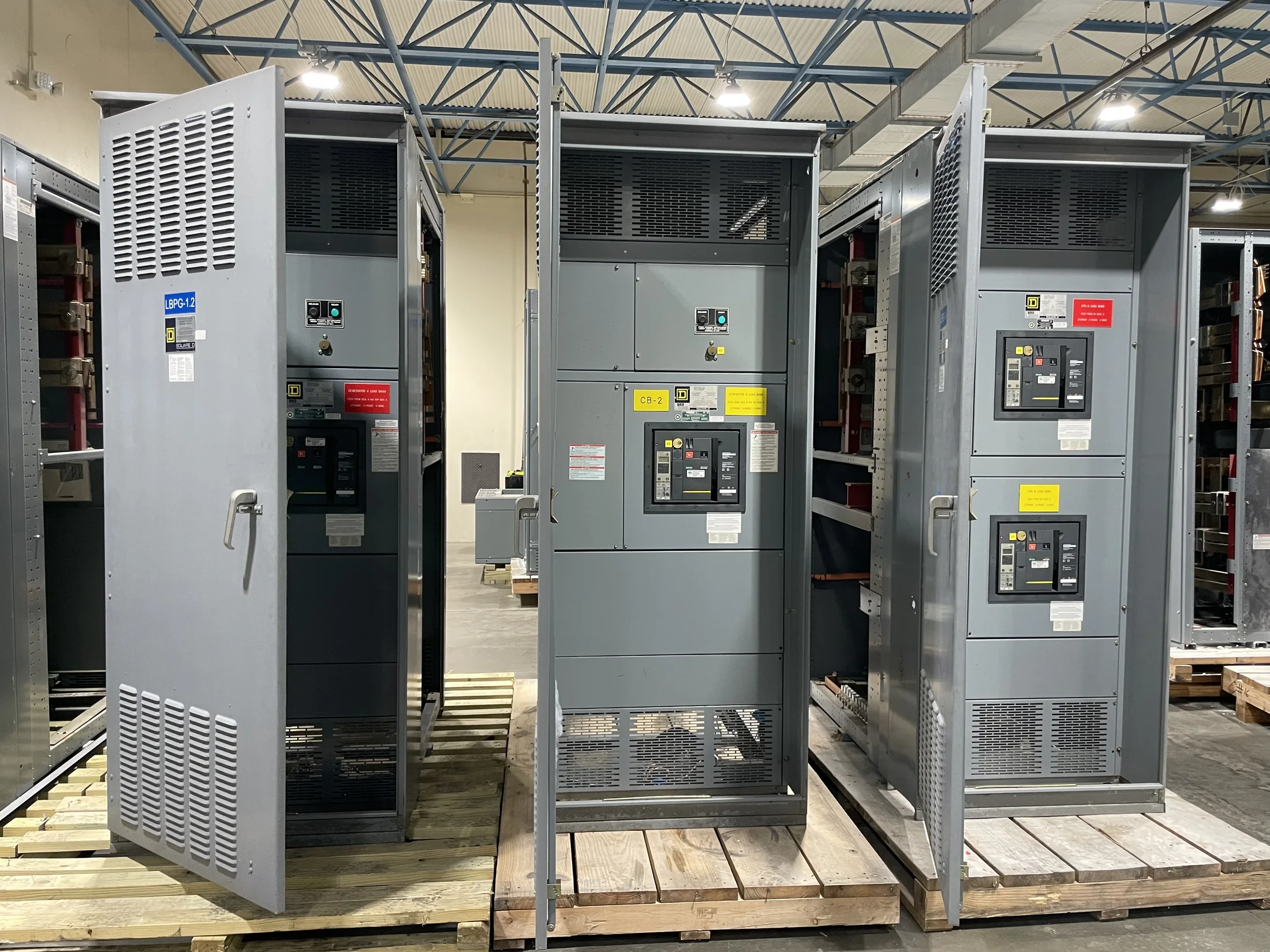
Compare the Full Ownership Picture
When comparing new switchgear purchases, separate the initial equipment cost from the costs and constraints that continue after installation. Consider engineering, installation, commissioning, routine inspection, parts availability, downtime exposure, and eventual modifications. The right comparison depends on the facility’s operating schedule, electrical system, and maintenance resources.
A lower purchase price does not necessarily indicate lower ownership cost, just as a higher price does not establish superior value. Compare equipment with equivalent voltage, current, short-circuit, environmental, and applicable construction requirements. Ask vendors to identify what is included, what remains project-specific, and which assumptions affect the quoted configuration.
Make Maintenance Access a Design Input
Maintenance cost can be affected by how technicians reach breakers, terminations, control wiring, and other serviceable components. Review working space, door and barrier arrangements, cable access, lifting or removal paths, and the sequence required for inspection. Confirm these details against the room layout, safety procedures, and the responsible engineer’s design.
Ask whether planned inspection or replacement work can be performed without disturbing adjacent equipment, and what switching or outage conditions the task would require. Do not assume that a particular compartment arrangement makes maintenance possible while energized. The facility owner, engineer, and qualified service personnel should establish acceptable procedures and outage expectations.
Plan Spares Around Actual Exposure
A spare-parts plan should reflect equipment configuration, critical loads, expected support horizon, and the consequences of a component failure. Identify which components are common across sections and which are specific to a breaker, control scheme, or protective device. Confirm part identification, interchangeability, storage needs, and ordering channels before treating spares as interchangeable.
Holding every possible replacement part can tie up capital and storage space; holding none may extend recovery time if a needed item is unavailable. Discuss candidate spares with the equipment supplier and maintenance team, using the final bill of materials and operating priorities. Availability and future compatibility should be confirmed rather than assumed.
Account for Electrical Losses
Conductive losses in switchgear and connected components can contribute to heat and operating energy use. Their financial significance depends on actual load profile, operating hours, electrical configuration, and energy prices. Request comparable loss information for the proposed designs where available, and clarify the loading and measurement assumptions behind any figures.
A loss comparison should not be reduced to a single annual savings claim without a defensible method. The responsible engineer should evaluate system loading, conductor and bus selection, temperature conditions, and coordination with upstream and downstream equipment. Consider whether expected savings justify a cost difference under realistic facility operation, not merely rated or assumed continuous loading.
Preserve Practical Options for Expansion
Future loads may require additional feeder positions, revised protection, control changes, or a larger distribution arrangement. Before purchase, identify credible expansion scenarios and ask what the proposed lineup can accommodate. A reserved space or provision may affect footprint and initial cost, and its usefulness depends on the final arrangement and applicable ratings.
Physical room alone does not establish that future additions are electrically or mechanically compatible. Changes may affect bus capacity, short-circuit duty, protection coordination, arc-flash evaluation, heat dissipation, and available fault current. The engineer should check the revised design, while the supplier confirms what modifications are feasible for the specific equipment configuration.
Match Equipment Type to the System
Life-cycle comparisons are meaningful only when the equipment category matches the application. UL 891 applies to switchboards; UL 1558 applies to low-voltage switchgear. Medium-voltage equipment is a distinct category, with requirements that depend on system voltage and project specifications. These standards are not interchangeable, and UL 891 does not cover medium- or high-voltage equipment.
Confirm nominal and maximum system voltage, continuous current, available fault current, grounding, protection, enclosure, and indoor or outdoor conditions. Also review utility requirements and the authority having jurisdiction’s applicable rules. The responsible engineer should establish the design basis so a quote reflects the intended equipment and avoids comparisons between unlike assemblies.
Evaluate Service Life and Downtime
Expected service life is influenced by environmental conditions, loading, maintenance practices, component condition, and changes in facility use. Rather than relying on a generalized lifespan, ask what inspection and maintenance information applies to the proposed equipment and which components may require attention over time. Confirm documentation, access, and support expectations for the particular build.
Downtime has operational consequences that may exceed direct repair expense, especially for critical processes. Map which loads are served, whether alternate feeds or planned shutdown windows exist, and what work requires an outage. These are project-specific operating decisions, not inherent guarantees of a switchgear design; coordinate them with facility operations and electrical engineering.
Build a Comparable Quote Request
For a useful quote, provide one-line diagrams, equipment schedules, voltage and current requirements, available fault-current information, protection needs, dimensions, cable-entry preferences, environmental conditions, and any utility or project specifications. Include maintenance-access concerns, spare-parts priorities, anticipated load changes, and requested documentation. The manufacturer builds new equipment in the United States using American components, with custom fabrication, short lead times, and nationwide shipping.
Ask suppliers to identify exclusions, assumptions, and options that change price or ownership considerations, including expansion provisions, instrumentation, controls, and requested accessories. Lead time depends on the final scope and project conditions. Have the responsible engineer review the proposed equipment, and involve the utility and AHJ where their requirements apply before placing an order.