Start with the project basis
A useful quotation begins with a defined project, not a general request for switchgear. Identify the facility, installation location, project stage, and whether the equipment serves new construction, an expansion, or a replacement. State the target delivery window and whether the quoted scope should include drawings, fabrication, and shipment.
If the design is preliminary, say what remains undecided. A manufacturer can identify information needed to refine the proposal, but an estimate based on assumed values should not be mistaken for a final, coordinated design. Have the responsible engineer review assumptions before they become procurement requirements.
Specify the equipment category and application
Use the project documents to identify whether the request is for a low-voltage switchboard, low-voltage switchgear, or medium-voltage equipment. These categories have different construction and application requirements. UL 891 applies to switchboards; UL 1558 addresses low-voltage switchgear. Neither designation describes medium- or high-voltage equipment.
Describe the source and loads served, system voltage, phase and frequency, and how the assembly fits into the distribution arrangement. Include the one-line diagram when available. If the intended equipment category is unclear, ask the design engineer to resolve it before comparing proposals built around different assumptions.
Provide ratings and fault information
Quote requests should identify required continuous current, voltage class, and available fault-current information at the equipment location. Include protective-device requirements, interrupting ratings, and coordination criteria when established by the design. These values must suit the system and applicable codes; a supplier should not guess missing engineering inputs.
Provide the latest one-line and, where relevant, the short-circuit or coordination study. Note whether the utility has confirmed its contribution and whether the study reflects planned sources such as generators or other onsite generation. The responsible engineer should verify the basis, while the utility and authority having jurisdiction may need to review related requirements.
Describe the lineup and operating needs
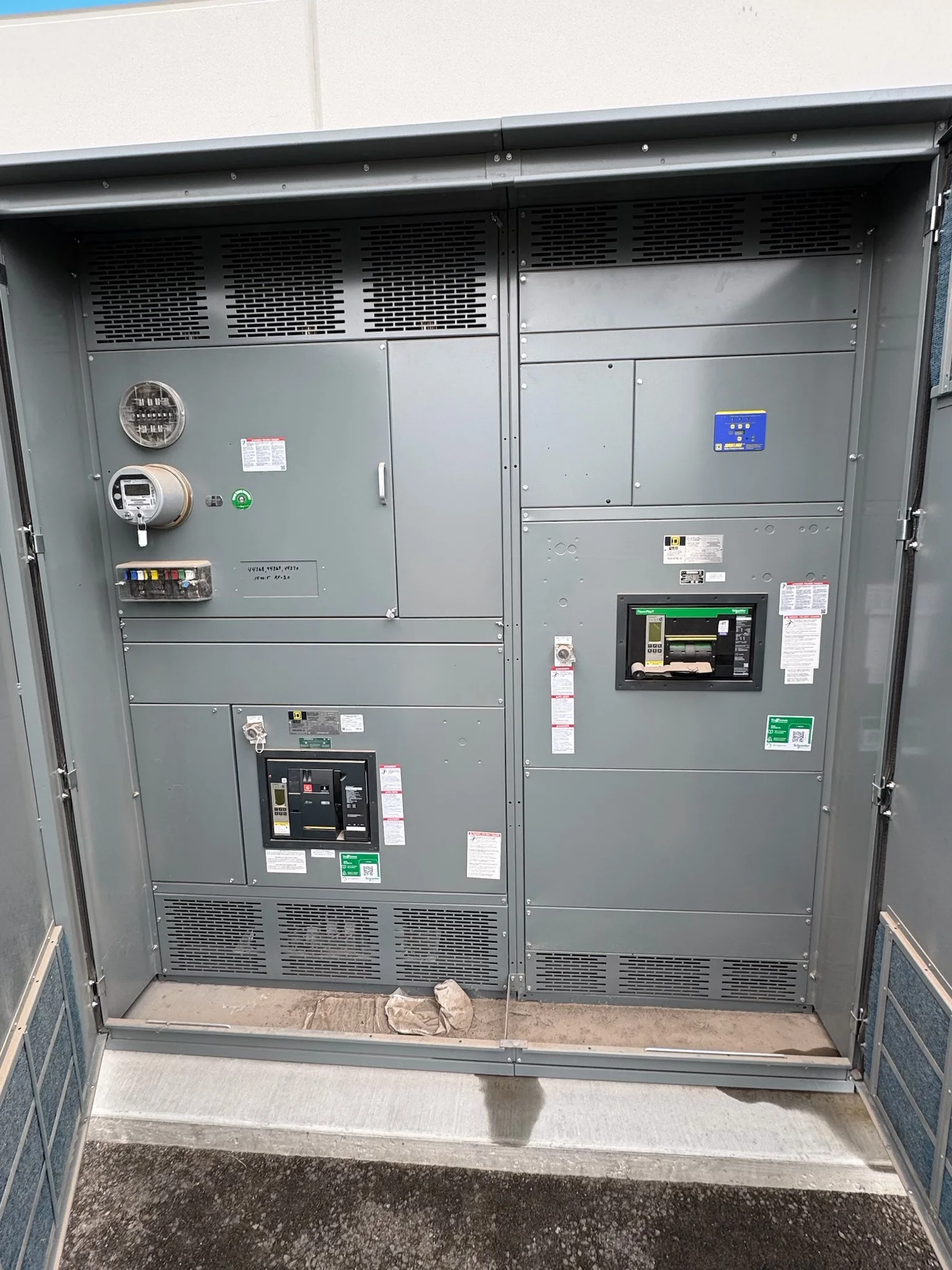
A quotation depends on the lineup arrangement: incoming sections, distribution sections, mains, ties, feeders, metering, and future provisions. Specify breaker or fusible-switch preferences where the design requires them, along with feeder quantities and ratings. Mark spare spaces separately from installed devices so proposals do not count unlike configurations as equivalent.
Explain how operators will access and maintain the assembly, including room dimensions, working clearances, cable entry direction, and front or rear access expectations. Identify unusual environmental conditions, enclosure requirements, or restrictions on section size. Confirm these details against the room layout and applicable rules before treating a proposed arrangement as suitable.
List controls, metering, and interfaces
State required metering functions, communications, protective relays, control power, alarms, and interface points. Identify protocols or owner standards only when they are known and applicable. Attach control schematics or specification sections if available, and distinguish required functions from options under consideration to keep the quote scope clear.
For integration with building systems, generators, transfer equipment, or existing distribution, identify the other equipment and who is responsible for interface design. Confirm signal lists, operating sequences, and responsibilities with the project team. A quotation should make exclusions visible rather than imply that all field wiring, programming, or commissioning is included.
Make the commercial scope comparable
Ask each supplier to identify what is included: equipment sections, devices, metering, documentation, shop drawings, and shipping terms. Request a separate list of exclusions, options, and owner-furnished items. Clarify whether installation, field testing, startup assistance, or commissioning is outside the requested manufacturing scope.
Compare proposals against a common document revision and written scope matrix. Check quantities, ratings, section dimensions, specified components, and exceptions line by line. A lower total can reflect omitted devices or unresolved assumptions, while a higher total may include options not required. Request clarification before choosing between non-equivalent quotations.
Evaluate schedule and design coordination
Provide the required ship-to location in Ohio, site access constraints, requested delivery sequence, and any milestones that affect release. Ask how drawing review, approval, and changes relate to the proposed schedule. Lead time depends on the confirmed design, components, and production planning, so do not treat an unqualified estimate as a guaranteed delivery date.
For a project with phased construction or a tight outage window, explain the sequence and identify which dates are fixed. Coordinate delivery, rigging, and installation planning with the contractor and facility team. The manufacturer builds new equipment in the United States using American components, offers custom fabrication and short lead times, and ships nationwide.
Turn the quotation into a clear next step
Before requesting a revision, consolidate questions about deviations, open technical items, options, and commercial terms. Record the document revision and quote validity information, and ask suppliers to identify changes from the requested basis. This creates a traceable comparison for engineering review and helps prevent mismatched revisions from reaching procurement.
Once a proposal is selected, route drawings and technical exceptions to the responsible engineer for review and coordinate utility or AHJ review where relevant. Confirm approved ratings, interfaces, and installation conditions before release for fabrication. A careful quote process helps Ohio buyers procure new switchgear that matches the defined project rather than an assumed standard configuration.