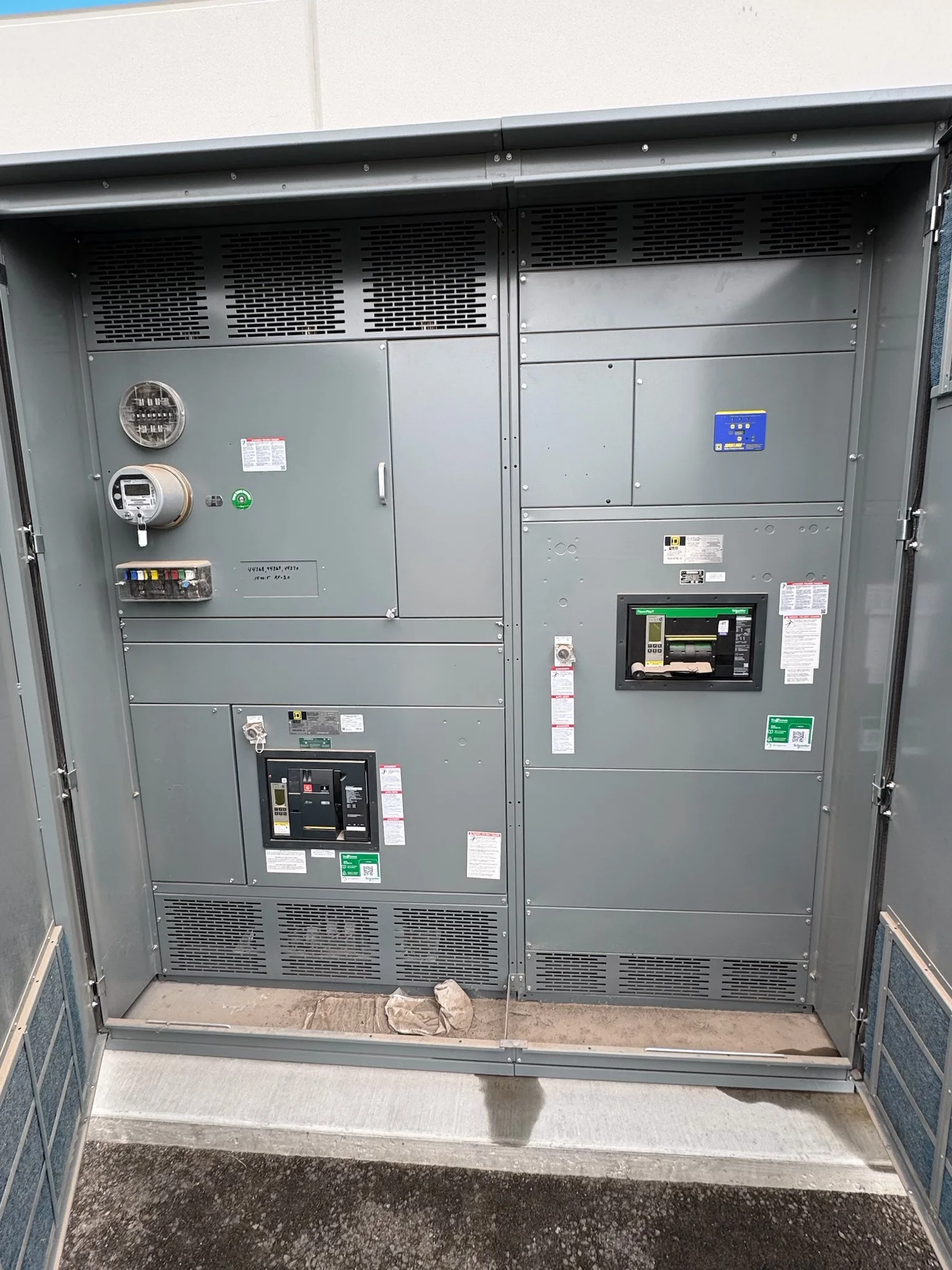
Start with the Equipment Scope
The equipment price depends on what the project actually requires: switchboard or switchgear type, voltage, service entrance arrangement, bus configuration, breaker count and ratings, metering, protective devices, and enclosure details. A budget built around an incomplete one-line diagram can omit components that materially change the manufactured lineup.
First establish whether the application calls for a UL 891 low-voltage switchboard, UL 1558 low-voltage switchgear, or medium-voltage equipment. These are distinct equipment categories, not interchangeable price options. The responsible engineer should confirm system voltage, available fault current, coordination needs, and applicable project requirements before requesting a firm configuration.
Identify Options That Change the Quote
Lineup dimensions, section quantity, bus material and ampacity, incoming and feeder devices, transition sections, and provisions for future circuits all affect price. So can specified instruments, control power, communications, ground-fault functions, surge protection, and special enclosure requirements. Confirm which items are required rather than assuming they are included.
Custom fabrication can address project-specific layouts and interfaces, but those details need to be defined early. Provide drawings, specifications, a current one-line, load information, and required submittal details. Identify requested standards or listing requirements for the proposed equipment; do not assume a particular build has an approval or feature without confirmation.
Budget Freight Separately
Freight is separate from the equipment price and depends on shipment dimensions, weight, delivery location, access, and how the lineup is divided for transport. Ask whether the quote includes shipping, what delivery terms apply, and whether the carrier can reach the actual receiving point—not merely the site address.
Before delivery, confirm the route from truck to electrical room, including door and corridor clearances, overhead limits, turning space, floor capacity, and any elevator restrictions. A lineup that cannot travel in one piece may need shipping splits and field reassembly. Agree on delivery sequence and storage conditions with the project team.
Include Unloading and Site Handling
Unloading may require a crane, forklift, rigging crew, lift plan, traffic control, or temporary removal of obstacles. Responsibility varies by delivery arrangement and site contract, so specify who supplies equipment and labor, who accepts custody, and whether the receiving crew is available during the delivery window.
Estimate handling from the actual equipment weights and approved lifting points, not a rough guess based on lineup appearance. Check slab or dock capacity, access for rigging, weather exposure, and the path to final placement. If the site cannot receive the shipment as planned, storage, redelivery, or additional handling may add cost.
Account for Engineering and Coordination
Engineering costs can include design development, protection and coordination studies, arc-flash analysis, grounding review, utility interface, drawing review, and integration with existing distribution. Which tasks belong to the manufacturer, electrical contractor, consulting engineer, or owner should be written into the scope to avoid gaps or duplicated effort.
The responsible engineer should verify fault duty, protective-device settings, selectivity objectives, feeder and service requirements, and physical interfaces. Utility requirements and the authority having jurisdiction can affect the design and approval process. Resolve discrepancies between specifications, one-line diagrams, and field conditions before release to manufacture, when changes are less disruptive.
Price Installation and Connections
Installation labor is not automatically part of an equipment quote. The contractor may need to receive and position sections, join shipping splits, anchor the lineup, install bus links, terminate conductors, and complete control wiring. Labor varies with access, working clearances, existing equipment, crew availability, and the sequence required by the site.
Check whether the project needs new feeders, conduit, cable tray, grounding conductors, barriers, housekeeping pads, or modifications to adjacent gear. Cable lengths and termination locations can affect material and labor. Confirm who provides lugs, field-installed accessories, and interconnecting conductors, and who verifies phase identification and mechanical installation.
Plan for Outages and Temporary Power
Replacing or connecting distribution equipment may require a planned outage, load transfer, temporary distribution, or phased cutover. The cost depends on operating schedules, the number of affected loads, redundancy, shutdown windows, and the time needed for safe isolation and reconnection. These costs are project-specific and should not be presumed included in equipment pricing.
Facility operations, the contractor, utility, and responsible engineer should define outage boundaries and switching responsibilities. Identify critical loads, backup sources, notification needs, and contingency plans. If temporary power is needed, determine its capacity, connection points, protection, rental period, and inspection requirements before comparing project budgets.
Include Testing and Commissioning
Commissioning costs may cover installation inspections, torque checks, insulation or continuity testing, protective-device verification, functional checks, control and communications testing, and documentation. The required activities depend on the specification, equipment scope, and project acceptance criteria. Clarify which party performs each task and what reports or records the owner expects.
Testing and energization should follow approved procedures and be coordinated with the facility, contractor, utility, and AHJ as applicable. Confirm whether specialist technicians, test equipment, relay settings, or owner training are within the installation contract. Include time for correcting deficiencies and completing turnover documents rather than budgeting only for initial energization.
Build a Comparable Project Budget
For a useful quote, provide the one-line diagram, equipment schedule, specifications, system voltage, available fault-current data, incoming and feeder requirements, site location, delivery access, and target schedule. Note whether the project is new construction, an expansion, or a replacement, and identify known outage constraints and requested commissioning scope.
Compare proposals by separating manufactured equipment, freight, unloading, engineering, installation, outage measures, and commissioning. Record exclusions, assumptions, and owner-supplied work alongside each amount. We manufacture new equipment in the United States with American components, offer custom fabrication, short lead times, and nationwide shipping; confirm project-specific scope and delivery details when requesting a quote.