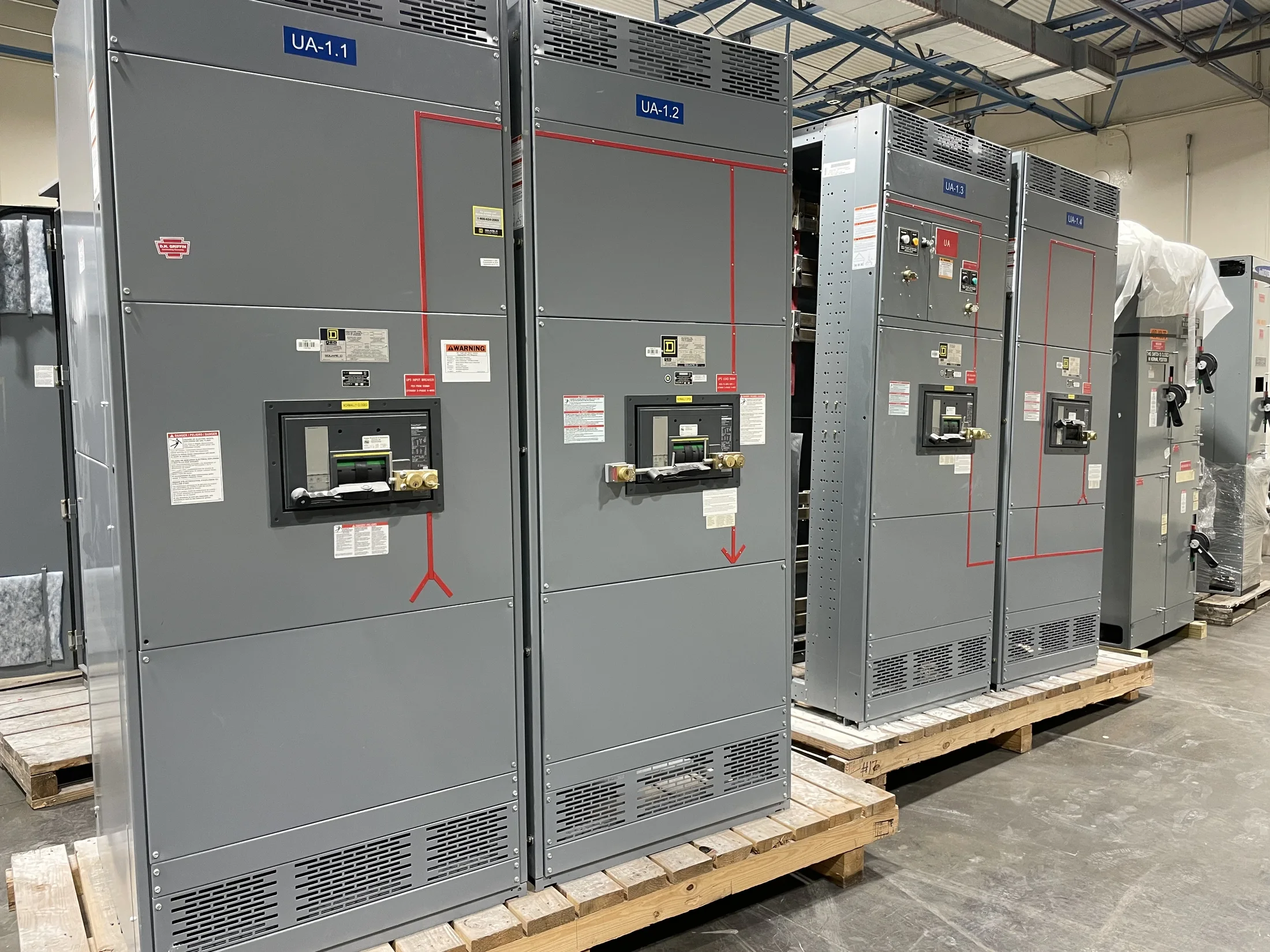
Start with the electrical duty
Before requesting a quote, describe what the equipment must serve and the electrical conditions at its point of installation. Share the system voltage, phase, frequency, available fault current if known, and expected continuous load. Identify whether the project is new construction, a capacity expansion, or a replacement, since each affects interfaces and installation planning.
Do not choose a product category from the word switchgear alone. Low-voltage distribution may call for a UL 891 switchboard or UL 1558 low-voltage switchgear, depending on design and project requirements. Medium-voltage systems need appropriately rated medium-voltage equipment; UL 891 applies to switchboards, not medium- or high-voltage gear.
Define the system configuration
Map the equipment’s role in the distribution system: service entrance, main distribution, feeder distribution, generator paralleling, or another defined function. Provide a one-line diagram showing sources, buses, main and feeder devices, tie arrangements, and downstream loads. If the diagram is preliminary, label assumptions and identify which decisions remain open.
Specify the preferred lineup arrangement and connection direction where established, including incoming and outgoing cable or bus locations. Note whether a future section, spare feeder space, or planned load growth is part of the scope. These choices influence enclosure layout and bus design, so describe actual needs rather than assuming every configuration is available.
Identify devices and control needs
List the main and feeder protective devices by function and required ratings, using the project’s coordination study or design documents where available. Identify any metering, instrument transformers, protective relays, control power, indication, communications, or interlocking that the design requires. Device selection and settings should follow the responsible engineer’s design, not a supplier’s unsupported assumptions.
Clarify which functions are included in the purchase and which are supplied by others. For example, state whether controls, network interfaces, field wiring, remote monitoring, and programming are required, and provide relevant interface requirements. If specifications name particular components or approved equivalents, include that language with the quote request so scope can be reviewed.
Match the enclosure to the site
Provide installation details that can change the build: indoor or outdoor location, available floor space, access route, ceiling height, working clearances, and cable entry constraints. Share room drawings or equipment plans when possible. Confirm environmental conditions such as ambient temperature, moisture, dust, corrosive exposure, or elevation with the project engineer.
State the enclosure arrangement, access, finish, and environmental protection requirements called for by the project documents. Do not treat a requested feature as standard without confirmation. For outdoor installations, explain the site exposure and any required enclosure or accessory details. The responsible engineer and authority having jurisdiction should review applicable codes and installation conditions.
Send documents that support pricing
A useful quote package includes the one-line diagram, equipment specification, load information, site drawings, and applicable coordination or short-circuit study data. Include the project location, quantity, requested delivery point, and any bid forms or submittal requirements. If documents conflict, flag the discrepancy instead of asking a supplier to infer which requirement governs.
Mark information as confirmed, preliminary, or pending, and provide a contact for technical questions. Identify required drawings, review milestones, documentation, and any inspection or testing provisions specified by the project. A clear list of exceptions or open items makes it easier to compare proposals on equivalent scope rather than headline price alone.
Review standards and interfaces
Specify the applicable product standard and project requirements without mixing equipment categories. UL 891 is for low-voltage switchboards; UL 1558 covers low-voltage switchgear. Medium-voltage equipment is a distinct category with separate design and applicable standards. The proposed equipment type and compliance requirements should be confirmed for the actual application.
Check connections to the utility, transformers, generators, transfer equipment, and downstream distribution. Confirm utility service requirements, grounding, metering responsibilities, and interface ownership with the utility and project team. The responsible engineer should verify system coordination, interrupting duty, and protection requirements; the authority having jurisdiction reviews code compliance for the installation.
Confirm schedule and delivery scope
Share the required ship date, site readiness assumptions, construction sequence, and any dates tied to submittal approval or outage planning. Lead time depends on the final configuration, component availability, engineering review, and release of approved drawings. Ask for schedule expectations against the defined scope rather than relying on an unqualified estimate.
For Ohio projects, identify the delivery location, unloading arrangements, receiving hours, and restrictions on truck access or staging. For projects elsewhere in the United States, provide the same details and note any freight, rigging, or site coordination requirements. Confirm what the equipment supplier includes and what the contractor or purchaser must arrange.
Move from quote to approved order
Before placing an order, compare the proposal against the specification and drawings line by line. Resolve exceptions, included devices, accessories, documentation, delivery terms, and open technical questions in writing. Verify that the quoted equipment matches the intended system voltage, duty, arrangement, and project standards; request clarification when assumptions are not explicit.
After scope alignment, the manufacturer can develop the order documents and custom fabrication details for review. Our company builds new electrical switchgear and power distribution equipment in the United States with American components, offers custom fabrication and short lead times, and ships nationwide. Final design requirements remain subject to engineering review and project approval.