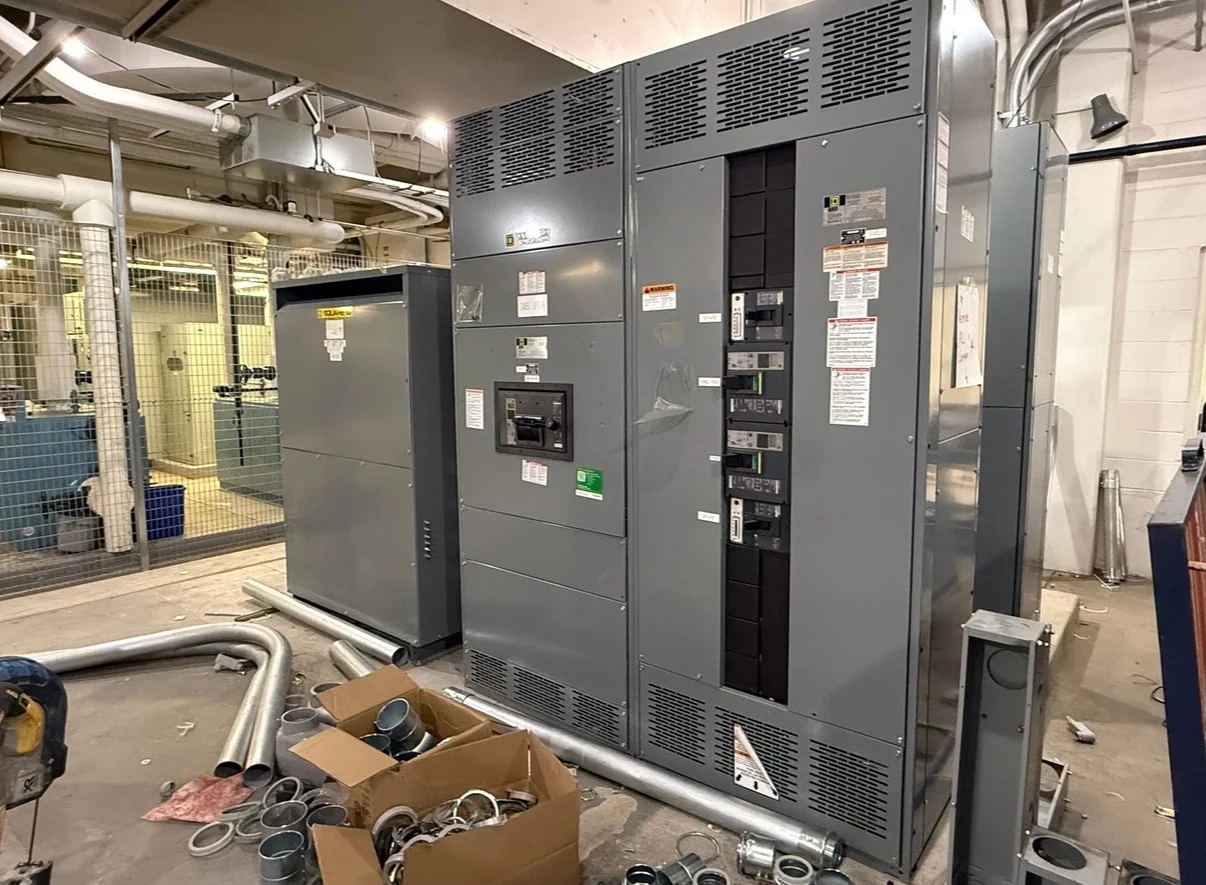
Separate the Equipment Package from the Project Design
Buying new switchgear does not transfer responsibility for the entire electrical project to the equipment manufacturer. The manufacturer develops and builds the specified equipment assembly; the project’s responsible engineer determines how that assembly fits the facility’s electrical design and applicable project requirements.
Establish the boundary early: identify who selects the system arrangement, supplies feeder and load data, performs studies, prepares installation documents, and submits approval packages. A written responsibility matrix prevents gaps, such as assuming a quoted lineup includes field wiring design, utility coordination, or permit drawings.
Define Equipment Design and Configuration
Equipment design converts an approved application and specification into a buildable assembly. Configuration decisions may include service voltage, phase and wire arrangement, main and feeder devices, bus arrangement, metering, control power, enclosure, access, and provision for future sections. The final selection depends on the project’s documented operating conditions.
Identify the applicable equipment category and standard rather than using “switchgear” as a catchall. UL 891 applies to low-voltage switchboards; UL 1558 applies to low-voltage switchgear. Medium-voltage equipment is a different class with separate standards and requirements. Confirm the intended assembly and specification with the responsible engineer.
Provide Complete Information for a Useful Quote
A quote is only as well-defined as its inputs. Provide the one-line diagram, equipment schedule, project specification, voltage and frequency, available fault-current information, source and load details, required breaker functions, and any metering or control diagrams. Include enclosure location, access direction, and environmental conditions.
Also identify project milestones, requested submittals, delivery constraints, and interfaces with existing or separately supplied equipment. Flag requirements that are still pending, including utility data or final study results. The manufacturer can identify configuration questions and quote the defined new equipment scope, but should not silently fill engineering gaps with assumed values.
Keep Installation Design with the Project Team
Installation design addresses the building and field work around the assembly: room layout, working clearances, access routes, anchorage, floor openings, conduit entry, cable routing, grounding, and connections to upstream and downstream systems. The project engineer and installation team coordinate these items against site conditions and governing codes.
Confirm dimensions, shipping splits, termination locations, and cable or bus interfaces against the equipment drawings before construction. Site access and handling can affect feasible lineup arrangements. The installer follows approved documents and manufacturer instructions; changes to layout or connections should be reviewed by the responsible engineer rather than improvised in the field.
Assign Power System Studies Explicitly
Power system studies answer questions that equipment drawings alone cannot resolve. Depending on the project, the responsible engineer may need to evaluate short-circuit duty, protective-device coordination, arc-flash hazards, load flow, or grounding. Study scope depends on the system and applicable requirements; it is not automatically included in an equipment purchase.
The study engineer needs accurate source data, transformer characteristics, conductor lengths and sizes, connected loads, operating configurations, and protective-device information. The study results may affect interrupting ratings, breaker selections, settings, labels, or coordination requirements. Confirm who provides final data, completes calculations, and communicates resulting changes before equipment release.
Coordinate Utility Inputs and Switching Interfaces
Utility responsibilities typically concern the point of service, available fault current, service characteristics, metering rules, and connection conditions. The facility’s engineer or designated project lead requests and verifies that information, then coordinates service equipment requirements with the utility. Requirements vary by provider and project; do not rely on an assumed standard interface.
Document ownership of utility-facing drawings, review submissions, and responses to comments. If the service arrangement, metering compartment, or incoming termination depends on utility direction, obtain that direction before finalizing the configuration. A manufacturer can incorporate confirmed requirements into a new assembly, but does not replace the utility’s review or authorization.
Understand Submittals, Reviews, and Approvals
Manufacturer submittals show the proposed equipment arrangement and relevant electrical and mechanical details for project review. The engineer of record checks them against the design intent, specification, study conclusions, and interfaces. Review and approval do not shift responsibility for the overall system design to the manufacturer.
The authority having jurisdiction, or AHJ, interprets and enforces applicable codes for the project and may require permit documents, inspections, or other evidence. The project team identifies the local approval process and submits the required materials. Confirm who resolves comments and whether changes require revised drawings, studies, or utility review.
Control Changes Through Release and Delivery
Before releasing equipment for manufacture, reconcile approved submittals with the purchase order, final one-line diagram, device schedules, and confirmed study inputs. Record unresolved exceptions and assign an owner and deadline. Changes after release can affect assembly configuration, interfaces, review documents, and delivery coordination, so route them through documented approval.
The manufacturer builds new equipment in the United States with American components, offers custom fabrication, and ships nationwide. Lead time depends on the defined scope and current project conditions; confirm schedule expectations in the quotation and order documents. Keep one accountable project contact for technical decisions and drawing revisions.
Use a Responsibility Checklist Before Ordering
Before placing an order, confirm the equipment standard and scope, source and load data, fault-current basis, enclosure and access conditions, connection interfaces, and required submittal content. Name the parties responsible for installation drawings, studies, utility coordination, permits, and field verification. Make pending decisions visible instead of treating them as settled.
Have the responsible engineer review the electrical design and equipment selection; consult the utility and AHJ where their requirements apply. This division of work supports a clearer quote and a more coordinated project without suggesting that one supplier controls every design decision. The purchase should proceed on documented requirements, not assumptions.