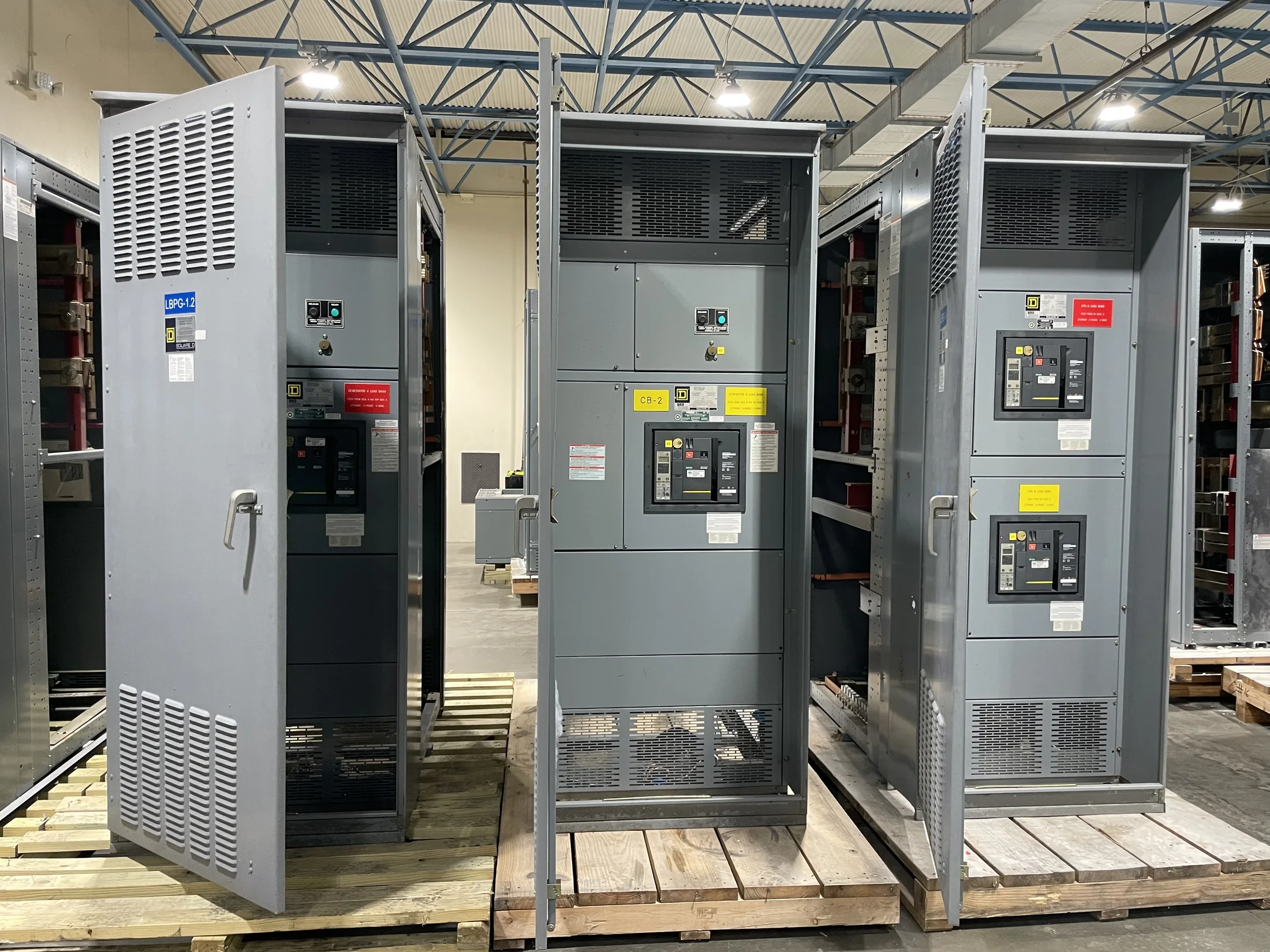
How do I choose between a switchboard and low-voltage switchgear?
Start with the distribution design, available fault current, service requirements, and operating needs—not the product name alone. UL 891 switchboards and UL 1558 low-voltage switchgear are distinct equipment categories. The responsible engineer should determine which construction and applicable standard fit the project and local requirements.
Compare main and feeder devices, voltage and current ratings, fault-current withstand or interrupting requirements, accessibility, and maintenance approach. A one-line diagram and load information help clarify the choice. The final selection should be checked against the project specifications, utility requirements, and authority having jurisdiction (AHJ).
When does a project need medium-voltage equipment?
Medium-voltage equipment is considered when the distribution system operates above the low-voltage range, such as at a utility service or campus distribution level. Its insulation, switching devices, protection, clearances, and application differ from low-voltage switchgear; UL 891 applies to switchboards, not medium- or high-voltage equipment.
Confirm system voltage, grounding method, available fault duty, utility service arrangement, and the intended equipment function before requesting a quote. The responsible engineer and utility should establish interface and protection requirements. Product scope and applicable standards depend on the specific design and must be confirmed for the project.
What information should I provide for an equipment quote?
Send the one-line diagram, project specification, system voltage, phase and wire configuration, available fault current, and required equipment ratings if established. Include main and feeder quantities, device types, trip or protection requirements, metering needs, and any preferred lineup arrangement. Identify the project location and requested delivery window.
Also share room dimensions, access route constraints, cable entry and exit preferences, and relevant environmental conditions. Note whether the scope includes controls, transition sections, or interfaces with existing systems. If details remain open, identify them as pending rather than assuming standard features; the manufacturer can flag information needed to define the proposed build.
Which drawings and documents can be requested?
Documentation needs vary by specification and scope. Ask which submittal drawings, equipment schedules, bills of material, wiring information, and operation or maintenance documents are included or available for the proposed equipment. State review milestones and required formats early so document preparation can be coordinated with the project schedule.
Confirm whether the engineer, contractor, utility, or AHJ requires specific labels, studies, or records. Some documents depend on the final configuration or on information supplied by others. Do not treat a drawing package as approval of the overall electrical design; the responsible engineer must review it for system coordination and code compliance.
How should I plan the equipment room and installation?
Check the room layout against the proposed lineup dimensions, working clearances, doors, overhead obstructions, cable routing, and access for delivery and placement. Confirm whether cables enter from above or below and identify the location of conduits, trenches, and structural supports. These details can affect section arrangement and fabrication.
Coordinate equipment placement with the electrical drawings, building conditions, and installation sequence before releasing the design. Confirm site access, unloading responsibilities, and any lifting or rigging limitations with the project team. Required clearances and installation provisions depend on the applicable codes, equipment design, and AHJ review, not a generic room assumption.
What affects lead time and the delivery plan?
Schedule depends on the approved configuration, component availability, engineering review, drawing approvals, and project changes. Provide the required in-service date, decision deadlines, and any phased delivery constraints when requesting a proposal. Short lead times may be available, but timing must be confirmed for the actual scope and current production conditions.
The manufacturer builds new equipment in the United States using American components, offers custom fabrication, and ships nationwide. Confirm the proposed schedule, shipping terms, destination access, and responsibility for unloading with the supplier. Build and transit timing are not interchangeable; coordinate both with construction milestones and avoid treating an estimate as a guaranteed delivery date.
Can equipment be customized for project requirements?
Custom fabrication can address project-specific lineup dimensions, device arrangements, cable provisions, controls, metering, or enclosure details when feasible. Provide the specification and markups rather than relying on a general request for a “custom” lineup. Each requested feature should be reviewed for compatibility with the selected equipment category and electrical ratings.
Ask the manufacturer to identify assumptions, exceptions, and items requiring engineering confirmation in the proposal and drawings. A requested option is not automatically included or available on every build. The engineer should verify that changes preserve required ratings, protection coordination, maintainability, and compliance with the project specification and applicable authority requirements.
What should I review before approving a proposal?
Compare the quoted scope with the one-line diagram and specification: equipment type and standard, system ratings, main and feeder devices, metering, accessories, lineup arrangement, and documentation. Check exclusions and clarify who supplies controls, cables, studies, and field services. Resolve differences in writing before authorizing fabrication to reduce avoidable design changes.
Confirm the proposed delivery assumptions, drawing review process, shipping scope, and any information still required from the customer or engineer. Verify that commercial terms match the project’s purchasing requirements. Final electrical design decisions remain with the responsible engineer, with utility coordination and AHJ review where applicable; a quote does not replace those reviews.