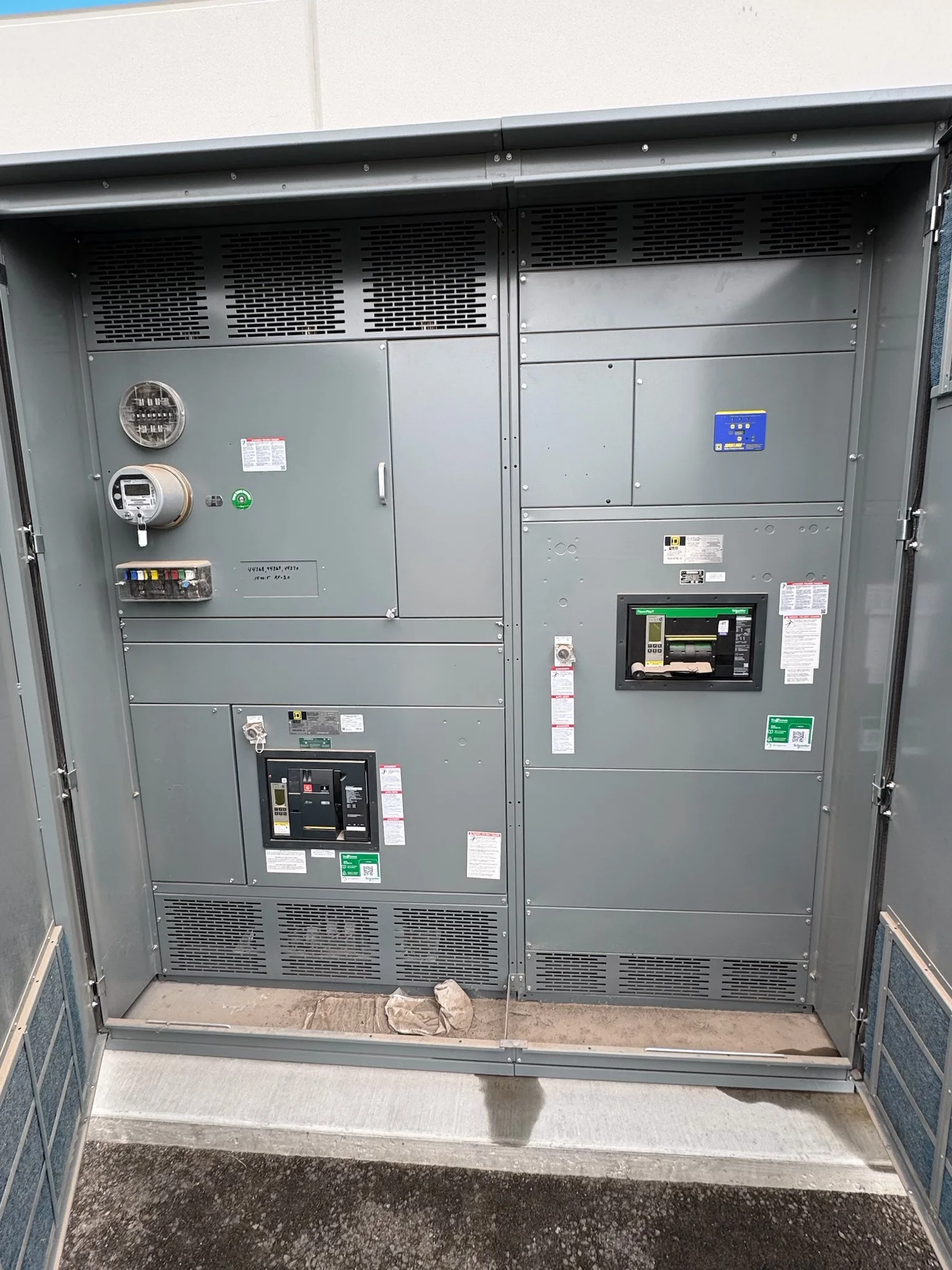
Start With a Bounded Basis of Design
Design-build teams often need budget and procurement direction before drawings and loads are fully settled. Begin by recording what is known, what is estimated, and who owns each open decision. Identify the design stage, intended service, project location, and anticipated delivery sequence so a quote reflects the current basis rather than an implied final design.
Separate mandatory requirements from provisional assumptions. For example, note whether service voltage, available fault current, load schedule, and source arrangement are confirmed or awaiting utility coordination. A manufacturer can develop a new-equipment proposal against stated inputs, but unresolved values should remain visible for review—not silently converted into guaranteed ratings or final configuration.
Establish the Electrical Boundaries
Define what the procurement includes and where interfaces sit. Confirm whether the package is a switchboard, low-voltage switchgear, or medium-voltage equipment; these are distinct equipment categories with different construction and standards considerations. UL 891 applies to switchboards, while UL 1558 applies to low-voltage switchgear. Neither designation should be treated as a blanket requirement for medium-voltage equipment.
Provide a one-line diagram or a clear written description of incoming sources, bus arrangement, tie breakers, and outgoing feeders. Identify utility and transformer interfaces, grounding approach, metering, and any generator or alternate-source connections. The responsible engineer should verify system application and applicable standards; utility requirements and AHJ review may affect final details.
Make Load Information Traceable
A preliminary load list is useful only when its status is clear. Mark connected loads, demand assumptions, spare capacity, motor starting needs, and anticipated future additions as confirmed, estimated, or still under development. Include feeder quantities and expected breaker types where known, and identify loads with unusual operating or coordination requirements for engineering review.
As schedules change, preserve the source and date of each revision. A new motor, revised demand calculation, or added process line can alter feeder count, protective-device selection, bus requirements, and enclosure planning. Ask the project team to identify which changes are design development and which represent an approved basis change before requesting a revised quotation.
Treat Ratings as Project Decisions
Voltage, continuous current, short-circuit capability, and protective-device characteristics must be evaluated as a coordinated system, not selected from a generic preference. Share available fault-current data and its source, including whether it is preliminary or utility-confirmed. The engineer should assess interrupting and withstand requirements, protection coordination, and any constraints imposed by upstream equipment.
Do not infer a rating from an early drawing or from a neighboring project. If fault current, transformer data, or operating configuration is unsettled, list the open item and the party responsible for closure. A quote can identify its design basis and assumptions; final equipment selection requires engineering confirmation against the completed system and applicable project criteria.
Resolve Space, Access, and Environment
Room dimensions and installation conditions can determine whether a proposed lineup is practical. Provide available wall length, ceiling height, working clearances, cable entry direction, access route, and any restrictions on lifting or placement. Confirm whether the lineup must align with existing equipment or connect to bus duct, conduit, transformers, or other package interfaces.
Describe indoor or outdoor placement, ambient conditions, elevation, ventilation, contamination concerns, and enclosure expectations when relevant. These are project-specific inputs, not features to assume. Early coordination can expose conflicts between equipment layout, architectural openings, and cable routing before fabrication documents are approved and physical changes become more disruptive.
Define Options Without Hiding Open Items
List desired functions such as metering, communications, ground-fault protection, arc-energy reduction measures, or automatic transfer logic, while distinguishing required functions from alternates. Identify control power sources, communication protocols, device preferences, and interface responsibilities where established. A project team should confirm compatibility with the intended operating scheme and other vendors’ equipment.
For each unresolved option, record its decision date, decision-maker, and schedule consequence. A pricing allowance or alternate can help compare choices, but it should not obscure what is included in the base proposal. Ask the manufacturer to state assumptions and exclusions plainly so engineering, purchasing, and construction teams evaluate the same configuration.
Build Change Control Into Procurement
Use a controlled document register for one-lines, specifications, load schedules, room plans, and interface drawings. Assign revision identifiers and dates, and route changes through a designated project contact. Before accepting a revision, compare it with the quoted basis and identify effects on equipment arrangement, device selection, materials, engineering effort, and the required delivery sequence.
Agree on a practical review path for submittals and deviations. The responsible engineer should disposition technical questions, while the buyer confirms commercial and schedule impacts before authorizing changed scope. This prevents informal markups from being mistaken for approved fabrication information and keeps a traceable record of decisions as design-build documents mature.
Prepare a Quote Package That Can Mature
For a useful initial quote, provide the project schedule, equipment category, one-line or service description, preliminary load and feeder information, known ratings, physical constraints, specification, and required options. Clearly label missing or provisional data. Include shipping destination and requested delivery milestones so the proposal can address the actual project context without assuming details not supplied.
As the design advances, update the package through agreed revisions and request confirmation of any changed assumptions before release. The manufacturer builds new equipment in the United States using American components, offers custom fabrication, and ships nationwide; project-specific scope and timing should be confirmed during quotation. Have the responsible engineer, utility, and AHJ review applicable design decisions.