Start with the decisions metering must support
Before selecting meters, identify how the information will be used: utility or tenant billing, energy allocation, demand management, equipment diagnostics, or operational visibility. These purposes call for different measurement points, accuracy requirements, data retention, and access controls. Share the intended decisions with the electrical designer and equipment manufacturer early.
Define which loads, sources, and distribution sections need separate readings. A single main meter may be sufficient for an overview, while a facility tracking production areas may need branch or feeder measurements. Establish whether values must be available locally, remotely, or both, and identify who will maintain the system.
Choose measurement points and equipment arrangement
Meter location depends on the one-line diagram and the purpose of each reading. Common locations include service entrances, incoming sources, tie breakers, and selected outgoing feeders. Confirm whether measurements should represent utility-delivered energy, a bus section, or a particular load; those points can differ electrically and should be labeled unambiguously.
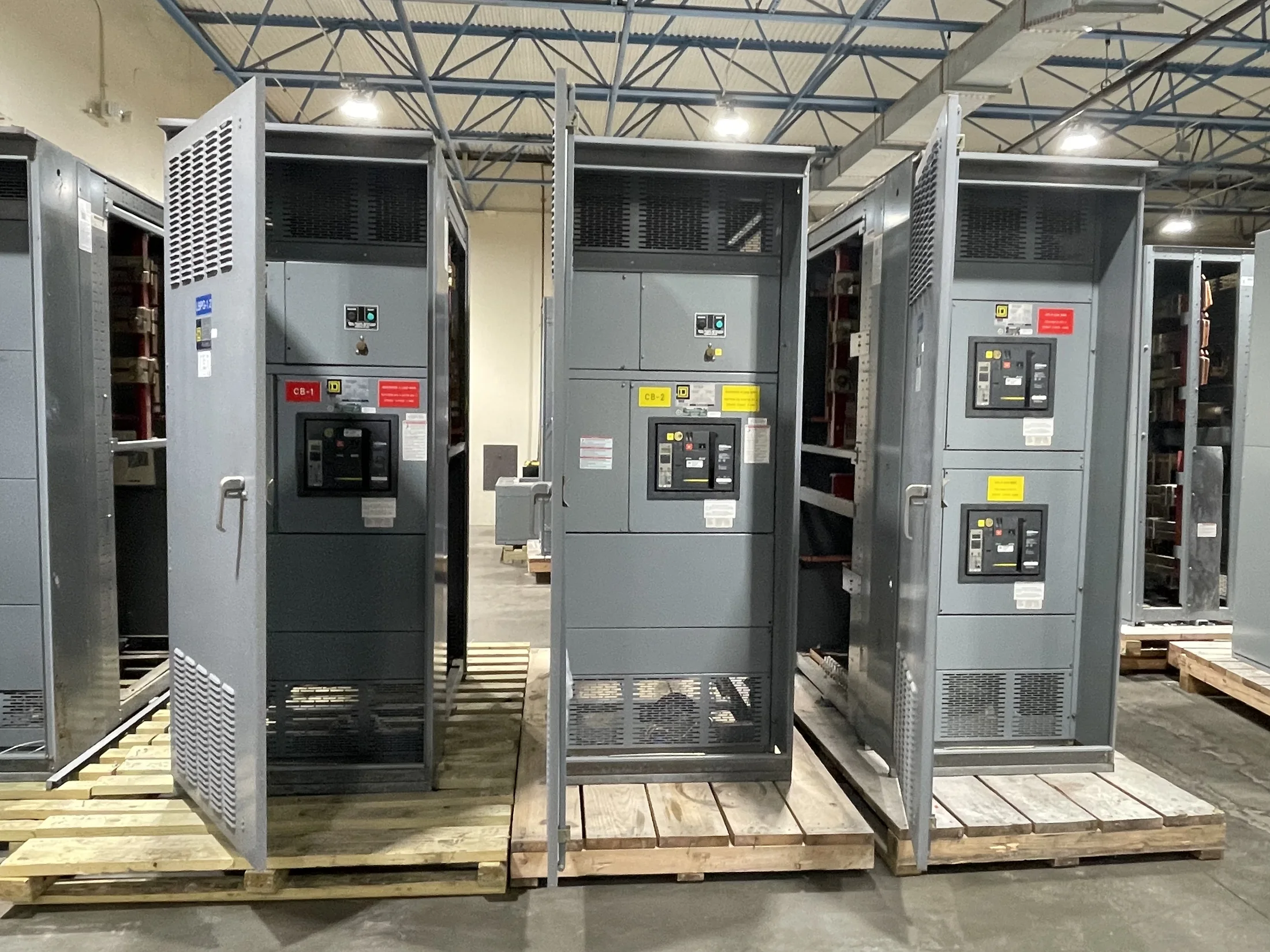
The switchgear or switchboard configuration affects access to conductors, instrument placement, and wiring routes. Provide the equipment lineup, voltage and phase arrangement, source and tie details, and feeder schedule for review. A proposed meter position must also fit the design’s barriers, clearances, compartments, and maintenance approach without compromising the assembly’s intended construction.
Match current transformers to the application
Current transformers (CTs) provide scaled current signals to compatible meters and protective or monitoring devices. Their ratio, accuracy class, burden, polarity, and physical arrangement must suit the expected current range and connected instruments. The responsible engineer should specify application requirements rather than selecting a CT from nominal system voltage or feeder size alone.
Confirm conductor dimensions, bus configuration, available mounting space, and whether CTs are needed on all phases or a neutral. Metering CTs and protection CTs serve different functions and should not be treated as interchangeable. Where both are required, the design must account for device connections, test access, labeling, and applicable separation practices.
Specify voltage inputs and meter functions
A meter may require voltage inputs as well as CT signals to calculate quantities such as power, energy, power factor, and demand. Confirm the system voltage, wiring configuration, frequency, and whether voltage transformers or fused sensing connections are appropriate for the proposed equipment. The engineer should verify input ratings and connection diagrams against the selected meter.
List the functions operators actually need, such as phase values, interval demand, energy totals, alarms, or power-quality indicators. Not every meter provides every function, and capabilities vary by device and configuration. Identify any required display, password or access approach, event logging, and data export expectations so the equipment arrangement and meter selection can be reviewed together.
Plan communications and system integration
For remote monitoring, specify the destination system and communication method expected by the facility, such as a building management system, supervisory control system, or energy platform. Identify protocol, network ownership, addressing and cybersecurity requirements, and whether the customer expects a gateway. Compatibility must be confirmed between the meter, network infrastructure, and receiving software.
Clarify who supplies and configures network components, establishes register maps, and performs end-to-end integration. A meter with a communications port does not by itself establish a working data path. Provide any required point list, naming convention, polling expectations, and connection constraints; confirm these with the controls team and responsible engineer before equipment details are finalized.
Account for wiring, access, and coordination
Metering requires more than choosing devices: instrument wiring, terminal blocks, fuses where applicable, test provisions, and clear identification all affect the build. Coordinate these details with protection, control, and auxiliary circuits. Confirm whether the customer or contractor will make field communications and sensing connections, and document boundaries to avoid gaps during installation and commissioning.
Review meter visibility and service access for the intended room and operating practices. Door-mounted displays, internal instruments, and remote displays present different access and wiring considerations. Confirm enclosure arrangement, environmental conditions, cable entry needs, and any restrictions on opening compartments. The responsible engineer and authority having jurisdiction should review the complete design where required.
Prepare complete information for a quote
A useful quote package includes the one-line diagram, equipment ratings and lineup, source and feeder schedule, requested measurement points, and metering functions. Add system voltage and frequency, available fault-current information, enclosure and installation conditions, and the governing project specifications. Provide preferred meter makes or approved alternatives only when the project requires them.
Include CT requirements or ask for engineering coordination based on documented measurement needs; also provide communications protocols, point lists, network interface expectations, and responsibility assignments. State schedule milestones and required submittal information. These details let the manufacturer assess custom fabrication, identify open technical questions, and prepare a proposal without assuming unconfirmed features or performance.
Coordinate review, build, and delivery
Our team manufactures new switchgear and power distribution equipment in the United States using American components, with custom fabrication and short lead times available for project-specific configurations. Final scope, component selection, documentation, and schedule depend on the approved design and build requirements. Nationwide shipping is available for customers in Ohio and across the country.
Before release, have the responsible engineer check metering connections, CT application, protective-device coordination, communications interfaces, and consistency with the project one-line. Coordinate utility requirements and AHJ review where applicable. Identify the testing, records, and commissioning checks required by the project; confirm their scope during design review rather than assuming they are included in every build.