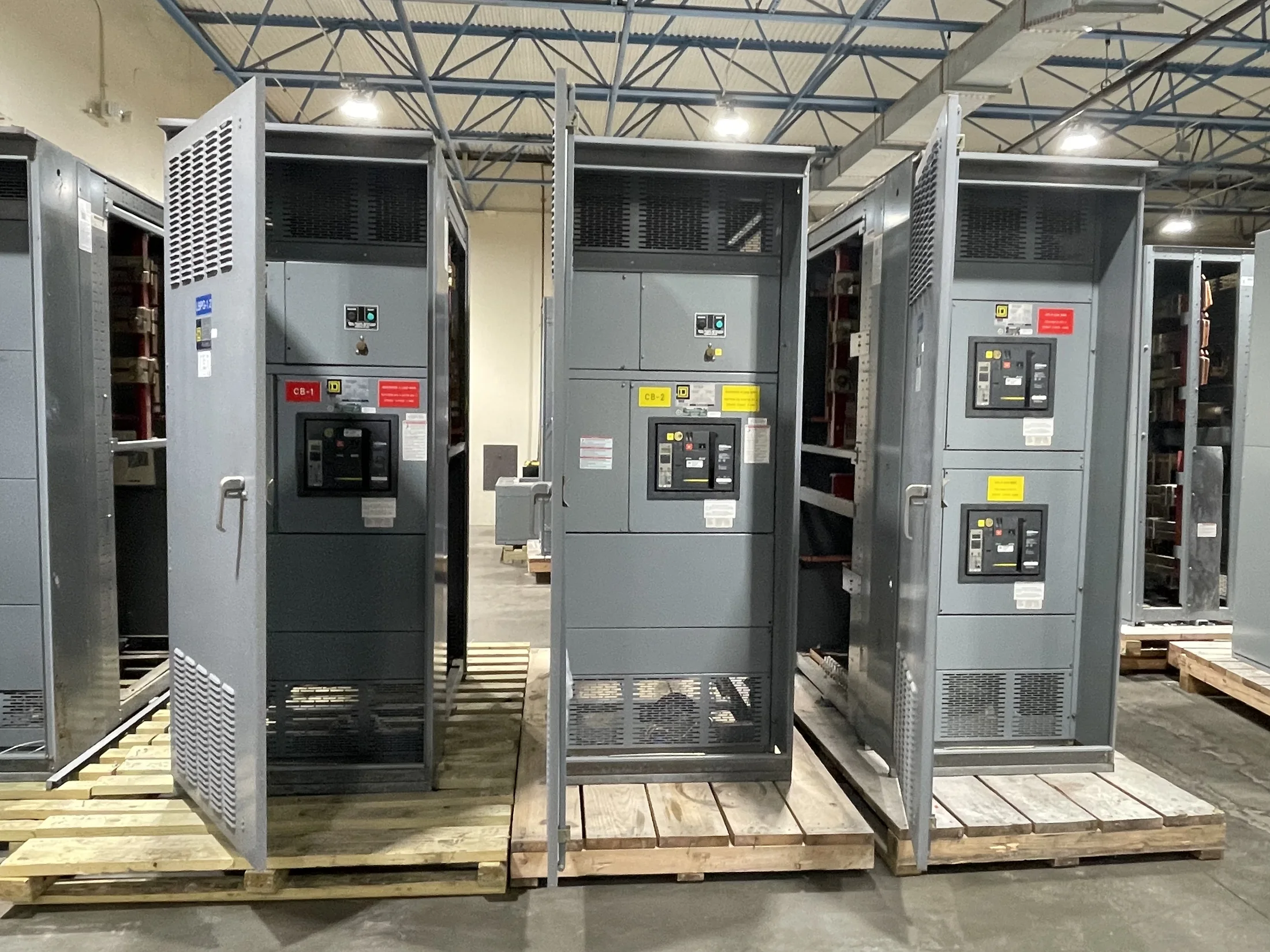
What a combination starter brings together
A combination motor starter packages a means to disconnect a motor circuit with motor-starting components and specified protective functions. The exact arrangement depends on the application; the term does not by itself establish a particular enclosure, control scheme, short-circuit rating, or protection package. Those details need to be defined for the equipment being built.
A project may call for a disconnect switch or circuit breaker, a contactor or other starter arrangement, overload protection, and control components. Their coordination and selection depend on the motor, available fault current, operating conditions, and applicable standards. Confirm the intended functions and ratings rather than assuming every combination starter contains the same devices.
Start with motor and load data
Provide motor nameplate information, including horsepower, voltage, phase, frequency, full-load current, and any service-factor or duty details relevant to the application. Also describe the driven load, starting frequency, expected operating schedule, and whether starting under load is required. This information helps establish a suitable starter and overload-protection approach.
Starting current, acceleration time, load inertia, and allowable voltage drop can affect equipment selection and upstream system coordination. Identify unusual conditions such as long motor leads, frequent starts, high ambient temperature, or a variable-speed drive elsewhere in the system. The responsible engineer should verify the design against the motor and installation requirements.
Select the disconnecting means and protection
The disconnecting means must suit the circuit voltage, current, and intended isolation procedure. A project may specify a fused switch or circuit breaker, but neither choice should be presumed from the phrase combination starter. Confirm available fault current, required interrupting capability, coordination objectives, and any project requirements for fuses, trip functions, or other protective devices.
Overload protection addresses motor overload conditions; it is not interchangeable with branch-circuit short-circuit and ground-fault protection. The specified arrangement should account for the motor’s rated current and applicable requirements, while the upstream protective device and assembly are evaluated for the system. Confirm protection settings, device types, and coordination expectations with the responsible engineer.
Choose the starting method and control behavior
Across-the-line starting is common, but application needs may point to reduced-voltage starting or a different motor-control arrangement. Starting method affects inrush, acceleration, component selection, and control complexity. Specify whether the motor must start locally, remotely, or from an automatic sequence, and describe required permissives, interlocks, and operator interfaces.
Control voltage, control power source, stop and start stations, indication, and communications can all shape the package. State whether the system needs auxiliary contacts, alarm signals, a remote trip input, or integration with a plant control system. These features are application-specific and should be confirmed in the drawings and scope, not treated as standard inclusions.
Plan enclosure and installation details
Enclosure selection depends on the installation environment, mounting location, access, and exposure to dust, moisture, chemicals, or temperature extremes. Provide the intended indoor or outdoor location and any specified enclosure type or environmental requirements. Confirm whether the assembly will be wall-mounted, floor-mounted, or incorporated into a larger distribution lineup.
Physical arrangement matters for cable entry, conductor bending space, ventilation, service access, and separation from adjacent equipment. Share available dimensions, conduit-entry preferences, line and load orientation, and site constraints early. If multiple starters are part of a project, identify grouping and lineup needs; do not assume a single starter package establishes a complete motor-control center.
Coordinate ratings and project standards
Voltage class and construction standard must match the application. Low-voltage combination motor starters are distinct from medium-voltage motor-control equipment; UL 891 applies to switchboards, not medium- or high-voltage equipment, and should not be used as a blanket description for a starter package. Confirm the required product standard, certification or listing scope, and project specifications for the actual build.
The assembly’s short-circuit rating, component ratings, and protective-device coordination must be appropriate to the installation. Available fault current and upstream equipment are key inputs, and a rating cannot be assumed without configuration review. Have the responsible engineer check the design; utility information and authority having jurisdiction requirements may also affect acceptance and installation.
Prepare a complete request for quotation
A useful quote request includes motor schedules, one-line diagrams, control schematics if available, equipment specifications, and the required quantity. Add voltage and frequency, motor horsepower and current, starting method, protective-device preferences, control voltage, enclosure requirements, and site conditions. Clearly identify open design questions so they can be resolved before the configuration is finalized.
Include applicable standards, drawing and submittal expectations, labeling requirements, incoming and outgoing conductor details, and any interface points with existing systems. State the destination and requested delivery needs for planning; lead times depend on the selected configuration and current project details. Complete inputs reduce ambiguity, but final design choices remain subject to engineering review and approval.
Build new equipment for the application
We manufacture new electrical equipment in the United States using American components and offer custom fabrication for project-specific requirements. For combination motor starters, the scope is defined around the required disconnecting means, starter, protective functions, controls, and enclosure. Short lead times and nationwide shipping are available, with schedule and shipment details confirmed for each order.
To begin, send the motor and system information, drawings, specifications, quantity, and installation requirements for review. We can clarify configuration questions and prepare a quote for newly manufactured equipment; no particular feature, rating, or approval is assumed until specified and confirmed for the build. The responsible engineer, utility where relevant, and AHJ should review applicable design and installation requirements.