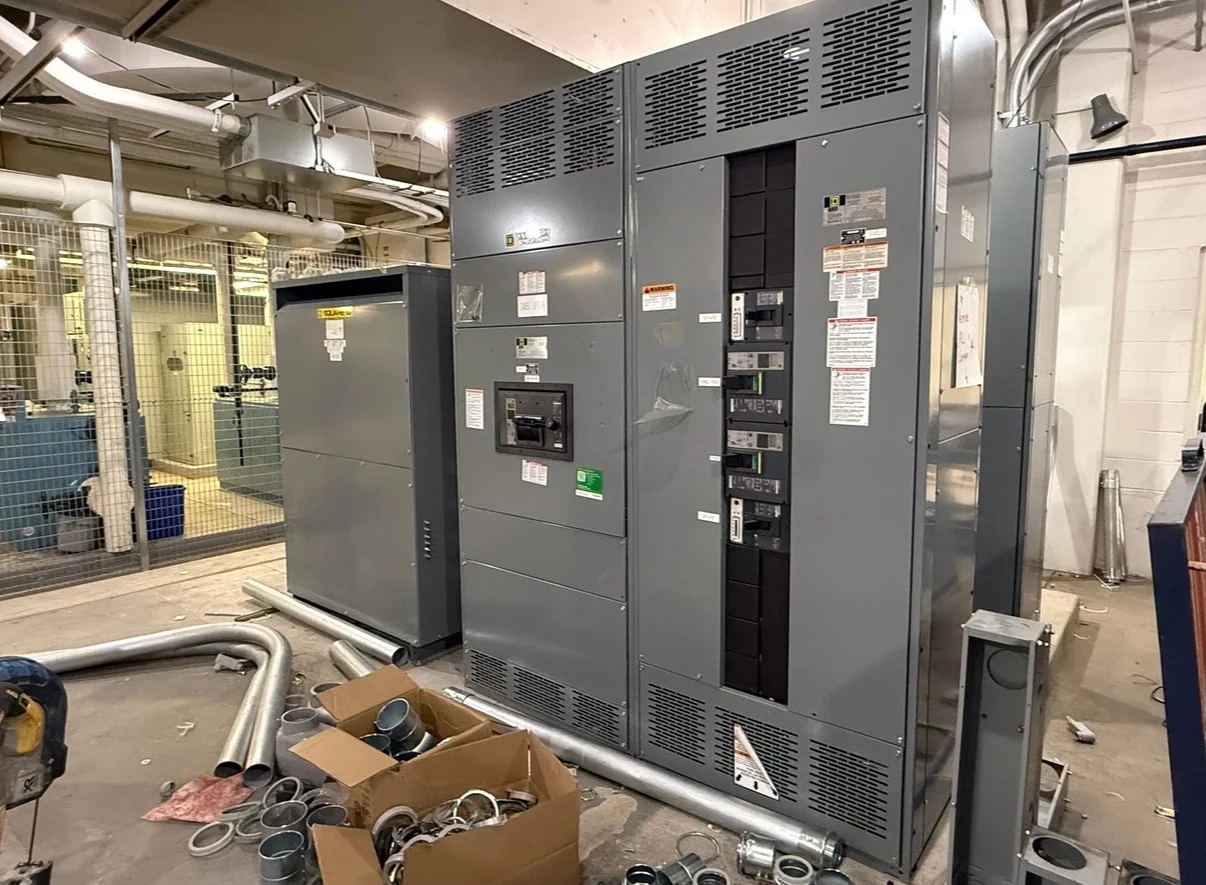
What Arc-Resistant Classification Means
Arc-resistant describes an assembly designed and tested to provide a defined level of protection to personnel under specified internal-arcing conditions. It does not mean an arc cannot occur, nor does it make every side, door, or operating position equally protected. Classification depends on the equipment design and the test basis.
For low-voltage metal-enclosed switchgear, IEEE C37.20.7 is commonly used to evaluate arc-resistant designs. Confirm the standard edition, accessibility type, and tested configuration stated for the proposed assembly. These details matter when comparing bids: the label alone does not establish that a particular lineup matches the installation.
Identify the Equipment Class Before Specifying
Start by identifying system voltage, application, and equipment category. UL 1558 applies to low-voltage switchgear; UL 891 applies to low-voltage switchboards and is not a medium- or high-voltage arc-resistant equipment standard. Medium-voltage metal-clad switchgear uses different construction and applicable standards, which must be evaluated separately.
Ask the responsible engineer to define the required assembly type, bus arrangement, interrupting devices, and applicable listing or standard requirements. Arc-resistance claims should be tied to the exact equipment category and design evidence, not transferred between product families. Utility requirements and the authority having jurisdiction may also affect the acceptable specification.
Choose Accessibility and Operating Conditions
Accessibility classifications describe which sides of an assembly were considered accessible during testing. Depending on the design and standard, a classification may address personnel at the front, sides, or rear. Determine where operators and other workers could be present during normal operation, maintenance, or switching before selecting a required type.
Also clarify whether the specified protection is expected with doors closed, during particular switching operations, or under other stated conditions. Do not assume a classification covers racking, inspection, open-door work, or every maintenance task. The project specification should identify operating procedures and limitations, with the engineer verifying that the selected design addresses them.
Plan the Exhaust Path as Part of the Design
An arc-resistant assembly may manage hot gases and pressure through a plenum, duct, or other tested exhaust arrangement. The intended path must be coordinated with the equipment location and the building layout. Confirm where the discharge terminates, what areas lie along that route, and whether the route remains unobstructed.
Duct dimensions, direction changes, outlet placement, and allowable length are design-specific. A field-added elbow, shortened duct, blocked outlet, or changed ceiling opening can invalidate assumptions tied to tested performance. Provide the manufacturer with architectural sections and room elevations so the exhaust configuration can be reviewed against the proposed equipment design.
Check Room and Installation Constraints
Arc-resistant construction can affect lineup depth, height, access, and required space above or behind the gear. Compare equipment outlines with door swings, structural members, cable trenches, overhead services, and adjacent equipment. Confirm how the assembly will enter the electrical room and whether the route permits delivery, positioning, and final connections.
The installation plan should account for manufacturer-stated clearances and the exhaust arrangement, not just code minimum working space. Coordinate ventilation, fire protection, ceilings, and nearby occupied areas with the project team. The engineer, contractor, and AHJ should resolve applicable electrical and building requirements before construction documents lock in room dimensions.
Match the Lineup to the Electrical System
Protection capability does not replace conventional system engineering. Provide nominal voltage, available fault current, system grounding, frequency, bus rating requirements, feeder quantities, and protective-device information for design review. Confirm service conditions and coordination objectives, and have the responsible engineer verify interrupting ratings and the complete short-circuit design.
Lineup changes can matter to an arc-resistant configuration. Additional sections, altered bus connections, different devices, or modified cable entry may fall outside the evaluated arrangement unless specifically covered by design documentation. Identify future provisions and unusual compartments at the quotation stage so the manufacturer can assess the requested configuration before fabrication.
Verify the Test Basis and Documentation
Request documentation that identifies the applicable test standard and edition, equipment type, accessibility classification, and tested assembly arrangement. Review how the proposed lineup relates to the tested design, including any permitted variations. A general statement that equipment is arc resistant is not a substitute for configuration-specific verification.
Confirm what supporting records will be supplied for the actual build and what limitations apply to installation or operation. Do not assume a particular certification, rating, or test result without documentation for that design. The engineer should reconcile the submittal with the project specification, while the AHJ determines code acceptance where applicable.
Prepare a Complete Manufacturer Inquiry
For a useful quote, send one-line diagrams, equipment schedules, plan views, room elevations, cable-entry preferences, and the required arc-resistant classification. Include voltage, system data, main and feeder requirements, metering, protective devices, control needs, environmental conditions, and project milestones. Note any utility standards or owner specifications that govern the installation.
Our team manufactures new switchgear and power distribution equipment in the United States using American components, with custom fabrication and nationwide shipping, including projects in Ohio. Share the exhaust route, access constraints, and applicable documentation expectations early. These project-specific details help establish a manufacturable configuration and identify items requiring engineering or AHJ review.