Map the power path before selecting equipment
A UPS bypass arrangement must match the actual one-line diagram and operating sequence, not just the UPS nameplate. Identify utility or generator sources, upstream distribution, UPS input and output, bypass source, downstream boards, and any alternate ties. This map clarifies which switching devices must coordinate and what remains energized during each operating state.
For Columbus projects, document the facility phase, planned capacity, expansion stages, and whether the work serves a new build or a system addition. Local utility service characteristics, available fault current, and the authority having jurisdiction’s requirements can affect equipment selection. The responsible engineer should validate system assumptions before a manufacturer prepares a proposal.
Choose a bypass arrangement for the operating sequence
A static bypass inside a UPS and an external maintenance bypass perform different functions. The former can provide a path around the UPS power conversion under specified conditions; an external arrangement can isolate UPS equipment for service. Confirm which functions are required, where switching occurs, and whether transitions are open or closed under the approved design.
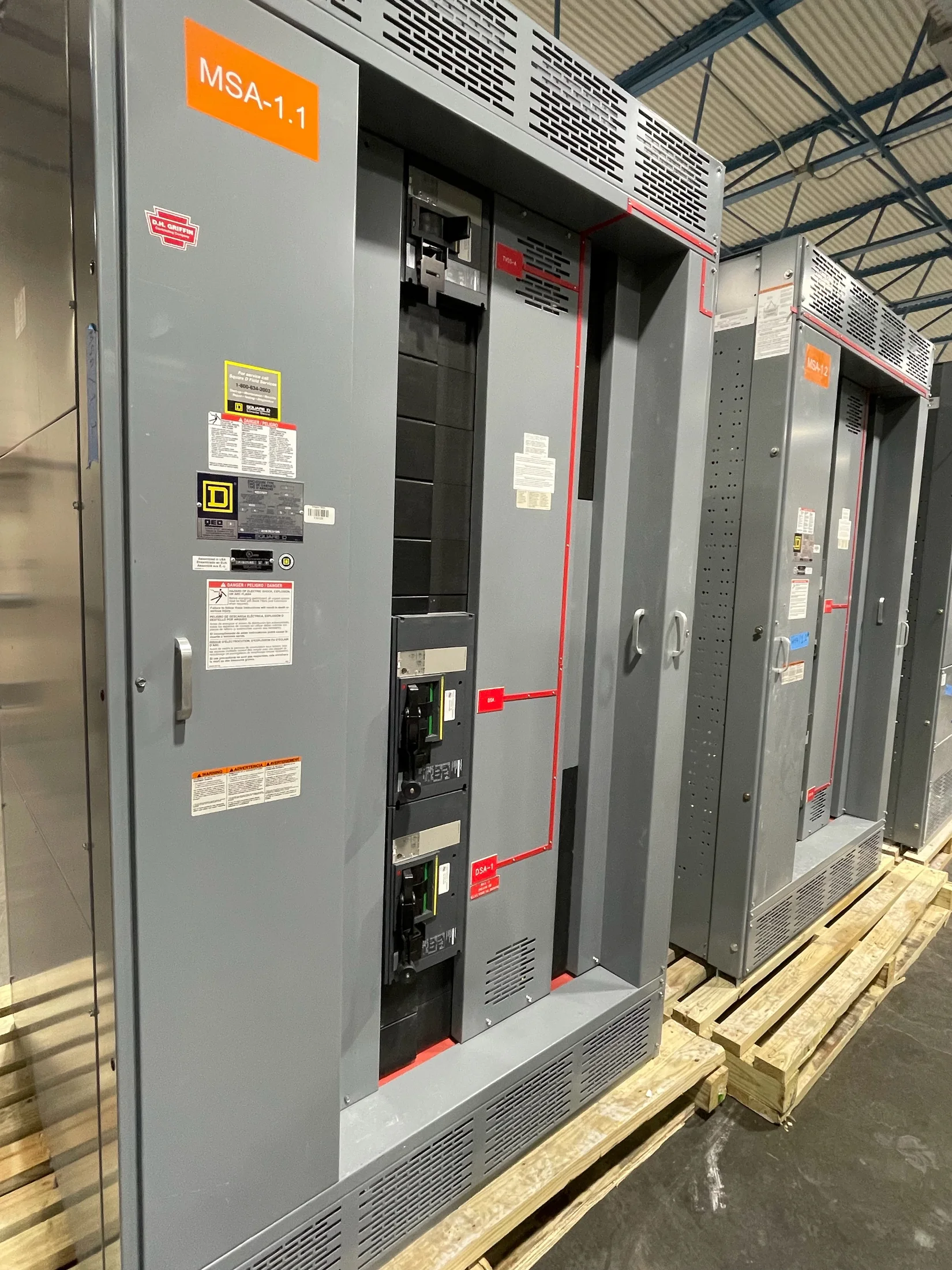
External bypass distribution may use a maintenance bypass cabinet, dedicated switchboard section, or coordinated combination of equipment. The right configuration depends on source topology, UPS manufacturer interface requirements, fault-duty calculations, and available space. Do not assume a particular interlock, transfer mode, or bypass feature is included; define it in the project documents and quote request.
Segment loads by criticality and service needs
Divide downstream loads into meaningful groups before assigning feeder space. IT halls, network rooms, controls, cooling, and other support systems may have different ride-through needs and maintenance windows. Segmentation can help operators isolate a branch or plan growth without treating every load as one undifferentiated block, but it must preserve the intended redundancy.
For each segment, provide expected and future load, voltage, phase, feeder type, and required source path. Identify dual-corded equipment, static transfer switches, and any loads that cannot tolerate a break in supply. Engineers should verify branch loading, neutral requirements, protective-device coordination, and the consequences of isolating one segment while adjacent sections remain in service.
Design isolation for maintainability and safe operation
Maintenance isolation is a system-level sequence, not simply the addition of a disconnect. Define how the UPS is transferred to bypass, how input and output are isolated, and how the load stays supplied during service. Identify permitted switching conditions, device position indication, interlocking needs, and the boundaries operators must verify before work begins.
Equipment arrangement should support the planned access and switching sequence. Confirm whether barriers, compartments, key interlocks, mechanical interlocks, shutters, or other provisions are required for the specific design; availability and suitability must be verified for the selected build. Review arc-flash and shock-risk procedures with the responsible electrical safety team rather than relying on equipment selection alone.
Coordinate ratings, protection, and standards
Specify system voltage, continuous current, short-circuit duty, grounding method, and the available fault current at each relevant point. Protective devices must be coordinated with UPS behavior and upstream sources, including generators where applicable. Confirm withstand or interrupting requirements, selective coordination objectives, and any limitations imposed by the UPS or transfer equipment manufacturer.
UL 891 applies to low-voltage switchboards; it is not a medium-voltage or high-voltage standard. UL 1558 applies to low-voltage switchgear. The equipment type and requested certification or listing must fit the design and applicable project specifications. Medium-voltage switching is a separate equipment scope, so communicate any MV interfaces clearly and have the engineer and AHJ confirm requirements.
Fit the lineup to the Columbus site and expansion plan
Room dimensions, access routes, working clearances, cable entry, and heat or ventilation conditions can constrain the lineup. Share room plans and indicate front, rear, and side access expectations, floor or housekeeping-pad details, and overhead obstructions. Confirm shipping splits and the route from receiving area to final location before finalizing enclosure and section dimensions.
Data centers often build capacity in phases, but future-ready provisions should be specific rather than assumed. Identify reserved sections, spare feeder positions, planned tie points, and the limits on future fault duty or bus loading. A later expansion may require revised protection studies or utility coordination; the initial configuration should leave room only where the approved design supports it.
Prepare a complete request for quotation
A useful RFQ includes the one-line diagram, load and feeder schedules, equipment specifications, control or interlock sequence, fault-current information, and site layout. Add UPS make and model when selected, interface drawings if available, grounding details, and required submittal documents. Mark deviations or unresolved design decisions so the proposal can identify assumptions instead of concealing them.
Also state delivery destination, installation phase, preferred shipping window, access constraints, and who will review drawings. Distinguish mandatory requirements from options, and note whether field services or coordination with other vendors are part of the project scope. Pricing and lead time depend on the finalized design, component availability, and current production schedule, so request project-specific confirmation.
Build and supply new distribution for project needs
We manufacture and supply new switchgear and power distribution equipment in the United States using American components, with custom fabrication for project-specific arrangements. For Columbus data center work, the design team can define the bypass sections, feeder segmentation, isolation provisions, and interfaces needed for the approved one-line and operating plan.
Our equipment is available to customers in Ohio and nationwide, with short lead times and nationwide shipping offered as project needs allow. Share the design basis early so the proposed configuration can be reviewed for scope, ratings, layout, and schedule. Final electrical design and installation details should be checked by the responsible engineer, utility, and AHJ where applicable.