Start with the service and project scope
A Cincinnati switchgear project may support a new building, an expansion, a service replacement, or a change in facility operations. Begin by documenting the existing and proposed one-line diagrams, utility service arrangement, voltage, phase, frequency, and available capacity. Confirm which equipment is in scope and where responsibility transfers between the utility and customer.
Ask the serving utility to confirm service characteristics and requirements for the specific site; do not infer them from a nearby property. The responsible electrical engineer should reconcile utility information with load calculations and project plans. For a quote, provide the service data, equipment location, target ratings, project schedule, and whether installation or field services are separately specified.
Match equipment to voltage and application
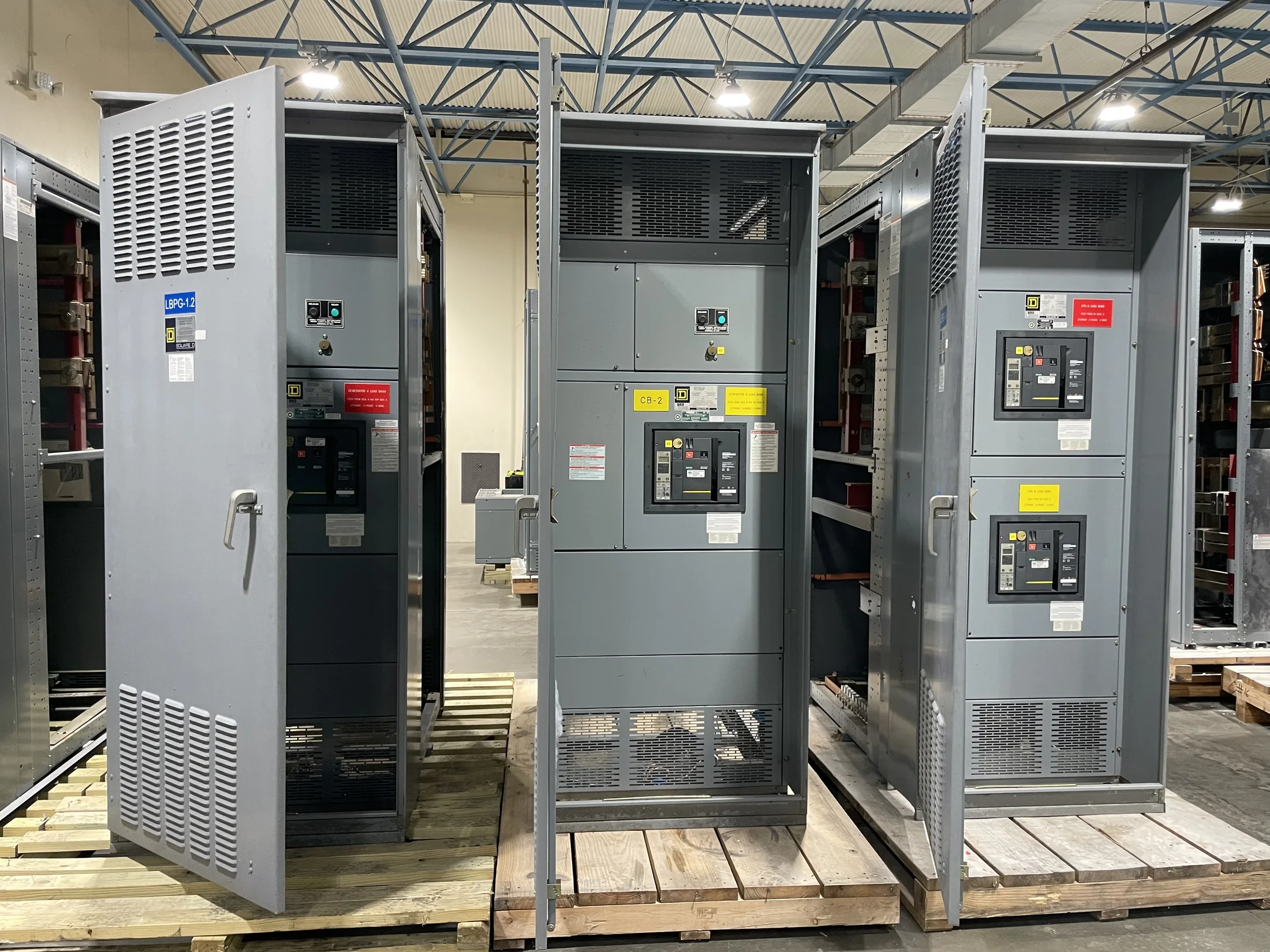
Equipment terminology matters when selecting a lineup. For low-voltage applications, UL 891 switchboards and UL 1558 low-voltage switchgear are distinct equipment categories, with different construction and application considerations. Medium-voltage equipment is a separate class, selected for the system voltage and project requirements; UL 891 does not cover medium- or high-voltage equipment.
The engineer should identify the actual system voltage, service or distribution function, required interrupting capability, and whether the project calls for a switchboard, low-voltage switchgear, or medium-voltage lineup. Confirm applicable standards and requested listing or labeling for the proposed build rather than assuming a category from an informal equipment name. Include the specification and sequence of operation with the inquiry.
Translate facility loads into a lineup
Build the equipment schedule from the loads the Cincinnati facility will serve, including normal, standby, and future loads where applicable. Record feeder quantities, breaker or switch requirements, estimated demand, motor starting conditions, and any large nonlinear loads. A manufacturing process, commercial building, healthcare space, or data-intensive operation can present very different distribution priorities.
Use load studies and the electrical design to establish bus and device ratings, spare capacity, metering needs, and space for future circuits. Spare ways or provisions should be defined explicitly; they are not automatic features. Identify critical loads, transfer arrangements, and any required separation of systems so the proposed configuration reflects operating intent rather than an assumed standard lineup.
Check fault current and protective coordination
Available fault current at the equipment location affects the required ratings and protective-device selection. Obtain utility fault-current data and account for transformers, generators, motors, and other sources that contribute to the system. Confirm the assumptions and point of calculation; values at the service entrance may not represent conditions at downstream distribution equipment.
The responsible engineer should evaluate interrupting and withstand requirements, selective coordination where specified, arc-flash analysis, and protection settings against the complete system design. Identify existing upstream and downstream devices, their available data, and any planned changes. A manufacturer can use supplied design criteria to develop equipment, but cannot substitute an unverified fault estimate for project engineering or utility confirmation.
Account for Cincinnati site conditions
The room and route to the installation can constrain dimensions, arrangement, and delivery. Provide room plans, ceiling height, access openings, door sizes, floor conditions, equipment clearances, and the intended handling path. Note whether equipment is indoors or outdoors, and document environmental conditions, exposure, ventilation, and any space limitations that affect enclosure or lineup configuration.
Existing buildings may also bring phased construction, shutdown windows, restricted access, or adjacent energized equipment. Describe those constraints early, while distinguishing them from the equipment specification. Confirm final clearances and working-space requirements against applicable codes and the project design. For outdoor or unusual environments, state the required enclosure conditions for review rather than presuming a particular rating or feature.
Coordinate metering, controls, and interfaces
A distribution lineup may need to interface with building controls, generator systems, transfer equipment, protective relays, or energy monitoring. List the intended functions and signals, communications requirements, metering points, control power source, and responsibility for external wiring. Provide control schematics or sequence narratives when available, especially when the project involves multiple sources or automatic operating sequences.
Confirm whether utility metering or utility-approved arrangements apply at the specific service. The utility and project engineer should review interface details before the equipment design is finalized. Identify device preferences only where they are part of the specification, and provide acceptable alternatives if allowed. Clear division of scope helps prevent gaps between switchgear, controls, field wiring, and commissioning work.
Prepare a complete request for quotation
A useful quotation package includes the one-line diagram, equipment schedule, specifications, load information, fault-current data, room drawings, and required delivery location. Add the requested equipment category and standards, nominal and maximum system data, bus and device requirements, enclosure conditions, metering and control scope, and any project-specific documentation needs. Mark items that remain preliminary so assumptions can be identified.
Also state the expected approval and release milestones, requested shipping window, destination, and whether unloading, installation, or startup are part of the procurement scope. New equipment is built to the project requirements; a quote cannot responsibly settle engineering inputs that have not been established. The manufacturer can review the submitted information and identify questions or configuration choices for resolution.
Review submittals before release
Before fabrication, compare submittals with the approved one-line, specifications, utility requirements, and room conditions. Check lineup dimensions, incoming and outgoing arrangements, device functions, ratings, control interfaces, and access needs. Resolve deviations in writing and route technical changes through the responsible engineer, contractor, owner, and utility or authority having jurisdiction when applicable.
A U.S. manufacturer can custom fabricate new switchgear and power distribution equipment, with short lead times and nationwide shipping; actual schedule and shipping arrangements depend on the approved scope and project details. For Cincinnati work, align delivery planning with site readiness and construction sequencing. Final design acceptance, installation, and code review remain project responsibilities, including review by the AHJ where required.