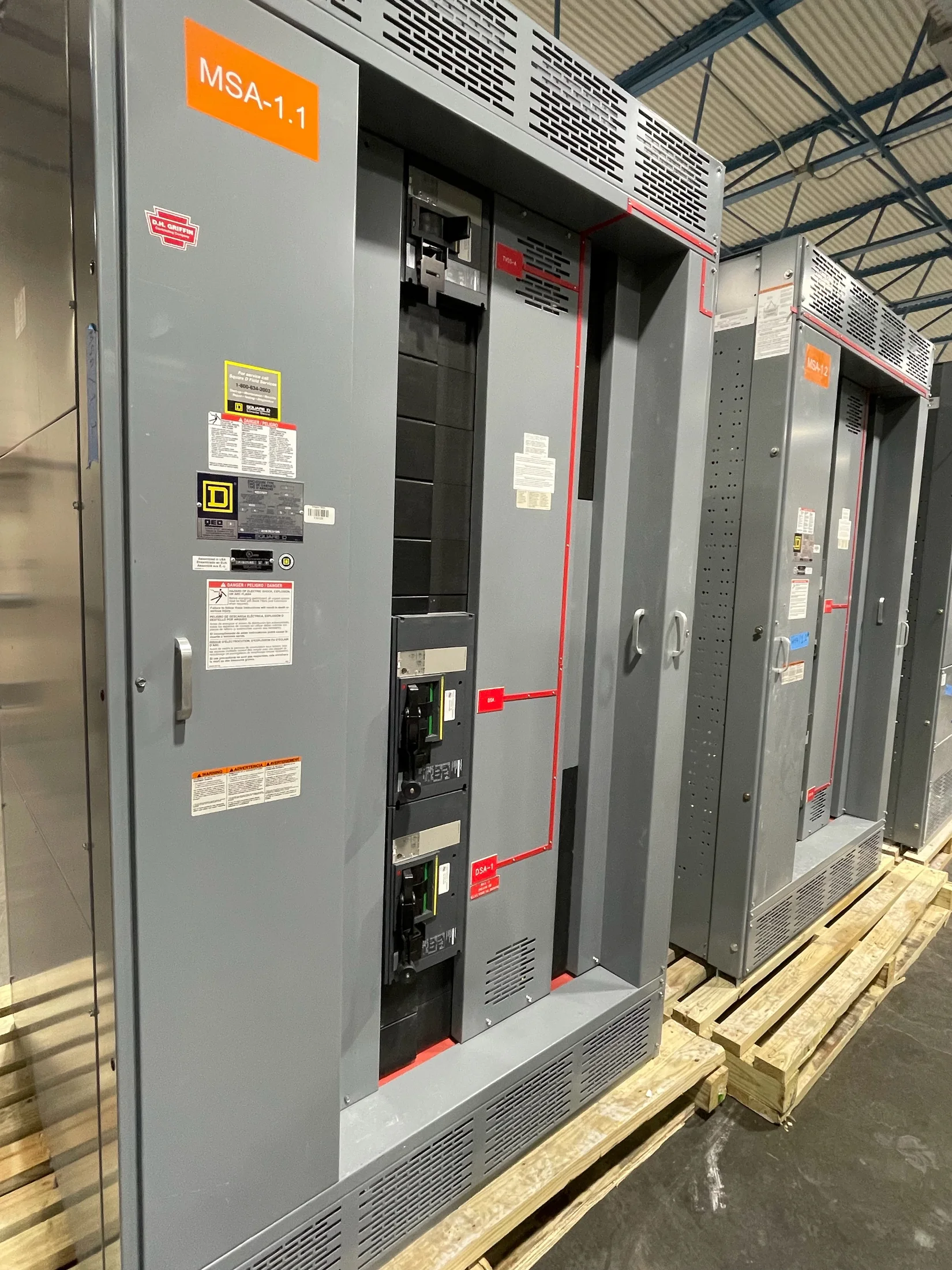
Start With the Equipment Boundary
“Switchgear” can describe equipment with different constructions and governing standards, so establish the scope before listing tests. A low-voltage switchboard built to UL 891 is not the same product category as low-voltage switchgear built to UL 1558, and neither designation applies to medium-voltage equipment. Identify voltage class, assembly type, and included sections.
Record the one-line diagram, service arrangement, incoming source, main and feeder devices, bus connections, and control functions. Note whether the supplied scope includes transformers, protective relays, metering, or remote interfaces. These boundaries determine which inspections and tests belong to the equipment manufacturer and which require coordination with other suppliers or site teams.
Translate the Specification Into Criteria
Review the purchase specification alongside the drawings and applicable product requirements. Extract each requested examination, test, witness point, document, and acceptance threshold; distinguish mandatory requirements from preferences or project-specific options. Resolve conflicting language before release, rather than assuming a generic factory routine satisfies every contract or design intent.
Acceptance criteria should be measurable and traceable to an approved source, such as the governing standard, specified drawing, device instructions, or project document. Confirm how deviations will be recorded and dispositioned. The responsible engineer should approve technical interpretations, especially where protection settings, interlocks, unusual control logic, or interface requirements affect evaluation.
Separate Inspection From Testing
Inspection checks construction and conformity: enclosure and compartment arrangement, labels, bus identification, wiring, component placement, mechanical operation, and workmanship against released documents. Decide which features need visual review, dimensional verification, or documented confirmation. Inspection is not a substitute for electrical tests, and a test result does not establish that every drawing detail is correct.
Testing applies a defined method and records an observed result against an acceptance criterion. The plan should identify the equipment under test, test setup, instruments or procedures where specified, responsible party, and required report. Avoid adding procedures without reviewing their suitability; an unnecessary or incorrectly applied test can create risk, delay, or ambiguous results.
Match Checks to Configuration
The assembly’s actual configuration drives the inspection checklist. A lineup with drawout devices, multiple mains, or compartmentalized construction calls for checks different from a simpler fixed-device arrangement. Confirm device types, ratings, mounting, barriers, shutters where specified, and accessibility against approved drawings and the purchase documents.
Control and protection details also matter. Identify CT and VT circuits, relay models, trip and close circuits, communications, auxiliary power, and any transfer or interlocking sequence included in scope. Verify the intended point-to-point checks and functional demonstrations with the engineer. For interfaces supplied by others, define connection boundaries and who confirms end-to-end operation.
Plan Factory Acceptance Activities
A factory acceptance plan should state which inspections and tests occur before shipment, which require customer or third-party witnessing, and how notice and access will be arranged. Agree on the agenda, applicable drawing revision, test records, attendees, and process for recording observations. A witness opportunity is a contractual coordination item, not evidence of a particular certification.
For a new equipment build, distinguish routine production checks from any design or qualification evidence explicitly required by the specification. Do not infer that a particular test was performed simply because equipment belongs to a product category. Request the relevant documentation and confirm its scope, applicability, and acceptance basis with the manufacturer before approving the plan.
Define Electrical Test Limits Carefully
Electrical checks may include continuity, wiring verification, insulation-related measurements, or functional operation when required and appropriate to the design. The purchase specification and applicable instructions must govern method and limits. Confirm which circuits are included, what devices must be isolated, and how sensitive components are protected during testing.
Protection testing requires equally clear boundaries. If relay injection or trip-chain verification is specified, identify approved settings, test points, expected indications, and pass criteria. Factory checks do not automatically replace field commissioning, utility coordination, or site-specific protective-device studies. The responsible engineer should determine what additional verification is needed after installation and connection.
Make Results Traceable and Useful
A usable report connects each result to an identifiable section, circuit, device, or drawing reference. Specify required readings, pass/fail status, instrument information where contractually required, date, and responsible personnel. Include the disposition of exceptions and retests, rather than presenting only a final status without context.
Keep approved drawings, equipment schedules, settings, and test records aligned by revision. Confirm the documentation package needed for turnover, including inspection records, test summaries, operating information, and any specified certificates or component documents. The buyer should state required formats and delivery timing; avoid assuming that every project requests the same record set.
Provide Inputs for a Quote and Schedule
For a quote on newly manufactured switchgear or distribution equipment, provide the one-line diagram, equipment schedule, voltage and service details, fault-duty information, required construction standard, and purchase specification. Include device and control requirements, dimensions or site constraints, requested tests, witness expectations, and documentation needs. Missing inputs can leave scope and acceptance responsibilities unresolved.
The manufacturer can review the requested inspection and test scope against the proposed configuration and identify items needing clarification. U.S. manufacturing, domestic components, custom fabrication, short lead times, and nationwide shipping are part of our manufacturing approach; confirm project-specific availability, component requirements, and schedule during quotation. Have the responsible engineer, utility, and AHJ review applicable design and installation decisions.