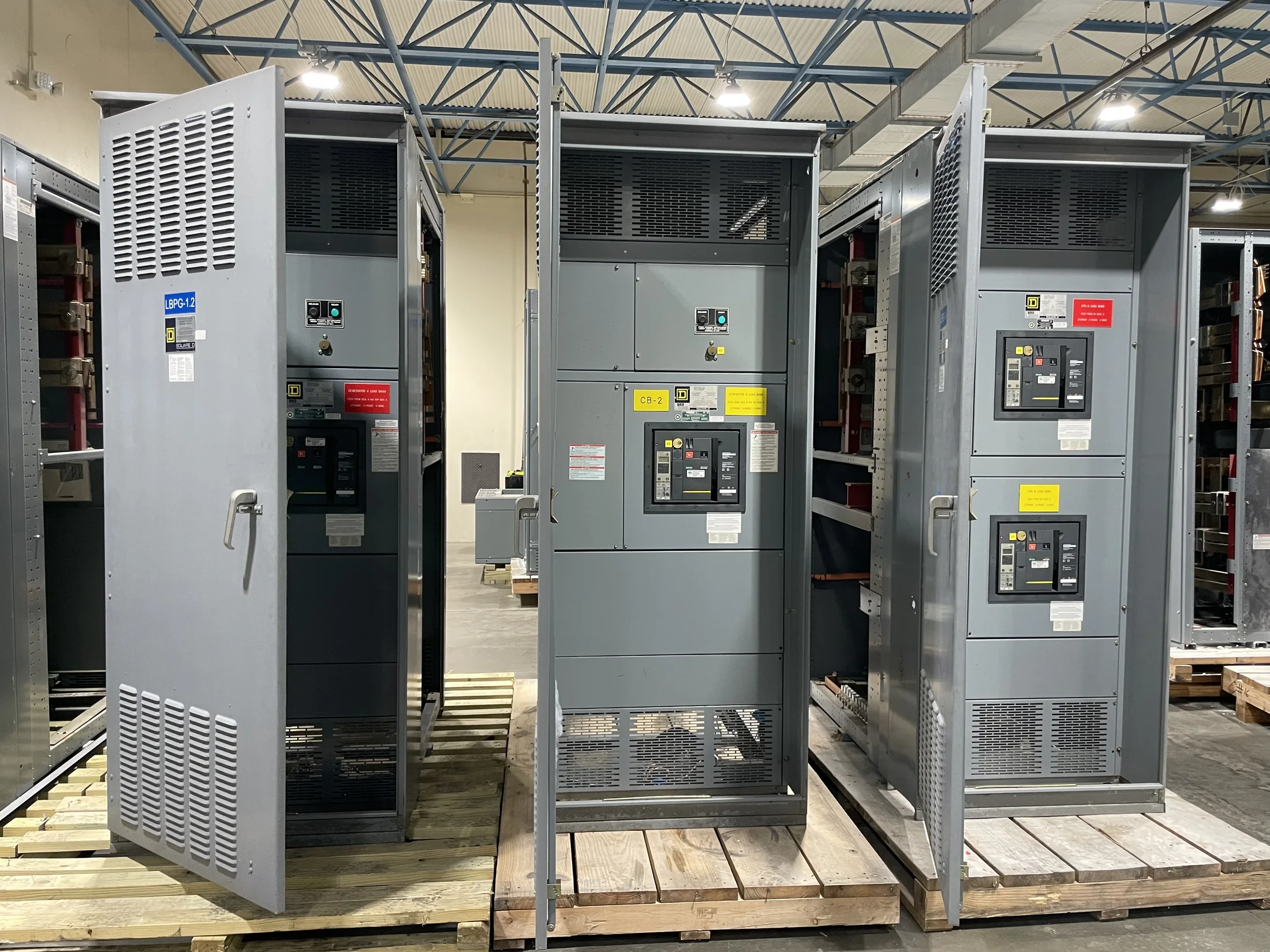
Source to the Approved Equipment Design
Switchgear component sourcing begins with the project’s electrical documents and specified equipment configuration—not a generic parts list. One-line diagrams, schematics, schedules, and the switchgear specification help establish the intended function of each breaker, relay, meter, control device, and accessory. Clear source requirements reduce ambiguity before fabrication planning.
The responsible engineer’s documents may identify a manufacturer, catalog number, ratings, and required options, or permit approved equivalents. Those instructions govern how alternatives are considered. A component that appears similar by name or frame size may differ in trip functions, terminals, mounting, control voltage, or interface details that matter to the finished assembly.
Check Availability Before Committing
Availability should be checked against the actual project configuration, including options and required quantities. A base catalog item may be obtainable while a particular trip unit, communication module, auxiliary contact arrangement, or control-power accessory has a different supply outlook. Confirming those details early gives the project team a more useful view of procurement risk.
Availability is not a permanent attribute: manufacturer schedules and supply conditions can change between quotation and release. For a new equipment order, we can review current sourcing information during planning and identify items needing purchaser attention. Any schedule discussion should state its assumptions and remain subject to confirmation when the order is authorized.
Evaluate Equivalents by Function and Compatibility
An equivalent component must satisfy the specified function and relevant electrical requirements, not simply fit the same opening. Review voltage, continuous-current and interrupting ratings where applicable, trip characteristics, control power, sensing inputs, wiring interfaces, environmental limits, and required communications. Which criteria apply depends on the switchgear design and the component’s role.
Mechanical interchangeability also needs verification. Dimensions, mounting pattern, bus or cable connections, terminal orientation, clearances, wire landing space, and accessory compatibility can affect assembly. For breakers and protective devices, coordination intent and available fault-current assumptions warrant particular care. The responsible engineer should assess the proposed device within the complete system, rather than in isolation.
Keep Substitution Approval with the Purchaser
A proposed substitution is not an approved substitution simply because a supplier identifies it as comparable or available. We present the proposed make and model, relevant ratings, configuration, and known deviations for purchaser review. The purchase documents should establish who may approve changes and what written record is required before implementation.
Where project specifications require engineer, owner, consultant, or utility review, route the proposal through the designated authority. Do not assume verbal direction changes contractual requirements. If approval is withheld, the purchaser and manufacturer can review the specified item’s sourcing status and discuss schedule or design options without silently altering the approved configuration.
Provide Documentation That Supports Review
A useful substitution package is specific enough for a technical comparison. Depending on the item, it may include manufacturer and catalog identification, applicable data sheets, dimensional information, connection details, rating information, accessory lists, and a written comparison against the specified component. Call out differences plainly instead of relying on a general statement of equivalence.
Documentation should also show where the proposed component appears in the equipment design. Updated schematics, bills of material, panel schedules, or wiring information may be needed when a change affects interfaces or drawings. The scope of revision depends on the approved design and project submittal requirements; not every component change requires the same document set.
Account for Equipment Standards and Boundaries
Component decisions must fit the equipment type and its governing construction basis. UL 891 applies to switchboards; UL 1558 applies to low-voltage switchgear. Medium-voltage equipment is a separate category with its own applicable design and project requirements. A component’s individual attributes do not, by themselves, establish the status of the complete assembly.
A change can affect how the equipment is evaluated, documented, or configured, so review it against the specified assembly and applicable requirements. Do not infer that a component substitution preserves a particular listing or approval without confirmation for that build. The responsible engineer, manufacturer, and, where relevant, the AHJ should resolve project-specific questions before release.
Make Quote Requests Actionable
For a component-sourcing review or new switchgear quote, provide the equipment type, voltage, current and short-circuit requirements, one-line diagram, specifications, schedules, and available schematics. Identify the exact specified manufacturers and catalog numbers, required options, quantities, delivery milestones, and whether the project permits equivalents subject to written approval.
Include the project’s submittal process and approval contacts, destination, installation constraints, and any utility or owner requirements that affect component selection. State whether the inquiry concerns UL 891 switchboards, UL 1558 low-voltage switchgear, or medium-voltage equipment. Complete information helps distinguish a sourcing question from a design change that needs engineering review.
Coordinate Decisions Through Release
Before fabrication release, reconcile approved component selections with the quotation, purchase order, drawings, and bill of material. Record the approved make and model and close open deviations. If availability changes after approval, notify the purchaser and submit a new comparison rather than treating earlier authorization as blanket permission for another alternative.
We build new equipment in the United States with American components, offer custom fabrication, and ship nationwide, including to Ohio projects. Component choices remain subject to project requirements and availability confirmation. Have the responsible engineer check design implications and consult the utility or AHJ where applicable; approval records should match the final equipment documents.