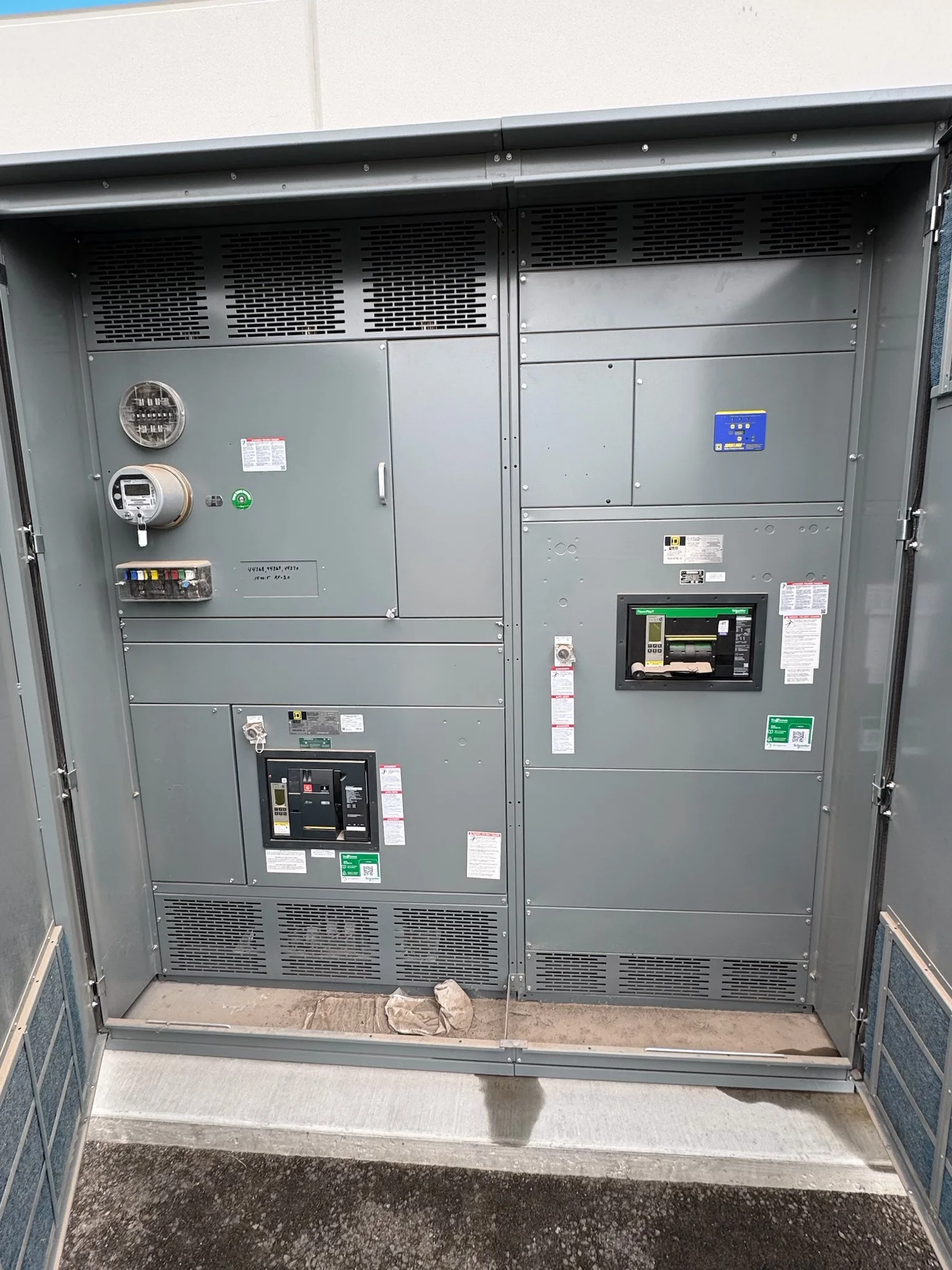
The BOM Connects Design Intent to Equipment
A switchgear bill of materials (BOM) is a structured record of the components required to build the specified assembly. It translates drawings, specifications, and schedules into an itemized list that can be reviewed by engineering, procurement, and manufacturing. A useful BOM identifies what each item does and where it belongs.
A BOM is not a substitute for the one-line diagram, control schematics, or project specification. Those documents establish design intent and requirements; the BOM helps track their material implications. Before release, the responsible engineer should reconcile the list against current drawings and clarify conflicts rather than assume a familiar configuration.
Identify the Assembly and Its Sections
Start with the equipment identity: project or purchase-order reference, lineup designation, voltage class, phase and wire arrangement, frequency, and applicable enclosure or installation conditions. Record the governing design documents and revisions. These identifiers prevent a component list from being detached from the exact assembly it is meant to describe.
Break the lineup into sections, cubicles, or functional spaces, using the terminology shown on project drawings. For each, note its role, such as service entrance, feeder, tie, or metering section, where applicable. Confirm bus arrangement, incoming and outgoing cable entry, and any space constraints against the approved layout; requirements vary by project.
Describe Devices at a Useful Level
List major devices by function and location, then capture the attributes needed to distinguish the specified item. Depending on the design, these may include circuit-breaker or switch type, frame or sensor details, trip unit functions, current transformers, meters, relays, fuses, and control power components. Do not rely on a generic label when settings or interfaces matter.
Where the specification names a manufacturer or model, record it as specified and flag any proposed substitution for review. For protective devices, document required functions and coordination inputs as defined by the design—not settings inferred from a catalog description. Ratings, interrupting capability, withstand requirements, and system conditions must be checked by the responsible engineer.
Capture Accessories and Small Components
Accessories can affect operation, installation, and commissioning, so list them explicitly rather than burying them in a general note. Possible items include auxiliary contacts, key or mechanical interlocks, shutters, racking tools, control switches, indicating lights, space heaters, thermostats, terminal blocks, and cable lugs. Include quantity, section location, and relevant interface details when known.
Separate standard items included in a specified device from separately supplied accessories, and identify who provides field-installed materials. For terminals and lugs, confirm conductor material, size range, quantity, and entry orientation from the project requirements. Check control voltage and wiring interfaces against schematics; these details should not be assumed from the equipment’s main power rating.
Record Alternates Without Hiding Differences
An alternate should be a clearly identified option, not an unmarked replacement in the base BOM. State the specified item, proposed alternate, quantity affected, and the reason it is being considered. Note whether the alternate changes dimensions, ratings, functions, connections, controls, or documentation so reviewers can assess its effect on the complete assembly.
Approval must follow the project’s submittal and procurement process. A comparable catalog description does not establish electrical or physical equivalence. The engineer, owner, utility, or authority having jurisdiction may need to review an alternate, depending on the item and project. Keep approval status, reviewer, and revision traceable before the manufacturing BOM is updated.
Tie Components to Ratings and Construction
A component list is meaningful only in the context of the assembly’s electrical and environmental requirements. Record applicable system voltage, continuous-current needs, available fault current or specified short-circuit duty, grounding method, and service conditions from approved project documents. Verify that device choices and the assembled equipment design are coordinated for those conditions.
Distinguish equipment standards rather than treating all switchgear as one category. UL 891 applies to low-voltage switchboards; UL 1558 applies to low-voltage metal-enclosed switchgear. Medium-voltage equipment has separate standards and design considerations. The BOM alone does not establish a listing, rating, or suitability; confirm the required construction and approval for the specific build.
Make the BOM Quote-Ready
For a manufacturing quote, provide the current one-line diagram, elevations or outline drawings, schematics when available, equipment specification, and schedules that define device functions and quantities. Identify the project location, indoor or outdoor conditions, required delivery point, and requested submittal scope. State which documents govern if revisions or notes appear inconsistent.
The BOM should identify known exceptions and open decisions: pending utility requirements, metering arrangements, cable termination details, control interfaces, or owner-furnished devices. Mark unknowns as items to confirm, not as settled specifications. This lets the manufacturer identify assumptions and request clarifications before pricing or releasing a design for review.
Control Revisions Through Manufacturing
Use revision identifiers, dates, and status labels to show whether a BOM is preliminary, quoted, approved, or released for manufacture. Track changes to quantities and part descriptions alongside the drawing revision that prompted them. A controlled record helps purchasing and assembly teams distinguish approved scope from review comments and unaccepted alternates.
A U.S. manufacturer building new equipment can use a coordinated BOM to plan custom fabrication, component sourcing, and nationwide shipment. Confirm any requested lead time, shipping constraints, and documentation deliverables for the particular project; none should be inferred from a generic list. Before final release, have the responsible engineer check the BOM against the design, utility criteria, and AHJ requirements where applicable.