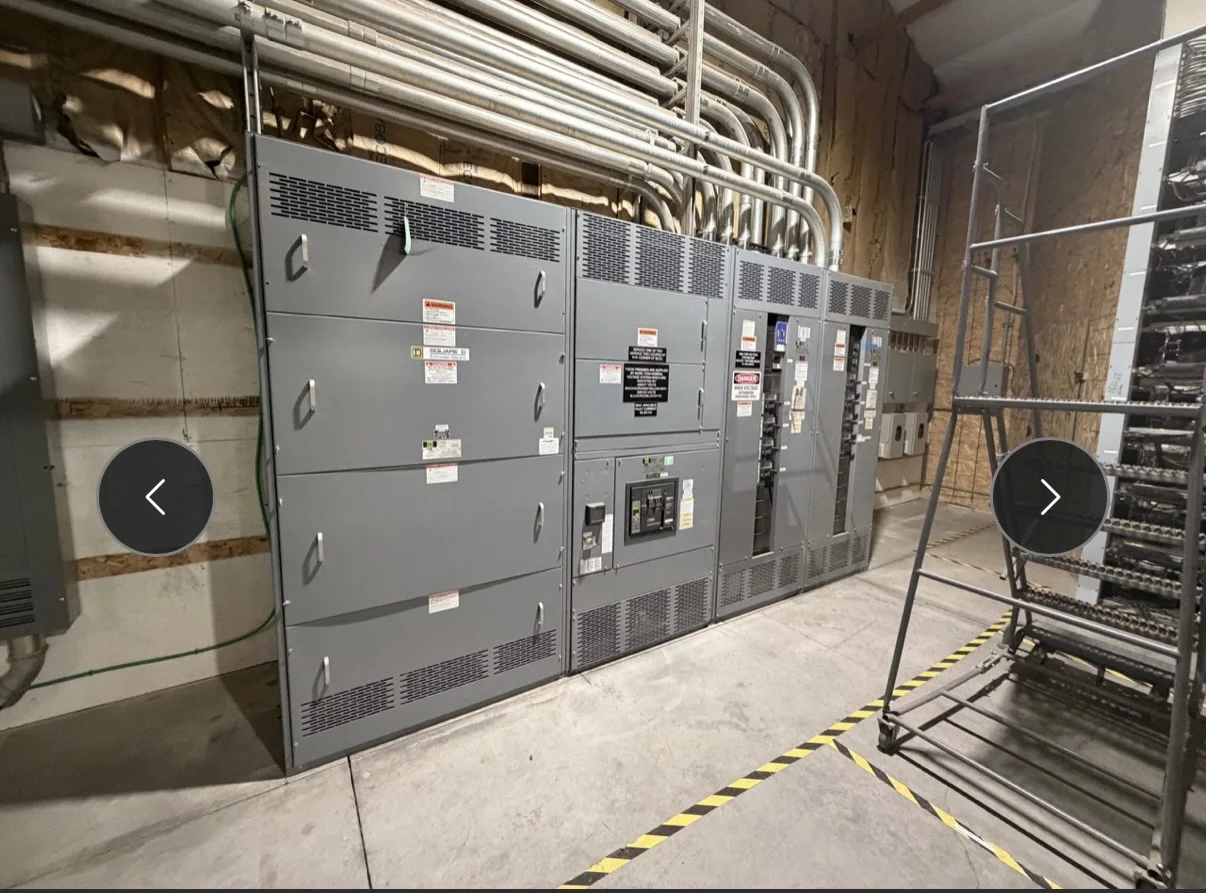
Start with the Equipment Boundary
First confirm exactly what the quoted assembly is: a low-voltage switchboard, low-voltage switchgear, or medium-voltage equipment. UL 891 applies to switchboards, while UL 1558 covers low-voltage switchgear; neither designation should be read as a medium-voltage rating. The proposal should identify the equipment type and applicable construction basis.
Match the quote to the one-line diagram and project scope. Check voltage, phase, frequency, bus arrangement, incoming and feeder quantities, ampacity, and stated short-circuit requirements against the design. Confirm whether the price covers one lineup, multiple sections, or connected assemblies, and record any interfaces assigned to others.
Make Every Protective Device Identifiable
A device schedule should name each breaker, switch, fuse, relay, or metering device included, with its position and intended function. For breakers, verify the quoted frame and trip information, pole count, and any specified accessories. Do not treat a general phrase such as “main breaker included” as a complete device description.
Check protection and control requirements against the available fault-current study and coordination design. Confirm whether settings, trip units, ground-fault functions, control power, and communications interfaces are included or remain project-supplied. These details depend on the approved design; the responsible engineer should resolve discrepancies before the order is released.
Define Metering, Controls, and Interfaces
Identify meters, instrument transformers, indicating devices, control switches, relays, terminal blocks, and communications components by quantity and location. A proposal should distinguish installed devices from provisions such as space, cutouts, or wiring only. Confirm the required metering functions, accuracy class, protocols, and points list with the project documents.
Trace external connections that affect the assembly: remote trip circuits, generator or transfer controls, building-management communications, and utility metering requirements. State who supplies and terminates field wiring, network cables, and interface equipment. Utility requirements and the approved control schematic may change scope, so flag open decisions rather than assuming compatibility.
List Drawings and Closeout Documents
Request a document register that identifies the drawings and records supplied, their expected review stages, and the final closeout package. Depending on the project, these may include approval drawings, elementary and connection diagrams, bills of material, equipment identification, and operation or maintenance information. Confirm format and delivery method.
Separate documents included with the equipment from engineering services that require separate scope. For example, site-specific coordination studies, arc-flash analysis, field labeling, and stamped design may not be part of a manufacturing quote. Confirm who reviews submittals, how revisions are handled, and whether approved changes affect price or schedule.
Specify Tests, Witnessing, and Records
Have the proposal state which inspections and factory tests are included, the applicable procedures or standards, and what records will be delivered. Do not assume a broad reference to “testing” means every requested test, a customer witness, or a particular report. Ask the manufacturer to identify the actual planned scope for this build.
If witness testing, special inspections, or project-specific checks are required, confirm notice periods, attendee arrangements, test limits, documentation, and responsibility for travel or retesting costs. The responsible engineer should determine whether proposed tests satisfy the specification. Factory testing does not replace site acceptance, installation checks, or commissioning unless expressly scoped.
Confirm Accessories and Physical Scope
Review accessories by function and quantity: lifting provisions, shipping splits, barriers, shutters, spare parts, keys, grounding hardware, and maintenance tools may be relevant to the specified design. Confirm whether required items are installed, shipped loose, or excluded. Avoid relying on a catalog image or typical configuration to establish what this quote includes.
Check dimensions, access clearances, cable entry, conductor termination space, enclosure requirements, and room conditions against the installation plan. Verify finish, labeling, seismic or environmental requirements, and indoor or outdoor construction where applicable. Confirm shipping preparation and unloading responsibilities; site access, rigging, anchorage, and installation are often separate from equipment supply.
Read Exclusions, Schedule, and Commercial Terms
Compare exclusions with the specification and purchase scope, not just the price. Common items to clarify include field labor, cable and bus connections, protective-device settings, spare devices, installation hardware, and commissioning. Ask for an explicit answer when a requirement is silent or ambiguous, and document accepted deviations in the proposal or order.
Confirm the quoted delivery basis, schedule assumptions, submittal dependencies, shipping destination, and responsibility for freight, unloading, and storage. Short lead times may be available, but timing must be confirmed for the actual configuration and component availability. U.S. manufacturing, American components, custom fabrication, and nationwide shipping should be clarified for the specific order.
Resolve Open Items Before Purchase Approval
Before approval, build a line-by-line compliance matrix: requirement, quoted response, included item or document, exception, and responsible party. Reconcile the equipment schedule, one-line, specifications, and proposal revision. Obtain written answers to open questions, especially where a device, test, interface, or accessory could affect design, fit, or cost.
Provide the manufacturer with the latest drawings, load and feeder schedules, system voltage, available fault-current information, applicable specifications, site conditions, and requested options. Confirm changes through a revised proposal before release. The responsible engineer, utility, and authority having jurisdiction should review applicable design and service requirements; quote scope alone does not establish approval.