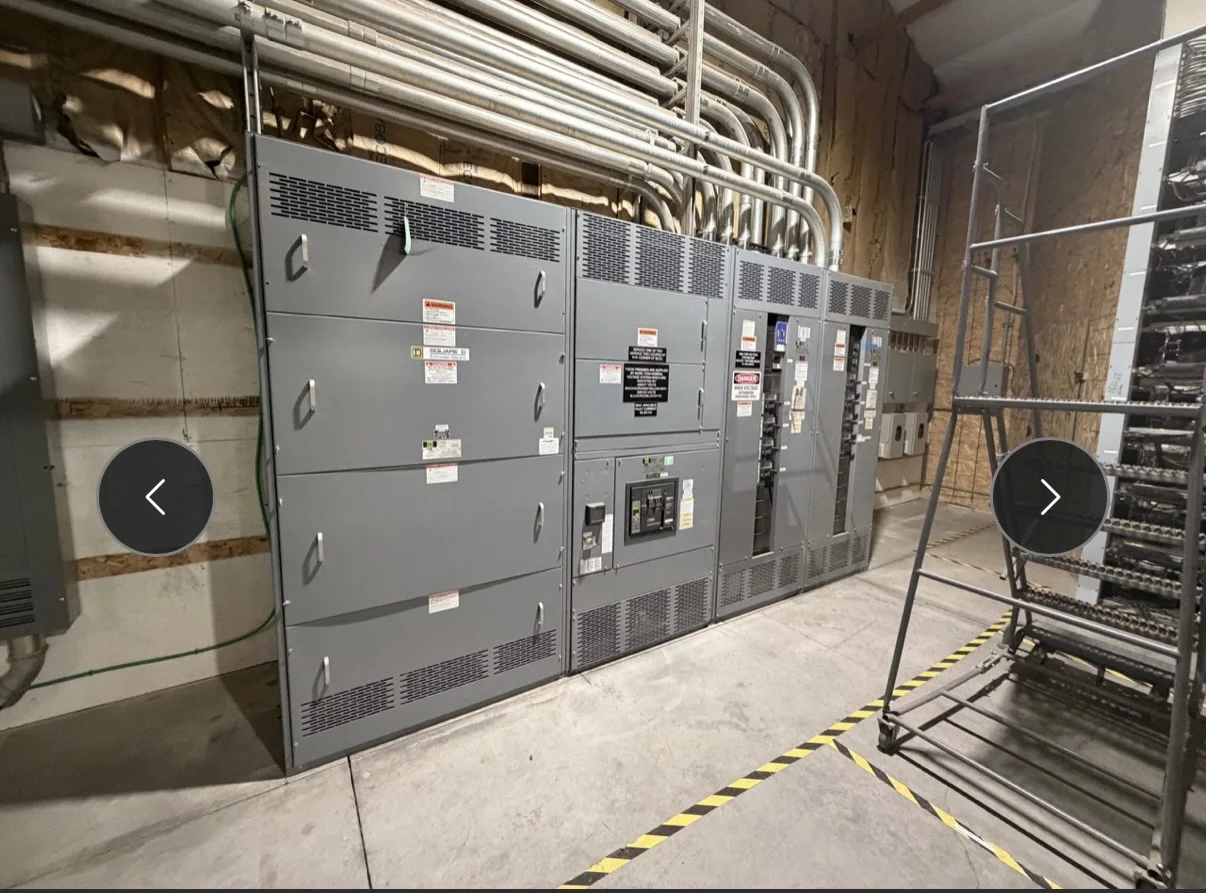
Begin with the one-line diagram
Send the current electrical one-line diagram showing the source, transformers, buses, main devices, feeders, tie breakers, loads and grounding arrangement. Mark the equipment being replaced or added, and distinguish existing components from the new scope. A dated drawing with revision status helps identify design changes that could affect configuration or pricing.
If the diagram is preliminary, label assumptions rather than presenting them as final. Include known utility information and transformer data, but do not infer available fault current from nominal voltage alone. The responsible engineer should verify system data and design intent; the utility or authority having jurisdiction may need to confirm applicable requirements.
Define voltage, current and fault-duty requirements
Identify nominal system voltage, phase, frequency, wire configuration, grounding method and required continuous current for each bus or section. Provide the calculated load basis and any anticipated expansion allowance. Clarify whether the stated current is a design requirement, an existing nameplate value or a preliminary estimate still subject to engineering review.
Provide available short-circuit current at the equipment location, the source and transformer impedances used, and the required interrupting or withstand criteria where established. These values influence device selection and equipment construction. Do not substitute a generic fault rating; the responsible engineer should validate calculations and coordinate with the utility when source data is incomplete.
Choose the equipment type and scope
State whether the project calls for a low-voltage switchboard, low-voltage switchgear or medium-voltage equipment, and identify the applicable design basis. UL 891 applies to switchboards; UL 1558 applies to low-voltage switchgear. Neither standard covers medium- or high-voltage equipment. The appropriate construction and evaluation depend on the actual project specification.
List what the quote should include: incoming section, bus arrangement, feeder sections, metering provisions, control compartments, transition sections or other defined assemblies. Note whether existing equipment interfaces are part of the scope. Custom fabrication can address project-specific layouts, but each requested feature, approval basis and interface must be confirmed for the particular build.
Schedule devices, metering and controls
Attach a breaker and feeder schedule with device type, frame or sensor information where specified, trip functions, poles, load served and any required accessories. Identify spare or future spaces separately from equipped feeders. State whether devices are fixed or drawout only when the design requires it, and flag coordination or selective-interlocking criteria for review.
Describe metering, relaying, control power, alarms, communications and protective functions that must be included. Provide control schematics or an I/O list if available, plus preferred communication protocols and points to integrate. Exact device models and settings require project review; the quote should not assume compatibility with existing systems without interface details.
Document the room and installation conditions
Provide room dimensions, clear working space, ceiling height, door and corridor widths, floor openings, cable trenches and the planned equipment location. Include access route constraints, lifting limits and whether the lineup must be divided for transport. These details can change section dimensions, shipping configuration, field assembly requirements and the practicality of moving equipment into position.
Report ambient temperature, indoor or outdoor exposure, altitude, dust, moisture, corrosive agents, vibration and other unusual conditions. Note seismic criteria or enclosure requirements if the project specification calls for them. Confirm service access, ventilation and applicable electrical clearances with the responsible engineer and AHJ; room suitability should not be presumed from the equipment quote.
Show cable entry and existing interfaces
Mark top or bottom cable entry, conductor material and sizes, quantities per phase, neutral requirements, lug preferences and expected cable routing. Include bus duct or transformer connections with dimensions and centerlines when applicable. Accurate termination information helps establish compartment space and layout, but final conductor and termination details must align with the approved electrical design.
For replacement or tie-in work, send existing nameplate photographs, connection dimensions, bus ratings and relevant field measurements. Identify the intended boundary between new and retained equipment, including control wiring and grounding connections. Measurements should be verified before release for manufacture; undocumented site conditions can require redesign or affect installation planning.
Clarify documentation, review and schedule
List required submittals, drawing formats, review milestones, operating and maintenance documents, labels and closeout records. Identify project specifications, owner standards and any required inspection or testing criteria. Requirements should be stated explicitly so the proposed scope can distinguish included documentation from items needing engineering coordination or separate confirmation.
Provide the requested delivery window, ship-to location, receiving restrictions, site contact and any phased shipment or outage constraints. Short lead times may be available, but timing depends on scope, component availability, drawing approval and production capacity; no schedule should be assumed until confirmed for the project. Nationwide shipping can be arranged to the designated destination.
Submit a complete quote package
A practical request package combines the one-line, equipment specification, schedules, room and cable-entry information, site photographs, delivery needs and a list of open questions. Identify the project phase and the person authorized to resolve technical clarifications. If documents conflict, call out the discrepancy instead of expecting the quoting team to choose a design basis.
The manufacturer builds new switchgear and power distribution equipment in the United States using American components, with custom fabrication for defined project requirements. After review, confirm scope, ratings, construction basis, interfaces, exclusions and schedule before approval. Electrical designs should be checked by the responsible engineer, with utility and AHJ input where relevant.