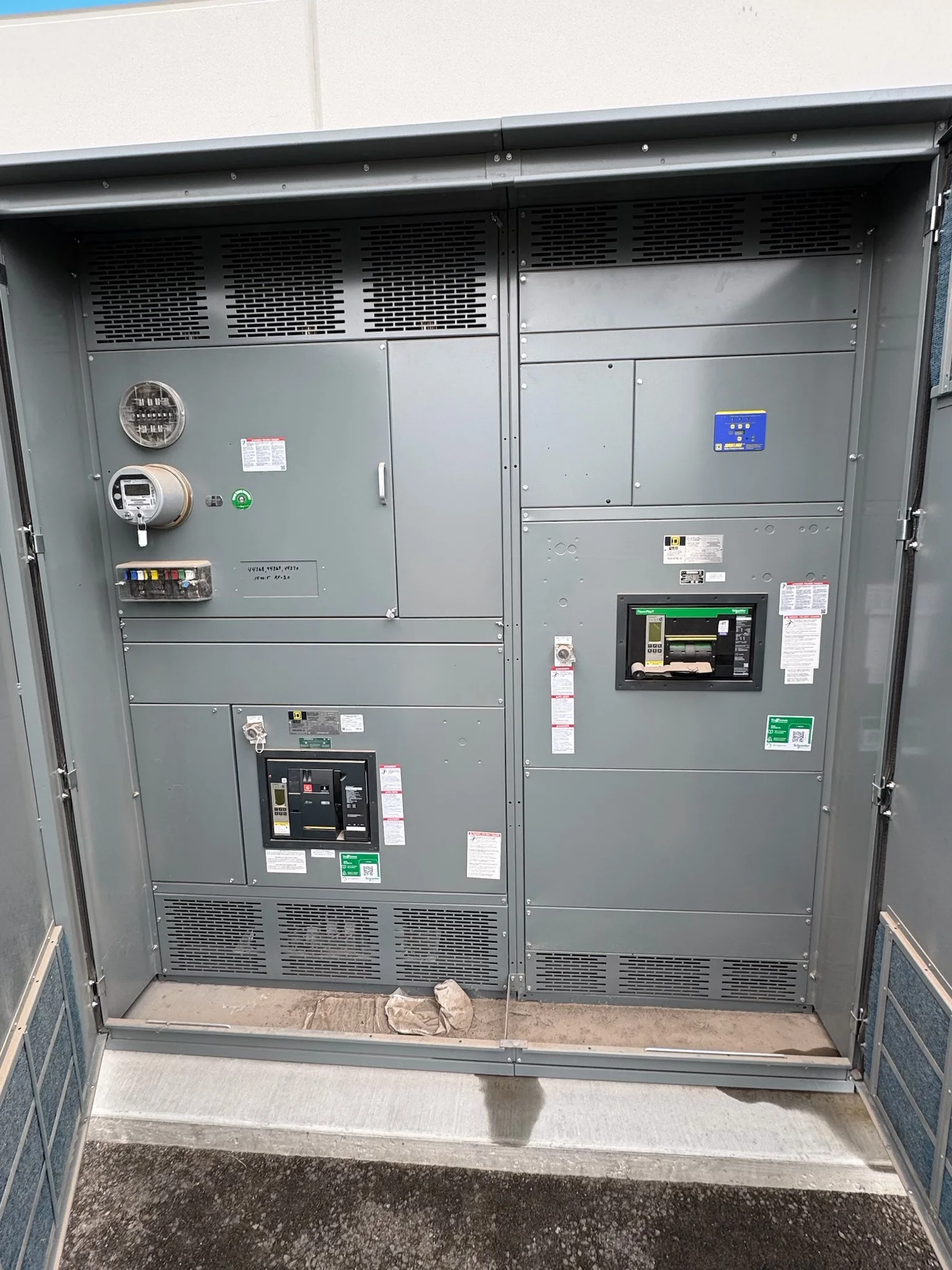
Start with the Existing Assembly
A retrofit is not simply a matter of choosing a new breaker or section with a similar nameplate rating. The existing lineup’s manufacturer, model, date of manufacture, construction, and arrangement help determine which components can be replaced and how new equipment might interface with what remains.
Begin by identifying whether the assembly is a UL 891 switchboard, UL 1558 low-voltage switchgear, or medium-voltage equipment. These are distinct equipment categories with different constructions and application requirements. The voltage class and equipment type should be verified from documentation and field information, not inferred from appearance alone.
Check Physical Fit and Connections
Available space is only one part of fit. Engineers need to compare section dimensions, mounting arrangements, bus locations, cable entry and exit paths, barriers, and access clearances. Even equipment that fits within an enclosure may not align correctly with the existing bus or allow safe installation and maintenance.
Useful records include dimensioned drawings, elevations, one-lines, photographs, and measurements taken by qualified personnel. Document obstructions, conduit locations, floor conditions, and access routes as well. Any proposed field modifications should be reviewed for their effect on enclosure integrity, clearances, and the assembly’s applicable listing or evaluation.
Verify Electrical Ratings and Duty
Compare the existing system’s voltage, continuous current, frequency, and short-circuit requirements with the proposed equipment. Breaker interrupting ratings and the assembly’s short-circuit rating must suit the available fault current and system conditions. A component rating alone does not establish that the complete lineup is adequate.
Confirm grounding arrangement, neutral configuration, bus details, protection scheme, and coordination requirements. Changes to loads, transformers, or utility service since the original installation can affect the study assumptions. The responsible engineer should verify fault-current and protection considerations, with utility input where necessary, before a retrofit configuration is finalized.
Assess Condition Before Reuse
The condition of the retained equipment matters as much as nominal compatibility. Inspection should consider corrosion, heat damage, contamination, insulation condition, loose or altered connections, damaged barriers, and evidence of water intrusion. Maintenance history and prior modifications can reveal concerns that drawings and nameplates do not show.
A new section cannot correct deterioration or undocumented changes elsewhere in the lineup. Qualified personnel should assess whether the existing structure, bus, and connected equipment are suitable for continued service and integration. If condition is uncertain, further inspection or testing may be needed before deciding whether a retrofit is practical.
Define What the Retrofit Must Do
Clarify the project objective before comparing options. The need may be to add a feeder, replace an obsolete component, increase distribution capacity, change control functions, or accommodate a revised load. Each objective affects the required arrangement, protection, interfaces, and amount of existing equipment that could remain.
Also establish outage constraints, installation sequence, operating needs, and whether temporary power is required. These details help determine if work can be staged or if a larger replacement should be evaluated. A retrofit should be judged against the facility’s operating plan as well as its electrical requirements.
Consider Listing and Responsibility
The original assembly’s markings and documentation should be checked before changing its construction. Replacing components or modifying bus, barriers, or enclosure sections may affect how the assembly is evaluated and whether its existing listing applies. Do not assume a new component automatically preserves the original assembly’s status.
The project team should identify who will design, manufacture, install, inspect, and approve the work. Applicable codes, the authority having jurisdiction, and the responsible engineer may influence the acceptable approach. The manufacturer can review supplied project information and discuss new equipment options, but site-specific approval is not presumed.
Prepare Information for a Quote
For an initial review, provide the equipment type, manufacturer and model if known, nameplate photographs, voltage and current ratings, available one-line diagram, lineup dimensions, and clear photographs of relevant sections. Include the proposed function, connected load information, and any known fault-current or coordination-study data.
Note the facility location, preferred schedule, site access limits, installation responsibility, and whether drawings or field verification are available. Identify unknowns rather than guessing. A quote for newly manufactured equipment can be more useful when its scope clearly states assumptions, interfaces, documentation needs, and items requiring confirmation.
When Replacement May Be the Better Path
A retrofit may be impractical when the lineup is badly deteriorated, its configuration cannot be verified, required ratings exceed what can be supported, or physical interfaces cannot be resolved. Limited documentation, extensive prior alterations, and incompatible protection or control requirements can also increase uncertainty and project risk.
Compare retrofit feasibility with a new lineup designed for the application, including installation space, outage planning, and connection requirements. The manufacturer builds new switchgear and power distribution equipment in the United States using American components, with custom fabrication, short lead times, and nationwide shipping. Final designs should be checked by the responsible engineer and, where applicable, the utility and AHJ.