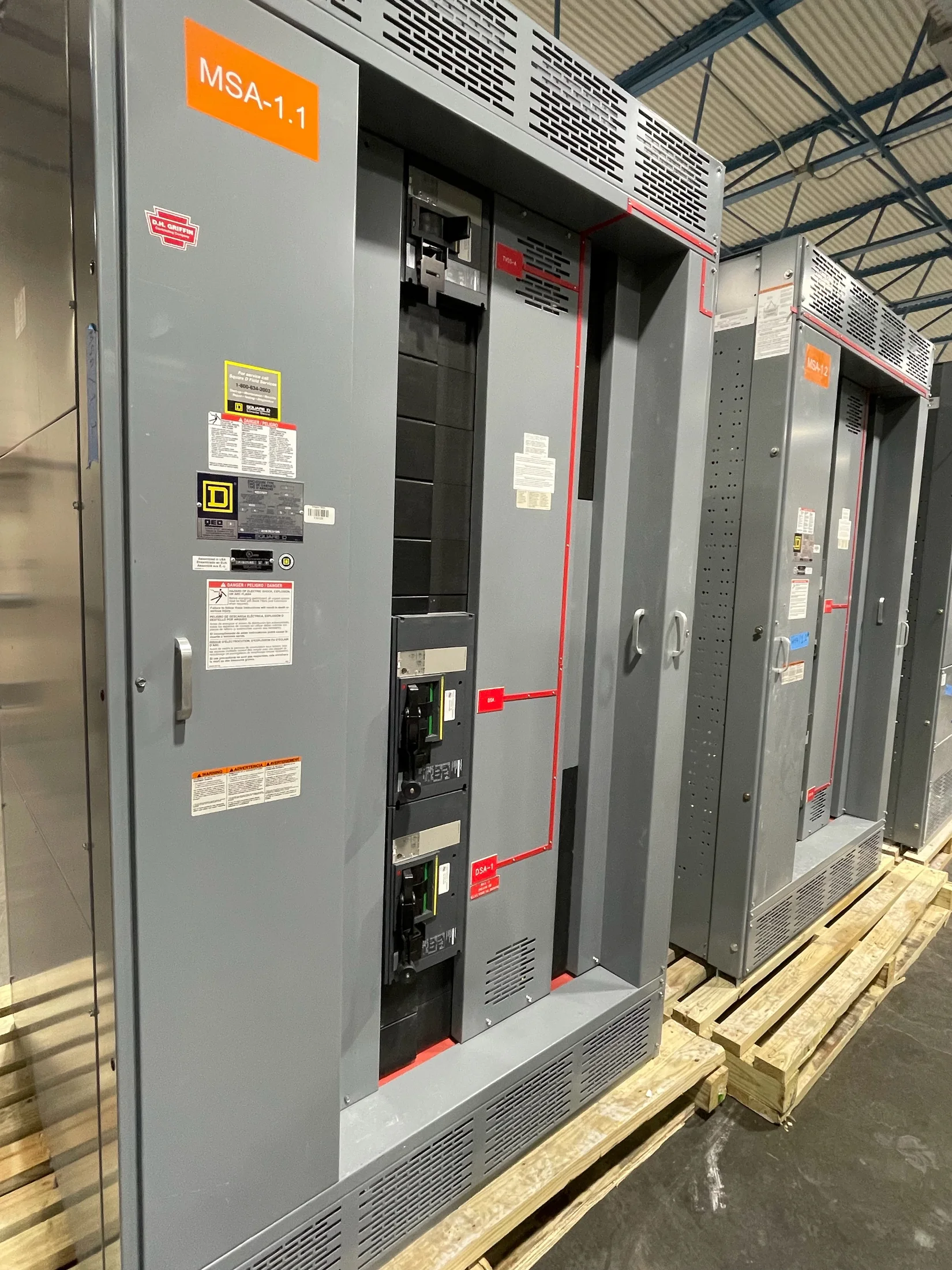
Start with the equipment class and ratings
First identify whether the project calls for a UL 891 switchboard, UL 1558 low-voltage switchgear, or medium-voltage equipment. These are distinct equipment categories, not interchangeable labels. Their construction, applicable standards, voltage class, and application affect design and quote scope; UL 891 applies to switchboards, not medium- or high-voltage gear.
Provide nominal system voltage, frequency, main and feeder ampere ratings, available fault current, and required short-circuit or withstand ratings. The responsible engineer should establish these values using the system study and utility information. Higher ratings or unusual combinations can affect bus design, device selection, spacing, and overall equipment construction.
Define the lineup and connection arrangement
A quote depends on the lineup’s electrical and physical arrangement: number of sections, mains, ties, feeders, metering compartments, and future provisions. Identify the one-line diagram revision and indicate normal operating conditions, source count, transfer approach, and whether parallel operation is intended. Each additional function can change compartment layouts and interconnections.
Confirm cable entry and exit directions, top or bottom access, conductor sizes, termination requirements, and available working space. Room dimensions, doors, overhead obstructions, and equipment movement paths may constrain section widths, depth, or shipping splits. Provide drawings when available; a proposed arrangement should be reviewed against site conditions before release.
Choose protection around the system study
Protective-device cost depends on the circuit duties and coordination requirements, not simply feeder count. Specify breaker or fuse types only after confirming load characteristics, interrupting requirements, fault levels, and coordination goals. Selective coordination, ground-fault protection, zone-selective features, or arc-energy reduction functions may require additional devices or engineered arrangements.
Share the protection study, device schedules, and any required settings or communication functions with the quote request. If studies are incomplete, identify assumptions clearly rather than treating a preliminary rating as final. The responsible engineer should verify device suitability and coordination; the utility and authority having jurisdiction may also have project-specific requirements.
Scope metering, controls, and communications
Control scope can range from basic local indication to metering, interlocking, automatic transfer, programmable logic, and remote communications. List the signals, operating sequences, alarm points, and interfaces expected at each section. Include preferred protocols and any interface boundaries with generators, building automation, supervisory systems, or utility equipment.
Clarify who supplies control power, wiring beyond the lineup, network devices, and field programming. A detailed sequence of operation helps distinguish required functions from optional monitoring and reduces assumptions in the quote. Custom control panels or extensive point lists may affect engineering and fabrication, while project-specific features must be confirmed for the proposed build.
Match the enclosure to its installation
Enclosure selection should follow the actual location and exposure. Confirm indoor or outdoor installation, ambient conditions, dust or moisture exposure, corrosion concerns, access needs, and any space or seismic constraints specified for the project. A higher environmental enclosure rating or special material and finish may change construction and component choices.
Provide room ventilation information, elevation, temperature range, and installation clearances where relevant. These details can affect thermal review, entry provisions, and service access. Do not assume a particular enclosure, finish, or environmental rating is included in a standard quote; state the required conditions and have the design checked for the site.
Make testing requirements explicit
Factory verification and project-specific testing are separate scope questions. Identify required routine inspections, functional checks, witness points, special test procedures, and any documentation expected from the manufacturer. The applicable equipment category and purchase specification help establish what verification is appropriate; avoid assuming a particular test or certification applies to every configuration.
If witness testing is requested, define the procedures, attendees, notice, and acceptance criteria before quotation. Also distinguish factory activities from site acceptance testing, commissioning, and field studies, which may belong to other project participants. The quote should state included scope and exclusions so testing responsibilities and schedule dependencies are visible.
Account for drawings and deliverables
Documentation affects engineering effort and coordination. List required submittals, drawing formats, review cycles, record drawings, wiring diagrams, bills of material, operating instructions, and maintenance information. Identify project naming, tagging, language, or document-control requirements. Extensive custom schedules or repeated revisions can add work beyond a standard equipment drawing package.
Send the latest one-line, specifications, load and feeder schedules, site layout, and applicable studies with the request. Mark open items and indicate who will approve drawings. Clear inputs help the manufacturer price the intended new equipment rather than make uncertain allowances; confirm final deliverables and review milestones in the purchase scope.
Build a comparable, complete quote request
To compare proposals, issue the same technical basis, drawings, options, and commercial assumptions to each supplier. Ask for scope boundaries, stated assumptions, exclusions, and any deviations. Consider delivery destination, packaging, freight, unloading responsibility, and required delivery sequence; nationwide shipping can be arranged, but site logistics should be defined.
A complete request typically includes equipment class, ratings, one-line, section layout, protection and control schedules, enclosure conditions, testing, documentation, and target milestones. The manufacturer builds new equipment in the U.S. with American components and offers custom fabrication and short lead times; actual configuration, schedule, and quoted cost depend on confirmed project requirements.