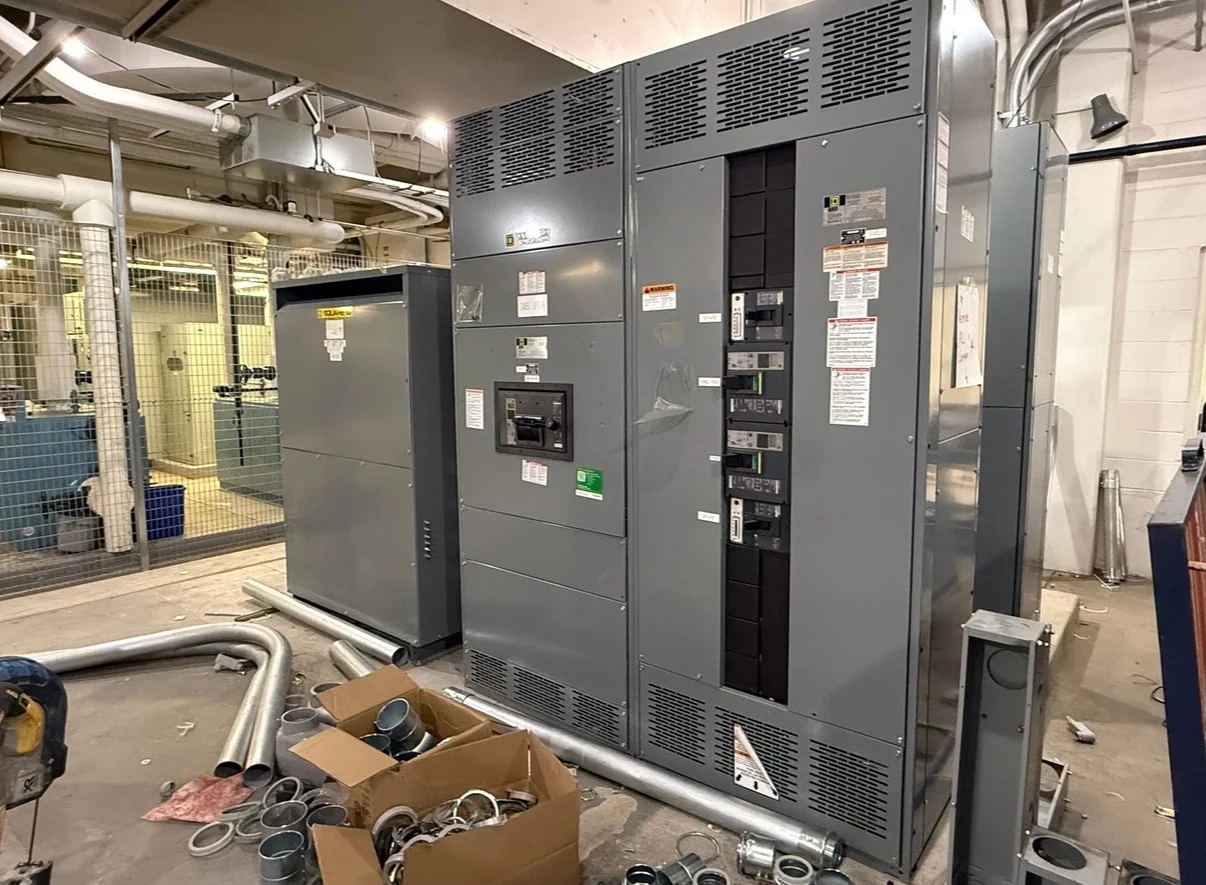
Outdoor installation is a design decision
Switchgear is not automatically suitable for outdoor placement just because it has a metal enclosure. The equipment must be designed for the intended environment, and its installation must follow the manufacturer’s instructions. A configuration intended for a conditioned electrical room may not tolerate direct weather, temperature swings, dust, or other site exposures.
Start by identifying whether the project needs indoor equipment, outdoor equipment, or equipment housed within a separate building or protective structure. The decision affects enclosure construction, access, layout, cable entry, and maintenance planning. Confirm the proposed use with the responsible electrical engineer before selecting a product or preparing a purchase specification.
Match the enclosure to actual exposure
An outdoor enclosure must be appropriate for the conditions at its specific location, not merely described as weather-resistant. Consider rain direction, wind-driven precipitation, snow, ice, airborne dust, corrosive contaminants, and the possibility of standing water. The required enclosure construction and environmental rating should be established from those exposures and applicable project requirements.
Also consider whether doors, seams, cable openings, ventilation features, and accessory compartments maintain the intended protection when installed. Field modifications or unplanned penetrations can compromise enclosure performance. Specify cable-entry locations and accessories early, and have the responsible engineer verify that the proposed configuration suits the site and installation details.
Account for temperature, sunlight, and condensation
Outdoor equipment can experience a wider temperature range than equipment inside a controlled electrical room. Direct sun may heat an enclosure, while cold weather can affect operating conditions and contribute to condensation during temperature changes. Evaluate the project’s expected ambient conditions and the equipment manufacturer’s stated operating limits rather than assuming a standard indoor design will suffice.
Ask whether the application calls for temperature-control or moisture-management provisions, and confirm how they are powered, maintained, and coordinated with the equipment. Do not assume heaters, ventilation, or other accessories are included. The design should address the location’s climate, enclosure configuration, internal heat, and any applicable engineering or code requirements.
Choose the correct equipment type and rating
Outdoor location does not determine the electrical classification of the assembly. Low-voltage switchboards, low-voltage switchgear, and medium-voltage equipment are distinct product categories with different construction standards and application requirements. For example, UL 891 applies to switchboards; it does not cover medium- or high-voltage equipment. UL 1558 addresses low-voltage switchgear.
The project specification should identify the system voltage, current requirements, fault-duty information, distribution arrangement, and applicable product standard. Confirm that the manufacturer can build the required equipment for the proposed outdoor installation and that the specific build’s construction and documentation meet the project requirements. Do not infer a particular listing or rating from the product category alone.
Plan the site, foundation, and access
Outdoor switchgear needs a suitable mounting surface and a location that supports safe installation and ongoing service. Confirm foundation dimensions, anchorage, equipment weight, cable routing, working space, drainage, and clearance from adjacent structures. The civil, structural, and electrical design teams may need to coordinate these details before equipment dimensions and entry points are finalized.
Consider how personnel will reach operating handles, inspect compartments, and perform maintenance in rain, snow, or other expected conditions. Plan for doors and removable components to open without obstruction, and verify that the location supports delivery and installation. The responsible engineer, project team, and authority having jurisdiction should resolve site-specific code and access questions.
Coordinate system protection and utility requirements
Outdoor placement does not change the need to coordinate the assembly with the electrical system. Confirm service voltage, available fault current, grounding and bonding approach, protection scheme, feeder arrangement, and required metering or control interfaces. Utility service requirements may affect equipment layout, compartments, access, or connection points, so obtain them before the design is released.
Review the proposed installation against the project one-line diagram, coordination study, specifications, and applicable codes. The responsible engineer should verify equipment ratings and protective-device requirements, while the utility and authority having jurisdiction should review matters within their roles. These checks help ensure that the selected outdoor configuration fits the system and site.
Provide complete information for a quote
A useful quote request describes the application rather than simply asking for outdoor switchgear. Include equipment type, voltage, bus and feeder requirements, fault-duty data, incoming and outgoing arrangements, metering or control needs, and the governing specification. Attach a one-line diagram, relevant schedules, and any utility criteria available for the project.
Also provide the installation location and environmental conditions, required enclosure characteristics, cable-entry direction, mounting and foundation constraints, access limitations, and project schedule. Identify requested standards, documentation, and any project-specific inspection or approval requirements. These details allow the manufacturer to assess the intended configuration and identify open questions before fabrication planning.
Confirm configuration and installation instructions
Before ordering, confirm that the quoted equipment is intended for the stated outdoor location and that its proposed enclosure and accessories match the project conditions. Review dimensions, entry locations, operating clearances, anchorage information, and any stated installation limitations. Clarify exclusions and options in writing so the equipment scope is not mistaken for site work or protective structures.
Installation should follow the instructions supplied for the specific assembly, including handling, placement, connections, and any required checks before energization. Coordinate field work with the responsible engineer and follow applicable codes and site safety procedures. A U.S. manufacturer can custom-fabricate new switchgear and power distribution equipment for Ohio and nationwide projects; confirm lead time and shipping needs with the quote.