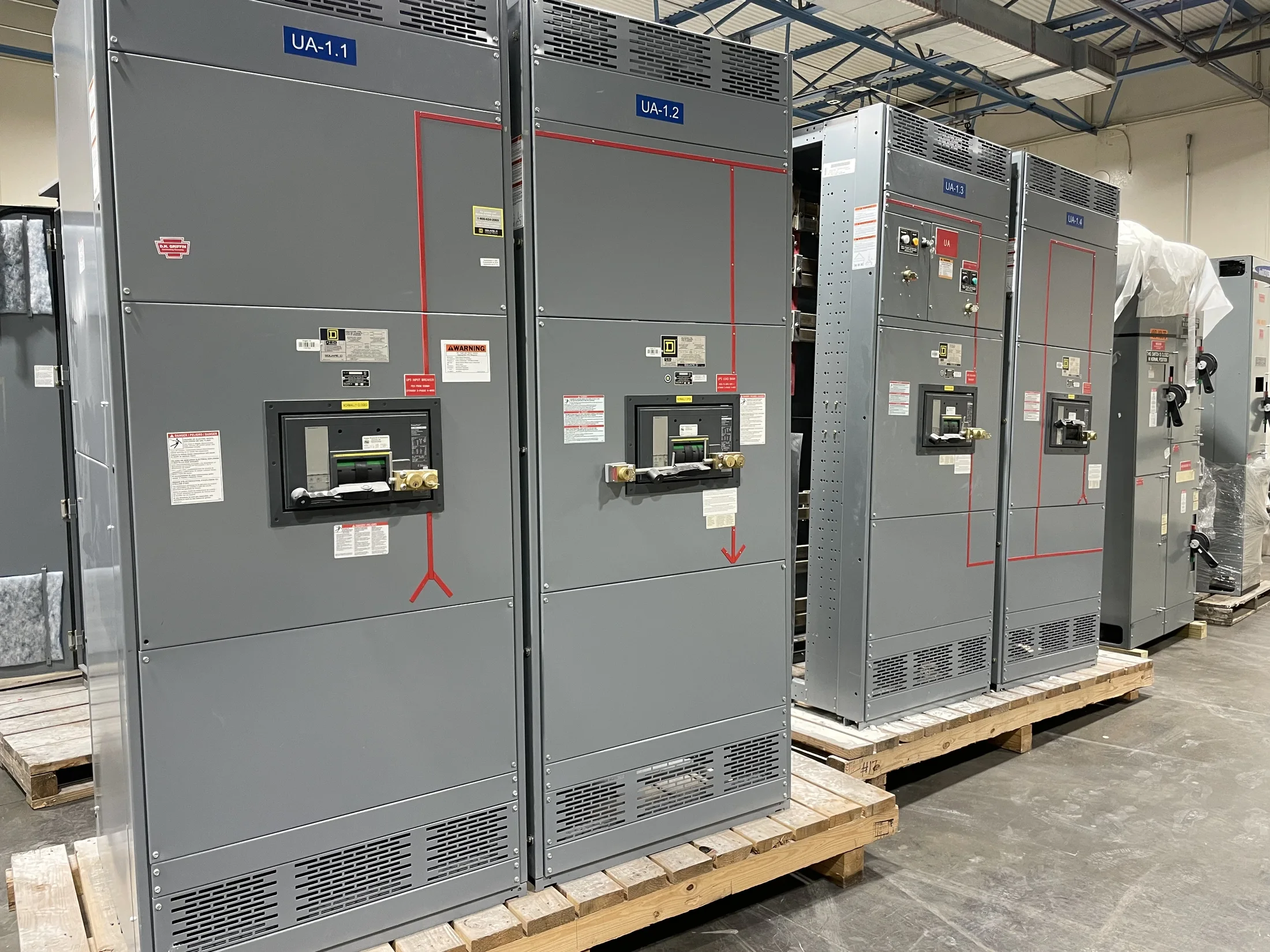
Start with the Project’s Electrical Basis
Before requesting pricing, establish what the equipment must serve and where it will connect. Gather the latest one-line diagram, available fault-current information, nominal system voltage, phase and wire arrangement, grounding method, and anticipated load. Include the utility service point and identify whether the project is new construction, an expansion, or replacement.
These inputs guide the equipment category and preliminary arrangement; they are not interchangeable across every installation. Have the responsible electrical engineer confirm design assumptions and applicable code requirements. If service characteristics or fault current remain uncertain, identify that uncertainty in the request so it can be resolved before the manufacturer finalizes a build.
Choose the Correct Equipment Class
For low-voltage distribution, distinguish a UL 891 switchboard from UL 1558 low-voltage switchgear. The project specification, service conditions, operating needs, and design requirements determine which is appropriate. A switchboard is not simply a lower-cost substitute for switchgear, and the names should not be treated as equivalent in a quote request.
Medium-voltage equipment is a separate category, with different voltage-class, insulation, switching, and protection considerations; UL 891 does not cover medium- or high-voltage equipment. State the intended equipment class and governing specification, then ask questions where the design documents conflict. The manufacturer can develop a proposed configuration against confirmed project requirements.
Define the Configuration Before Comparing Prices
Describe the required lineup and functions: incoming service, main device, feeder count and ratings, tie or transfer provisions, metering, and spare spaces. Identify expected cable entry and exit directions, conductor material and size when known, enclosure location, and access clearances. Note whether the installation is indoors or outdoors and any environmental conditions.
Configuration choices affect footprint, connections, coordination, and cost, so avoid comparing proposals based only on a headline rating. Mark required items separately from preferred options, such as provisions for future feeders or particular control interfaces. Confirm dimensions and access paths with the project team, including doors, corridors, rigging limits, and final equipment-room layout.
Prepare a Quote Request That Can Be Acted On
Send a coherent package rather than a list of disconnected ratings. Include the one-line diagram, equipment specification, load or feeder schedule, site voltage and fault data, requested quantity, project location, and target dates. Identify the submittal format and any required drawings, documentation, or procurement forms, and provide a contact for technical questions.
Flag open items rather than silently assuming an answer. For example, note that utility fault-current data is pending or that a protective-device setting study is still in progress. Ask the supplier to identify exclusions, assumptions, and items requiring confirmation in its proposal. This makes scope differences visible before a purchase order or schedule commitment.
Evaluate Price Against Scope and Interfaces
A useful price comparison checks the same scope across proposals: equipment class, device arrangement, bus and connection requirements, metering, enclosure, and documented options. Review exclusions such as field-installed wiring, external controls, commissioning, or site work rather than assuming they are included. Request clarification where a proposal describes an alternate configuration.
Equipment cost is only one part of project cost. Consider engineering review, shipping, unloading, handling, installation labor, required accessories, and any schedule effects of unresolved design inputs. Pricing depends on the confirmed design and build scope, so avoid relying on a generic allowance as a final budget. Ask what changes would require repricing.
Coordinate Engineering Review and Submittals
After selecting a supplier, route the proposed drawings and data through the responsible engineer and other project reviewers. Check device ratings against system conditions, verify feeder and termination details, and compare the lineup with the approved one-line and room layout. Confirm interfaces with transformers, generators, transfer equipment, protective relays, and building controls where applicable.
Resolve comments before authorizing production, and document approved deviations from the original specification. The engineer should check protection and coordination requirements; the utility and authority having jurisdiction should review matters within their scope. Confirm which party supplies final settings, field wiring, and acceptance documentation. Submittal approval is a design checkpoint, not a substitute for installation review.
Plan Procurement and Delivery for the Site
Tie the requested ship date to actual project milestones: approved submittals, site readiness, installation sequence, and energization needs. Confirm who receives the shipment, the delivery location and access restrictions, unloading responsibility, and whether equipment must arrive in stages. Ohio weather, site conditions, and construction sequencing may affect handling plans; verify them for the specific project.
A U.S. manufacturer building with American components can provide custom fabrication, short lead times, and nationwide shipping, subject to the confirmed design and current production schedule. Ask for the schedule basis and identify decisions that could affect it. Do not treat an early estimate as a guaranteed delivery date until scope and project coordination are established.
Keep Changes and Responsibilities Visible
Once the order is released, maintain one controlled record of approved drawings, changes, open questions, and responsible contacts. A revised feeder count, utility requirement, cable entrance, or room dimension can affect fabrication and installation. Submit changes promptly and ask the manufacturer to explain any price or schedule impact before approving the revision.
Before shipment, coordinate the final equipment details with the electrical contractor, engineer, and site team. Confirm receiving inspection, storage conditions, lifting instructions, installation responsibilities, and the plan for final field checks. Newly manufactured switchgear is built to an agreed scope; careful change control helps keep that scope aligned with the project as it moves toward energization.