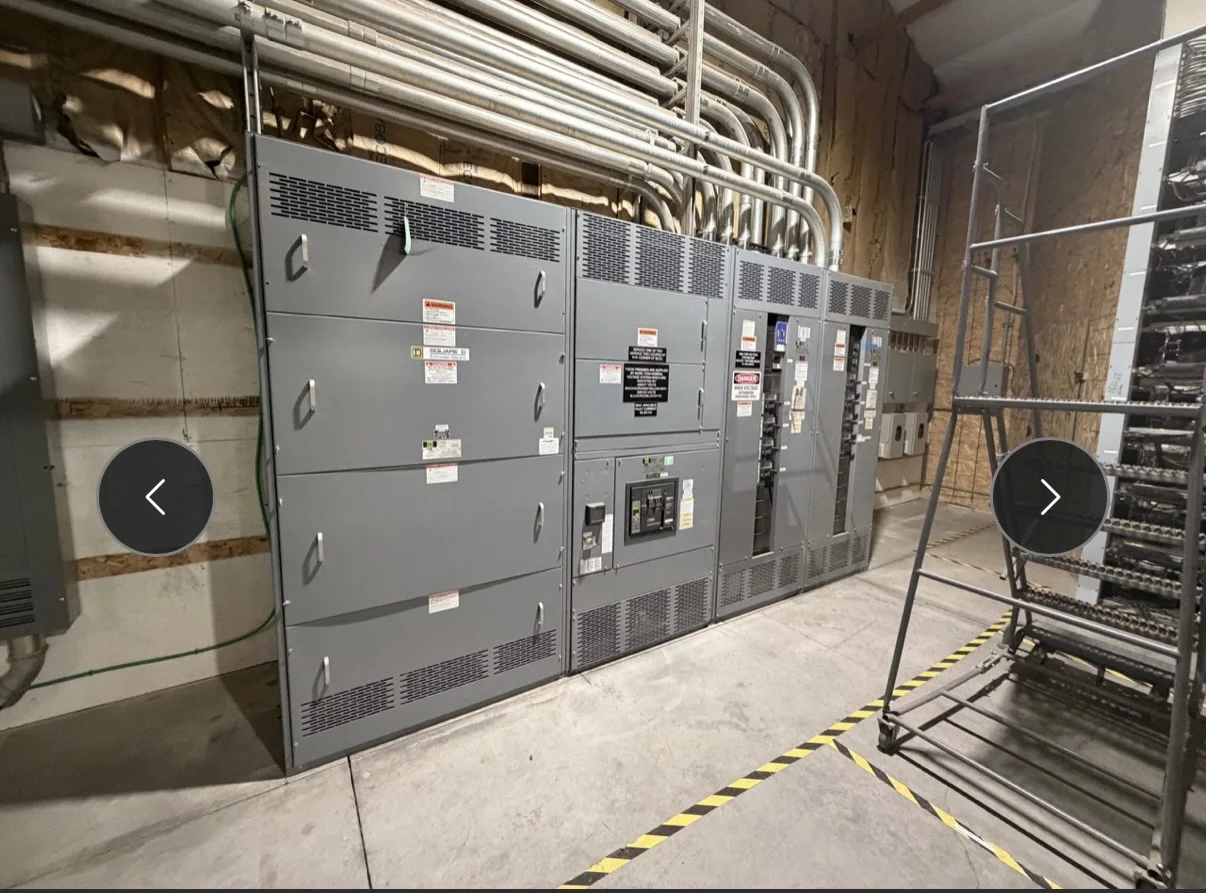
What a withstand rating describes
A withstand rating identifies the short-circuit current an assembly is designed and evaluated to endure for a specified duration under stated conditions. It addresses the assembly’s ability to remain structurally and electrically intact during that event. The rating is meaningful only when its test basis, time, and equipment configuration are understood.
It does not mean a switchgear assembly can interrupt every fault current. Circuit breakers or other protective devices perform interruption, while the assembly must withstand the applicable stresses until a fault is cleared. Coordinate the available fault current, protective-device clearing time, and equipment rating in the project design.
Read current and time together
A short-circuit withstand specification commonly includes a current value and a duration. The duration matters because a fault that persists longer exposes conductors, supports, joints, and enclosures to thermal and mechanical stress for more time. Do not compare current values without checking their associated time and stated test conditions.
The design engineer should determine the maximum available fault current at the equipment location and establish the relevant protection clearing time. Utility source data, transformer impedance, conductor length, parallel paths, and upstream device settings can affect the calculation. Confirm assumptions with the responsible engineer and utility where applicable.
Distinguish equipment classes and standards
For low-voltage distribution, UL 891 applies to switchboards, while UL 1558 applies to low-voltage metal-enclosed switchgear. These are distinct equipment categories; a withstand value should be considered with the product standard and assembly design that apply. The project specification should identify the intended equipment class rather than using the terms interchangeably.
Medium-voltage equipment is a separate category with different applicable standards, voltage classes, and evaluation criteria. UL 891 does not cover medium- or high-voltage equipment. Identify system voltage and equipment type at the outset, then have the responsible engineer confirm the applicable requirements and how short-circuit duty is to be documented.
Configuration can change the evaluation
An assembly’s evaluated short-circuit capability is tied to its construction, not simply to a nameplate number. Bus arrangement and material, bracing, section layout, incoming and outgoing devices, joints, and enclosure details may all be relevant. A change to one component or arrangement can affect whether an evaluation applies to the proposed build.
Review the complete lineup, including transition sections, metering compartments, cable spaces, and connection points that form part of the specified assembly. Confirm device types and ratings, bus orientation, and any special provisions with the manufacturer during design review. Do not assume a rating transfers to a modified or field-assembled configuration.
Coordinate withstand and protection
Protection settings help determine how long fault current flows, so coordination studies and equipment selection should be considered together. A protective device’s interrupting rating is not the same as the switchgear assembly’s withstand rating. Verify both against the calculated fault conditions, and check that upstream and downstream protection operate as the design intends.
Current-limiting devices, maintenance settings, selective coordination requirements, and backup protection can change the conditions used in an engineering review. Provide the relevant device data and proposed settings when seeking confirmation. The responsible engineer should assess the complete protection scheme rather than relying on a withstand figure in isolation.
Specify the actual site conditions
Short-circuit duty depends on the electrical system at the installation point. Capture nominal voltage, frequency, grounding method, source configuration, transformer information, and calculated available fault current. If sources can operate in parallel, or a generator or alternate feed can supply the bus, clarify each operating mode and its contribution.
Installation conditions also matter to equipment selection and documentation. Record indoor or outdoor location, ambient conditions, altitude if relevant, service entrance role, cable entry, and space constraints. Identify the project’s applicable code, specification, and authority having jurisdiction so unresolved requirements can be reviewed before the design is finalized.
Information to provide for a quote
A useful request for quotation includes one-line diagrams, load and feeder schedules, system voltage, available fault-current study, protection-device information, and the required withstand current and duration. Include the governing equipment standard and any project-specific submittal requirements. If studies are preliminary, label assumptions and identify who will confirm them.
Also provide lineup dimensions or room constraints, incoming and outgoing arrangements, metering needs, environmental conditions, and the intended installation location. These details help determine whether custom fabrication is needed and what design questions remain. The manufacturer can build new equipment in the United States with American components and ship nationwide; proposed ratings remain subject to review of the specific design.
Verify documentation before release
Before approving submittals, compare the proposed assembly description and short-circuit documentation with the project specification and calculated system duty. Check that the stated current and duration match, the equipment class is correct, and the described lineup and devices correspond to the intended build. Resolve exceptions in writing rather than inferring equivalence.
Field changes, substituted devices, or altered protective settings should receive engineering review because they may affect the original assumptions. Have the responsible engineer check the design, consult the utility when source data is needed, and coordinate with the AHJ on applicable requirements. A project-specific review is essential; no rating should be presumed without supporting documentation.