Start With the Serving Utility’s Current Requirements
Identify the electric utility serving the site and obtain its current service manual, metering standards, and project-specific instructions. Requirements can differ by service territory and change over time, so a previous project, nearby facility, or generic drawing is not a substitute for written confirmation.
Record the utility contact, project or service-request number, document revision dates, and open questions. Ask whether the utility has reviewed the proposed service voltage, capacity, transformer arrangement, and metering location. Keep written responses with the design package so the engineer, contractor, and equipment manufacturer work from consistent information.
Define Service Characteristics Before Selecting Equipment
Document the nominal service voltage, phase, frequency, number of service conductors, and grounding arrangement supplied or required at the point of service. Confirm whether the utility will provide a transformer and, if known, its secondary configuration and available fault current. These details affect equipment selection and the protective-device study.
Clarify the service size, anticipated demand, load growth, and whether the project is new construction, a service replacement, or an expansion. Note parallel sources, generators, energy storage, or other on-site generation for engineering review. Do not infer that a familiar voltage or ampacity is acceptable without utility and design confirmation.
Translate Metering Rules Into a Buildable Layout
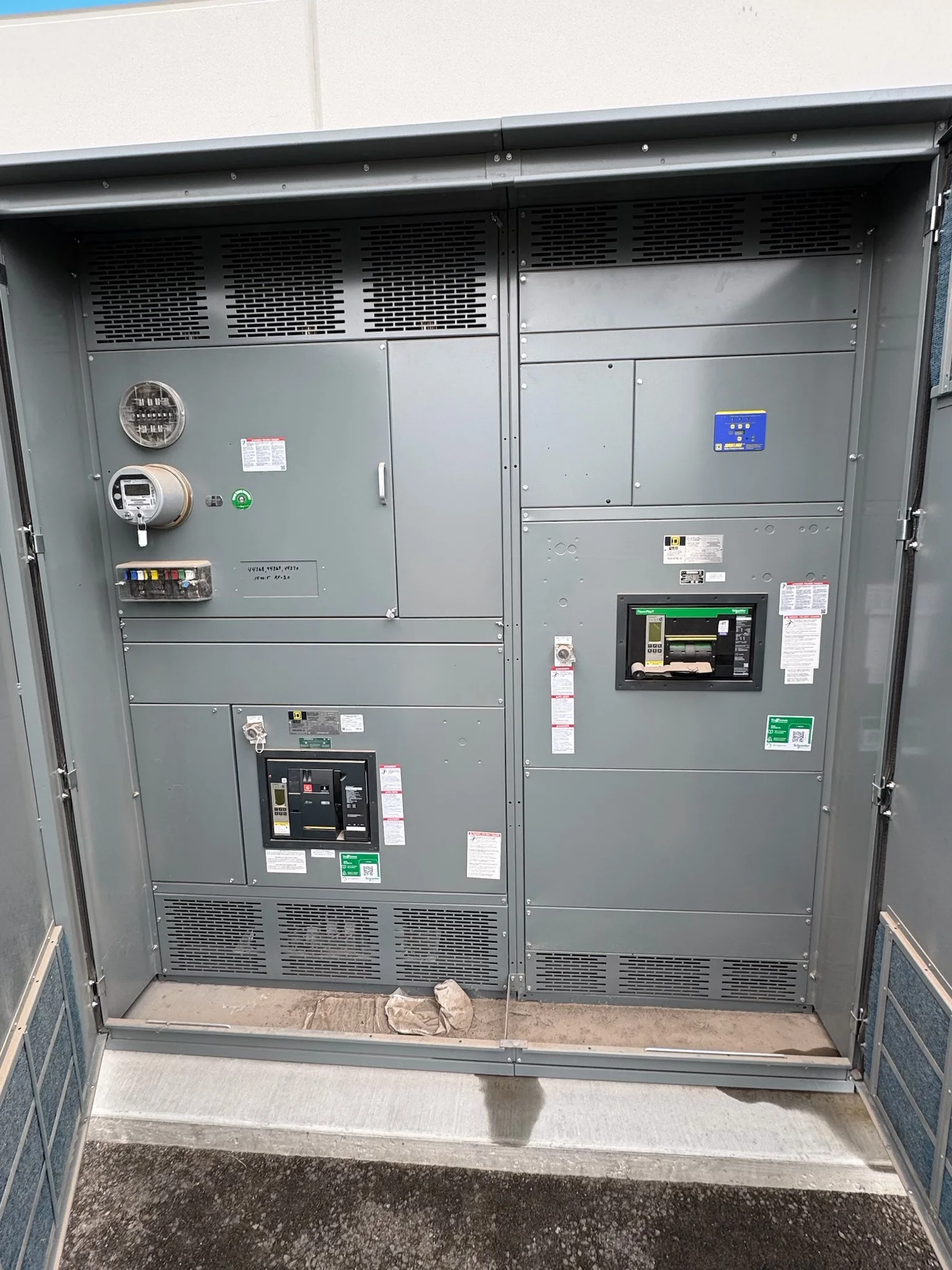
Ask the utility to specify meter type, instrument-transformer requirements, meter socket or enclosure details, test-switch needs, and ownership boundaries. Confirm which party furnishes and installs each component, and whether the utility requires a particular manufacturer, approved arrangement, or separate metering compartment before equipment dimensions are finalized.
Establish meter location, access, working clearances, environmental exposure, and acceptable distance from the service point. Confirm whether meters must be grouped, externally accessible, or arranged for utility seals. For multiple tenants or services, provide a one-line diagram and meter schedule showing how each meter corresponds to its load.
Identify the Service Equipment and Its Responsibilities
Show the service disconnecting means, overcurrent protection, bus arrangement, and downstream distribution on the one-line diagram. Confirm the intended equipment type and applicable construction standard with the responsible engineer. UL 891 applies to low-voltage switchboards; UL 1558 applies to low-voltage switchgear. Neither standard covers medium- or high-voltage equipment.
Utility rules may specify service-entrance arrangements, line-side access, barriers, or a location for utility-owned components. Treat each as a requirement to verify against the utility’s documents and project conditions. The manufacturer can review defined interfaces, but the engineer and utility determine what the installation must satisfy.
Coordinate Fault Current, Protection, and Grounding
Request available fault-current data at the service point, including the utility’s assumptions and the date supplied. The engineer needs this information to evaluate equipment ratings, overcurrent-device selection, and coordination. If fault current is pending, identify it as an open design item rather than assuming a value from an older study.
Confirm grounding and bonding requirements, neutral treatment, and any utility restrictions affecting protective-device placement. Consider transformer impedance, conductor length, motor contribution, and alternate sources in the system study where applicable. Have the responsible engineer verify the final configuration and ratings against the actual system and applicable codes.
Prepare Drawings and Documents for Utility Review
Submit the utility’s requested package, which may include a site plan, service one-line, load information, equipment elevations, metering details, and service-point location. Include clear notes on ownership boundaries, proposed transformer location, conduit routes, and access. Requirements vary, so confirm the review checklist and preferred file format with the serving utility.
Track review status, comments, resubmittals, and approved drawing revisions. Distinguish utility acceptance of a service arrangement from equipment certification, code compliance, or approval by the authority having jurisdiction. Resolve comments with the responsible engineer and utility before releasing fabrication details that depend on the disputed interface.
Build a Complete Package for an Equipment Quote
For a useful quote, provide the one-line diagram, load schedule, service characteristics, utility metering instructions, available fault current, and required equipment ratings if established by engineering. Add enclosure location and environment, cable-entry direction, dimensions or space limits, and any requested future provisions. Mark unresolved requirements so assumptions are visible.
Identify project location, schedule needs, drawing-review milestones, shipping destination, and the contractor or engineer responsible for technical questions. A U.S. manufacturer can assess custom fabrication and nationwide shipping from this information, but final construction details depend on confirmed requirements. No quote should replace utility review or engineering approval.
Control Changes Through Release and Installation
Utility comments can affect meter compartments, service conductors, access, and equipment arrangement. Route every change to the engineer, contractor, and manufacturer, then update the one-line and equipment drawings together. Confirm which revisions require another utility review and which affect dimensions, connections, or the fabrication schedule.
Before installation, verify that delivered equipment matches the approved submittal and that field conditions preserve clearances, access, and conductor routing. Coordinate inspection and energization steps with the utility and AHJ. Because site conditions and local interpretations vary, have the responsible parties resolve conflicts before connections are made or service is energized.