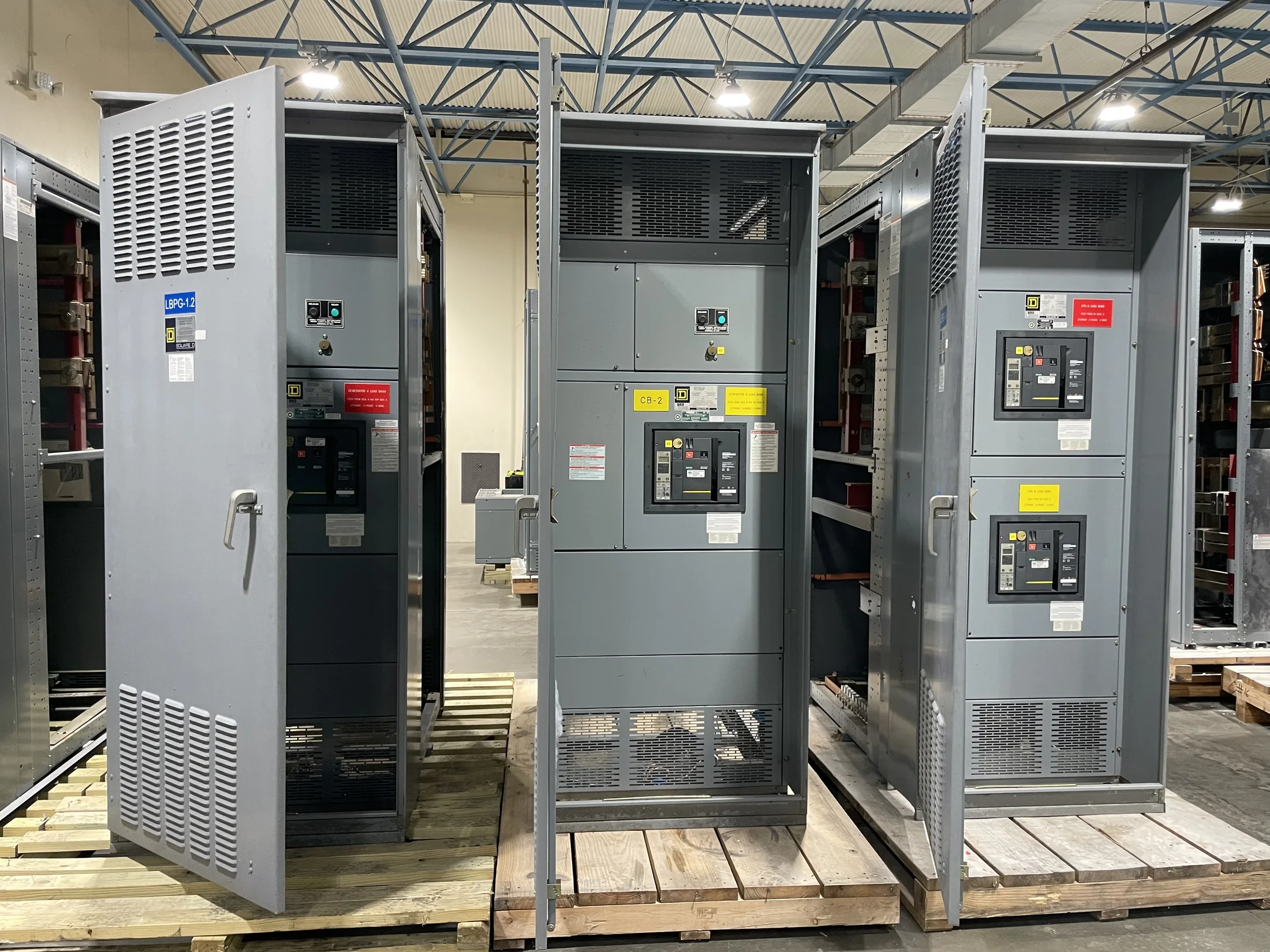
Four Different Meanings of Spare Capacity
“Spare capacity” can describe several different provisions, and they are not interchangeable. A lineup may have unused circuit positions but insufficient bus capacity for additional demand. It may have room for another section while its service entrance, transformer, or upstream protection cannot support the added load.
A useful specification identifies each desired provision independently: installed spare devices, unused circuit positions, physical space for future equipment, and electrical capacity for anticipated load. State whether these are required at delivery or only planned for a later project. This avoids treating a general percentage as a complete expansion plan.
Spare Circuits and Ready Positions
An installed spare circuit is a provisioned branch device that is present but not assigned to a current load. Define the device type, frame or rating requirements, poles, trip functions, connection arrangement, and whether it must be wired to terminals. Confirm how the spare is to be identified on drawings and labels.
An unused position is not necessarily a ready-to-energize circuit. Clarify whether it includes the required mounting structure, bus connections, barriers, doors, and provisions for a future breaker. Device availability and configuration depend on the selected equipment and applicable standards; confirm the required arrangement with the manufacturer and responsible engineer.
Physical Space for Future Sections
Physical expansion space may mean an empty compartment within the initial lineup, an adjacent section reserved for later installation, or clear floor area beside the equipment. Specify which is intended. Give available room dimensions, access routes, working clearances, ceiling restrictions, and any limits on moving equipment through doors or around structural obstructions.
A future section may also require coordinated enclosure dimensions, bus interfaces, grounding connections, and provisions for joining the lineup. Confirm whether the initial project must include mechanical or electrical preparation, or whether later work will require shutdown and field modifications. Do not assume future sections can be added without checking the original configuration and site conditions.
Bus Capacity Is Not Circuit Count
Bus capacity concerns the current-carrying capability of the equipment’s bus system under defined conditions; it is separate from how many outgoing circuits are installed. A specification should identify the required ratings and system conditions using project documents, rather than infer capacity from the number of spare breaker spaces or a future-load percentage.
Bus arrangement, temperature conditions, enclosure configuration, and the selected equipment type affect what can be supplied. For low-voltage applications, distinguish a UL 891 switchboard from UL 1558 low-voltage switchgear when defining the equipment. Medium-voltage equipment has different design and application considerations; UL 891 does not cover medium- or high-voltage equipment.
Translate Growth Plans Into Load Data
A future-load allowance should describe the expected additions, not simply request “20 percent spare.” Provide estimated demand, voltage, phase, load type, duty, diversity assumptions, and anticipated timing where known. Identify large motors, nonlinear loads, heating, charging, process changes, or other loads that may affect demand and equipment selection.
The responsible electrical engineer should assess demand calculations, diversity, load balance, fault duty, voltage drop, and applicable code requirements. Future demand can affect the service, transformer, protective devices, conductors, and upstream system as well as the distribution lineup. Confirm utility capacity and review assumptions with the utility and AHJ where relevant.
Protection and Coordination for Expansion
Adding circuits later can change available fault current, protective-device coordination, arc-flash studies, and selective coordination requirements. State whether future circuits must meet defined coordination or protection criteria, and provide available fault-current information and upstream device data for the present design. Do not assume an empty position establishes suitability for any future load or device.
Where later additions are expected, identify who will verify revised calculations and drawings before installation. A breaker’s interrupting rating, trip settings, conductor sizes, and equipment ratings must suit the actual system conditions. The manufacturer can use project-specific engineering information to configure new equipment, but final system application remains subject to design review.
Information for a Project-Specific Quote
For a quote, provide the one-line diagram, equipment type and voltage, system phase and wire configuration, service or feeder ratings, available fault current, and relevant utility requirements. Include load schedules and distinguish existing loads from planned additions. Note required spare devices, future positions, bus provisions, and any reserved floor space separately.
Also provide enclosure and installation details, cable entry preferences, environmental conditions, access limitations, and project schedule. The U.S. manufacturer builds new switchgear and power distribution equipment with American components, offers custom fabrication and short lead times, and ships nationwide. Final scope and timing depend on the project documents and selected configuration.
Write Acceptance Criteria That Can Be Checked
Turn each expansion goal into a verifiable requirement. For example, identify a stated number and type of installed spare devices, a defined count of future positions, specified bus ratings, and the physical dimensions or location reserved for later equipment. Document whether each item is included in the initial supply or is a future-phase allowance.
Review the equipment drawings and submittals against the load assumptions, one-line, room layout, and expansion sequence before release. Confirm that the responsible engineer, facility team, utility, and AHJ have addressed applicable interfaces. A precise specification helps avoid paying for provisions that do not solve the actual constraint while making future work easier to assess.