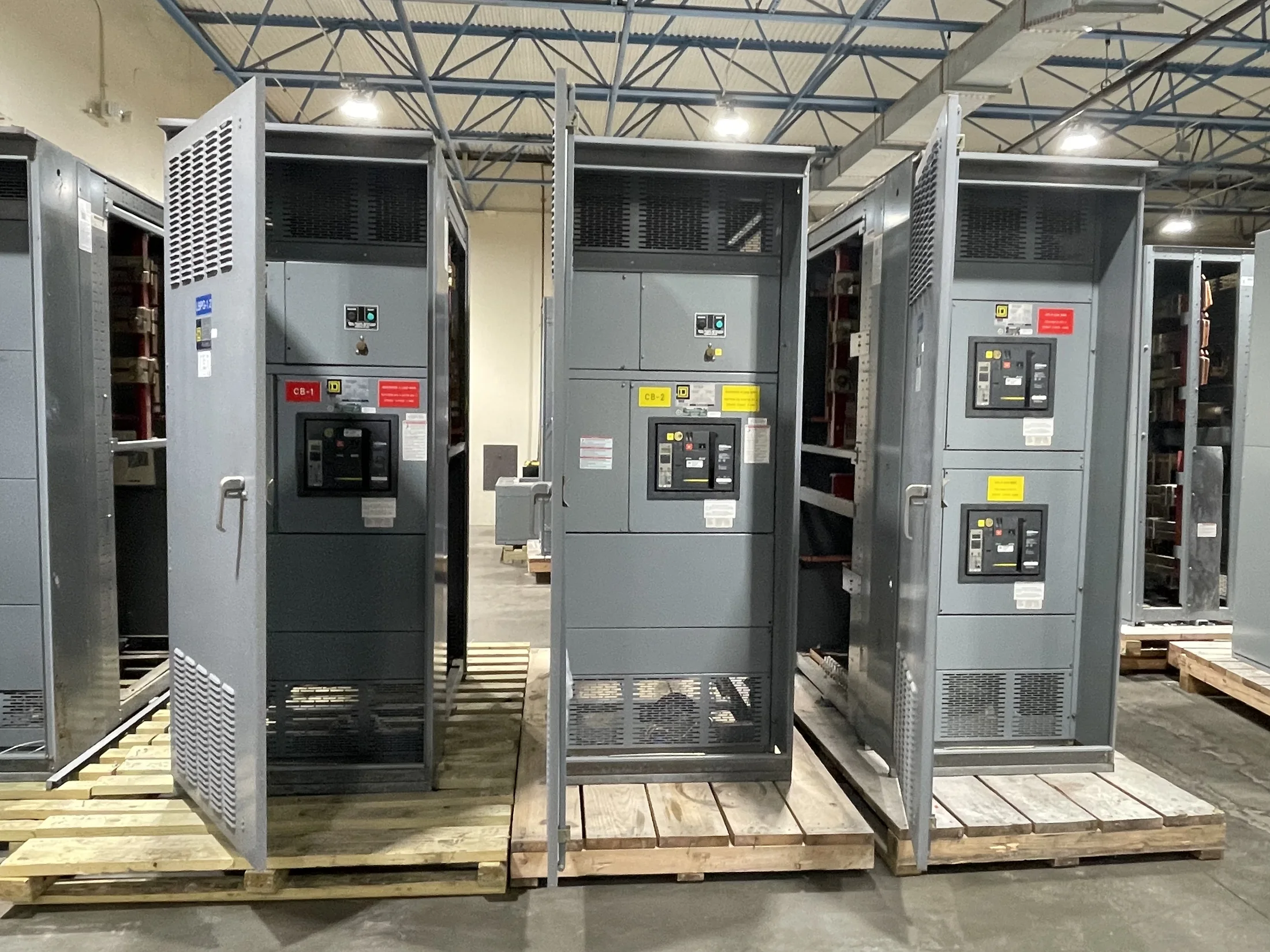
What a Dielectric Withstand Test Establishes
A dielectric withstand test applies a specified voltage between electrical conductors, or between conductors and ground, to assess insulation integrity under defined conditions. It is a controlled verification step, not a general measure of every aspect of equipment reliability. Acceptance depends on the applicable standard and the agreed test procedure.
The required voltage level and duration are not universal values. They depend on equipment type, rated voltage, construction, insulation system, and whether the test is a production test, design test, or other evaluation. Project documents should identify the governing requirements rather than assume that one familiar test value applies to all assemblies.
Start with the Equipment Standard
Identify the equipment category before setting test expectations. UL 891 applies to low-voltage switchboards; UL 1558 applies to low-voltage metal-enclosed switchgear. Medium-voltage equipment follows different standards and insulation requirements. UL 891 does not cover medium- or high-voltage equipment, so its test provisions must not be carried over to those applications.
The responsible engineer and manufacturer should confirm the standard edition, equipment ratings, and applicable clauses for the proposed assembly. Requirements can vary with the product’s construction and intended use. A specification that names only a voltage or test duration may leave important questions unanswered, including test connections, frequency, conditioning, and acceptance criteria.
Test Level and Duration Are Linked
Test voltage is selected from the governing standard and the specific equipment rating and insulation design. Duration is likewise prescribed or defined by the applicable test plan. Neither should be chosen by treating a higher voltage or longer application as automatically better; departures from standardized conditions can affect insulation stress and invalidate a comparison.
The test plan should state the applied voltage, waveform or source type where relevant, application time, connection points, and pass/fail criteria. It should also identify whether the test is performed on a complete assembly or specified components. If project requirements differ from standard production testing, resolve the difference before design approval and manufacturing.
Configuration Changes the Test Scope
A switchboard or switchgear lineup may include bus, circuit breakers, instrument transformers, control wiring, surge protective devices, and other components. Their ratings and connection arrangements can influence which portions are included, isolated, or treated separately during a dielectric test. Review the one-line diagram, bill of materials, and assembly layout together when defining test boundaries.
Removable or withdrawable devices, shipping splits, field-installed sections, and customer-supplied components may require specific handling in the test plan. Confirm whether the factory test covers the assembled shipping configuration, individual sections, or selected circuits. Also identify equipment that must be disconnected or protected during testing, and document any field verification required after installation.
Insulation and Environmental Considerations
Insulation coordination, clearances, creepage distances, materials, and internal geometry affect how a design withstands electrical stress. Altitude, contamination, humidity, and other service conditions may also influence equipment selection or design review under the relevant standard. These factors do not create a single substitute test value; they inform the design basis and the applicable requirements.
Share the intended installation environment and operating conditions during specification development. If the equipment will serve a high-altitude, damp, dusty, corrosive, or otherwise demanding location, the engineer should determine whether ratings, construction, or evaluation need adjustment. Confirm any required assumptions with the manufacturer and, where applicable, the utility and authority having jurisdiction.
Production Testing and Project Verification
Routine production testing and design or qualification testing serve different purposes. A production dielectric test checks specified insulation performance on the manufactured equipment under the standard’s prescribed conditions. Design testing may evaluate a type or configuration more broadly. A project should clearly distinguish required factory checks from special tests, inspections, or documentation requested by the purchaser.
Before adding a witness test or additional voltage application, confirm its purpose, procedure, acceptance criteria, and effect on schedule. Repeating or extending a test without technical justification may impose unnecessary stress or create ambiguity about conformance. The responsible engineer should review special requests against the equipment standard and the manufacturer’s approved test plan before they become procurement requirements.
Information to Provide for a Quote
For a useful quotation, provide equipment class, system voltage, current ratings, lineup arrangement, neutral and grounding details, and the governing standard with edition if specified. Include one-line diagrams, applicable specifications, component schedules, and service conditions. These details help establish the equipment configuration and identify which dielectric requirements apply to the new assembly.
Also state desired factory test documentation, witness requirements, special test procedures, and any project-specific acceptance criteria. Identify customer-furnished devices and field-installed sections, since they can affect test boundaries and responsibilities. The manufacturer can review the requested scope for feasibility and clarify assumptions; final design requirements should be checked by the responsible engineer and relevant approving parties.
Documentation and Acceptance
A test record should identify the assembly or section tested, test date, procedure or governing basis, applied conditions, and result, consistent with the agreed documentation scope. Confirm in advance what records will accompany the equipment and how deviations or exclusions are reported. A clear record supports review without implying that one test establishes every design or installation requirement.
As a U.S. manufacturer building new equipment with American components, we can custom-fabricate switchboards, low-voltage switchgear, and applicable distribution assemblies for projects in Ohio and nationwide. Share the standard, configuration, and test-plan expectations early; we offer short lead times and nationwide shipping, subject to confirmed project scope and schedule.