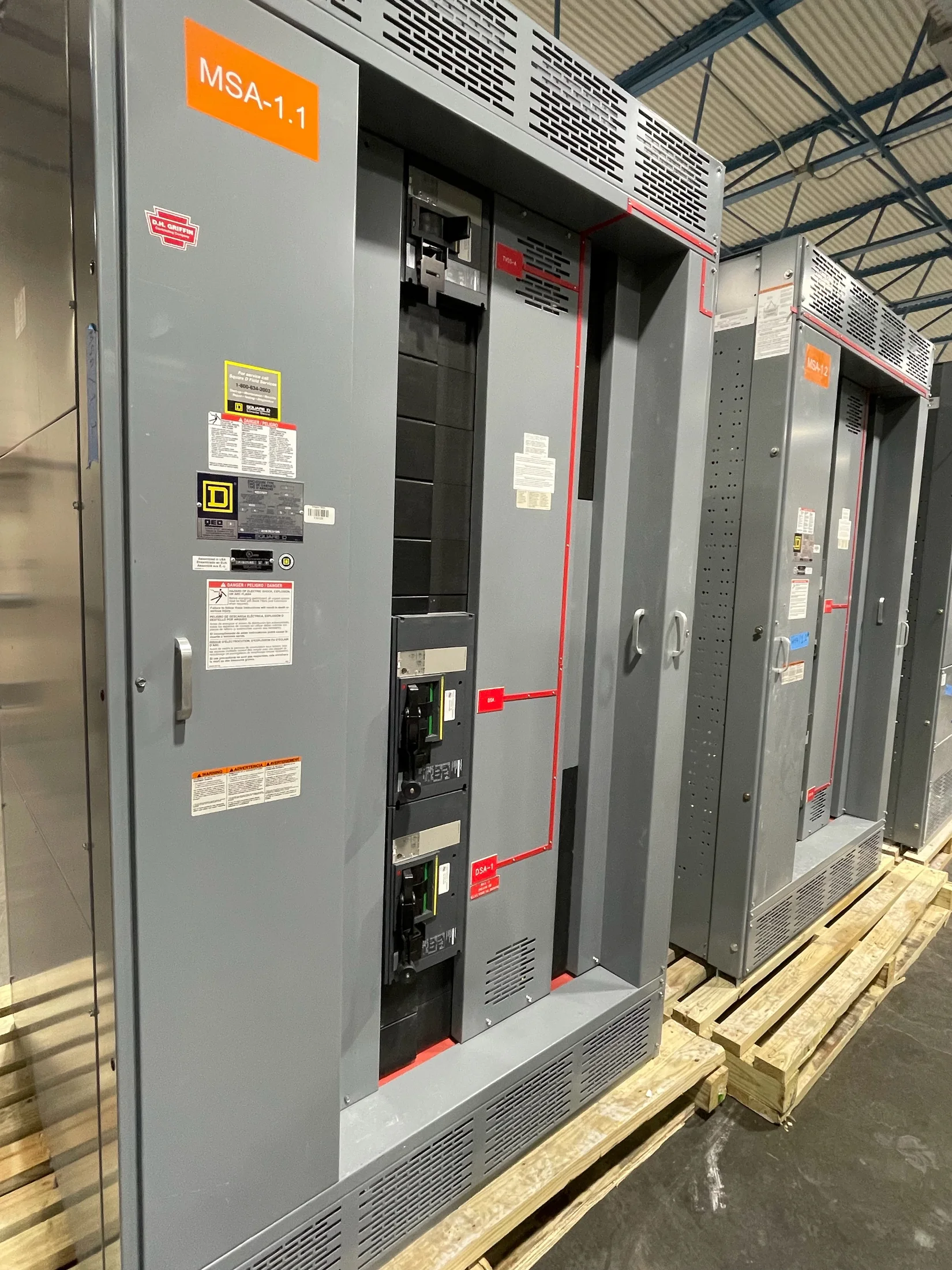
Start With the Equipment’s Rated Conditions
Derating is the adjustment or verification needed when expected operating conditions differ from the conditions underlying an equipment rating. Begin with the exact equipment type, nameplate data, manufacturer documentation, and applicable product standard. A switchboard, low-voltage switchgear lineup, and medium-voltage assembly do not share interchangeable rating assumptions.
Identify whether the concern is continuous current, short-time withstand, interrupting duty, or another limit; these are different characteristics. A lower allowable continuous load does not by itself establish fault-duty suitability. The responsible engineer should compare the proposed application with the equipment documentation and applicable codes, utility requirements, and authority having jurisdiction.
Account for Ambient Temperature and Heat
Ambient temperature around the assembly influences heat dissipation and can affect the usable current capacity of bus, devices, and conductors. Determine the expected temperature at the equipment location, including seasonal extremes and heat from nearby machinery, roofs, transformers, or other electrical assemblies. A room thermostat reading may not represent conditions inside a crowded enclosure.
Use the manufacturer’s published guidance for the specific construction and devices rather than applying a generic temperature correction. Confirm whether the stated rating already incorporates a defined ambient basis, and how any adjustment applies to the complete assembly. Where conditions are uncertain, provide measured data, design temperatures, and the anticipated operating profile for engineering review.
Examine Enclosure and Ventilation Choices
Enclosure type, protective features, dimensions, and ventilation openings affect how heat leaves equipment. Indoor and outdoor installations can experience different solar gain, weather exposure, dust, or restricted airflow. A requested enclosure rating or added barriers may change thermal behavior; the implications depend on the actual assembly and must be confirmed for the selected design.
Document clearances around the lineup, room size, air movement, exhaust paths, and any planned filters or louvers. Do not assume that adding a fan or opening a panel is an acceptable remedy: such changes may conflict with environmental protection, safety, or listing conditions. Ask the manufacturer to evaluate the proposed enclosure and installation arrangement together.
Review Bus, Devices, and Internal Arrangement
Current capacity belongs to an assembled configuration, not simply to a bus-bar material or a breaker frame size. Bus geometry, joints, supports, plating, device placement, compartment partitions, and connections can all affect temperature rise. Changes in lineup width, section sequence, or feeder arrangement may therefore warrant review against the approved design basis.
Provide the one-line diagram, bus ratings requested, device types and ratings, section layout, and any special transition or termination details. Identify future provisions and spare spaces, since populated and unpopulated arrangements may differ thermally. Confirm whether the desired rating applies to the entire lineup, a particular section, or an individual circuit under stated conditions.
Consider Loading Patterns and Diversity
A load estimate should reflect how equipment will operate, not only the sum of installed nameplate currents. Record expected continuous loads, demand assumptions, duty cycles, peak periods, and likely simultaneous operation. Harmonic-producing loads, frequent cycling, and uneven phase loading can affect conductor heating or create conditions that require additional analysis.
Do not treat diversity as permission to exceed an applicable rating or omit code-required calculations. The engineer should establish the design load and explain any operating assumptions used to select equipment. For a quotation, provide load schedules and identify known future expansion so the proposed bus and device arrangement can be evaluated against the intended service.
Include Conductors and Installation Details
External conductors and terminations are part of the thermal picture. Conductor material, size, insulation temperature rating, number of parallel sets, routing, grouping, and termination temperature limits can constrain the practical current carried by a circuit. A switchgear rating does not automatically establish that field-installed cables or connections have equal capacity.
Describe incoming and outgoing cable or busway arrangements, lug requirements, entry direction, and available bending space. Confirm conductor ampacity and termination compatibility under the installation conditions with the responsible engineer. If field modifications, unusually long connections, or adjacent heat sources are anticipated, disclose them early so the equipment interface can be reviewed before fabrication.
Separate Thermal Questions From Other Ratings
Derating for operating current is not a substitute for checking short-circuit ratings, protective-device coordination, voltage, frequency, or environmental suitability. Each requirement has its own basis. Specify available fault current, system grounding, utility information, and protection details so the selected assembly and devices can be evaluated for the actual electrical system.
Equipment standards must also match the product category. UL 891 applies to switchboards; UL 1558 applies to low-voltage switchgear. Medium-voltage equipment is a distinct category with separate applicable standards and design considerations. Confirm the required construction and documentation for the project rather than treating one standard or voltage class as universal.
Prepare a Useful Design and Quotation Package
A focused request for quotation should state system voltage, phase, frequency, service and bus requirements, requested continuous current, fault-duty data, and the applicable equipment category. Include one-line and elevation drawings, device schedules, enclosure requirements, cable details, and project-specific ambient and room conditions. Mark requirements as confirmed or still under engineering review.
A U.S. manufacturer can custom-fabricate new switchgear and power distribution equipment for Ohio projects and ship nationwide; lead time depends on scope, components, and design review. Share the delivery location, schedule, and approval process, but do not assume a rating until the proposed configuration is evaluated and accepted by the responsible parties.
Verify the Final Application Before Release
Before design release, reconcile the equipment submittal with actual site conditions and the load calculation. Confirm ambient assumptions, enclosure and ventilation, lineup configuration, termination details, protective-device selections, and any manufacturer-stated limits. If the installation changes after approval, revisit the assessment rather than carrying forward an assumption that no longer applies.
The responsible electrical engineer should check the design against applicable codes and project criteria, consulting the utility and AHJ where relevant. Provide revised drawings or site data when conditions change. Clear documentation of the rating basis helps contractors install the intended arrangement and helps facility teams operate within the evaluated application.