Start with the decisions operators need to make
Remote monitoring is most useful when each data point supports an operating decision. A Kettering facility may need to identify abnormal loading, compare feeder demand, review power quality, or verify breaker status. List the questions operators need answered before selecting meters or defining a communications interface.
Separate routine visibility from protective functions. Monitoring values can help staff investigate conditions, but they do not replace protective relays, local controls, or required operating procedures. Confirm which information is advisory, who responds to alarms, and whether the owner expects readings at the equipment, a local workstation, or a supervisory system.
Specify meter points by source and purpose
Create a point schedule for each incoming source, bus section, tie, and feeder considered for monitoring. Candidate values include phase and line voltage, phase current, real and reactive power, energy, frequency, power factor, and demand. Whether a value is available depends on the selected meter, sensing arrangement, and wiring.
Identify status and alarm points separately from measured quantities. Breaker open or closed indication, trip status, and meter alarms may be useful, but the exact signals and meanings must be confirmed for the proposed devices. Include units, update expectations, naming conventions, and whether historical trending or event records are required.
Choose the right measurement locations
Meter placement affects what operators can see. An incoming meter can show facility demand, while feeder meters can help distinguish large loads; bus-tie measurements may support operational awareness across sections. A project does not necessarily need every point at every circuit, so prioritize loads and sources with clear operational value.
Confirm the electrical design and instrument-transformer requirements with the responsible engineer. Current transformers, voltage connections, wiring routes, meter burdens, and available compartment space depend on the equipment arrangement and applicable design. Provide one-line diagrams, system voltage, source configuration, feeder list, and desired metering boundaries for review.
Match the interface to the owner’s network
Identify how switchgear data will reach the owner’s monitoring platform: for example, a serial connection, Ethernet, or a specified industrial protocol. Do not assume a particular protocol, port, gateway, or topology is included. Confirm the owner’s accepted device list, addressing method, network segmentation, and whether communications terminate inside or outside the equipment lineup.
The interface should match the receiving system and its point model. Ask the owner or controls integrator for protocol details, register maps or point naming rules, polling expectations, and gateway requirements. Clarify who furnishes network switches, cabling, configuration, software licenses, and integration labor so scope gaps are visible before the quote is finalized.
Set cybersecurity requirements before ordering
Owner cybersecurity policies can determine which devices and connections are acceptable. Confirm requirements for asset approval, password management, user roles, encryption, firmware handling, vulnerability notification, and remote access. A monitoring design may need to operate without an internet connection or vendor access, depending on the facility’s rules and risk review.
Define who administers accounts, approves configuration changes, and maintains device records after installation. Ask whether the owner requires disabled unused services, unique credentials, network firewalls, logging, or a formal change process. These controls are project-specific; document them for engineering review rather than assuming every meter or interface provides a particular capability.
Resolve alarms, time, and data retention
Agree on alarm thresholds and routing with the people who will use them. A high-demand alert, loss-of-communications indication, or abnormal meter value needs a defined recipient and response. Thresholds should reflect facility operations and engineering judgment, not generic defaults, and the owner should decide which events merit notification.
For trending and event review, confirm timestamp source, clock synchronization, sample or polling interval, retention period, and export format. The meter may provide data locally while the owner’s software stores long-term history; those are different functions. Specify what the equipment interface supplies and what the facility network or supervisory system must provide.
Coordinate monitoring with the equipment type
The equipment specification must identify the applicable product category and standards independently of the monitoring scope. UL 891 applies to switchboards; UL 1558 applies to low-voltage switchgear. Medium-voltage equipment is a distinct category, and UL 891 should not be described as covering medium- or high-voltage equipment.
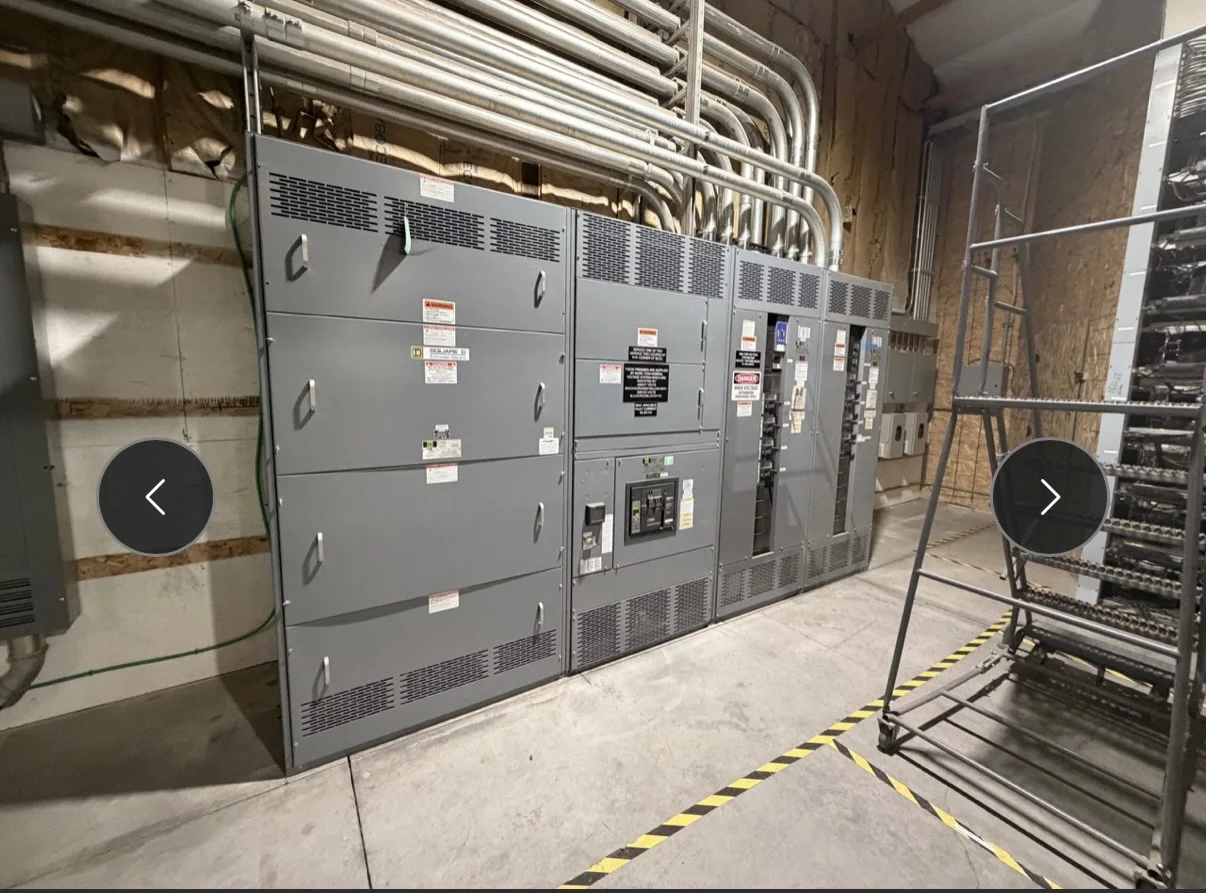
For a new lineup, confirm section arrangement, incoming and feeder devices, metering locations, control power, interface placement, and access for service. Monitoring components must fit the engineered configuration and owner requirements. Applicable ratings, construction, certifications, and options depend on the specific build and must be verified rather than presumed.
Prepare a complete Kettering project information package
For a useful quote, provide the Kettering project location, application, one-line diagram, equipment type, system voltage, source and tie arrangement, feeder schedule, and requested meter points. Include protocol and network documents, cybersecurity standards, preferred device requirements, data destinations, and any owner or integrator contacts available during design coordination.
Also identify schedule constraints, installation boundaries, required submittals, and who supplies network components or performs system integration. The manufacturer builds new equipment in the U.S. with American components, offers custom fabrication and short lead times, and ships nationwide. Final configuration, availability, and project requirements should be confirmed for the specific order.